


Welcome to the first edition of Power Play! Every Sunday from now through the midterm elections, senior writer Molly Taft will examine one of the political season’s most consequential issues: data centers. We welcome your comments and will answer reader questions in future editions.
Watch WIRED’s first livestream from a data center this Thursday, September 10. Molly, senior political correspondent Hugo Lowell, and senior business writer Max Zeff will be joining the discussion. You can submit your questions here.
It has been a difficult summer for data center supporters—and public opinion appears to be worsening. According to recent polling, 75 percent of Americans now oppose building data centers in their communities, compared with 42 percent last year. As the midterm elections approach, politicians from both parties—including Texas Governor Greg Abbott and Pennsylvania Governor Josh Shapiro—are changing their positions and signaling that they will take a tougher stance on controversial data center development.
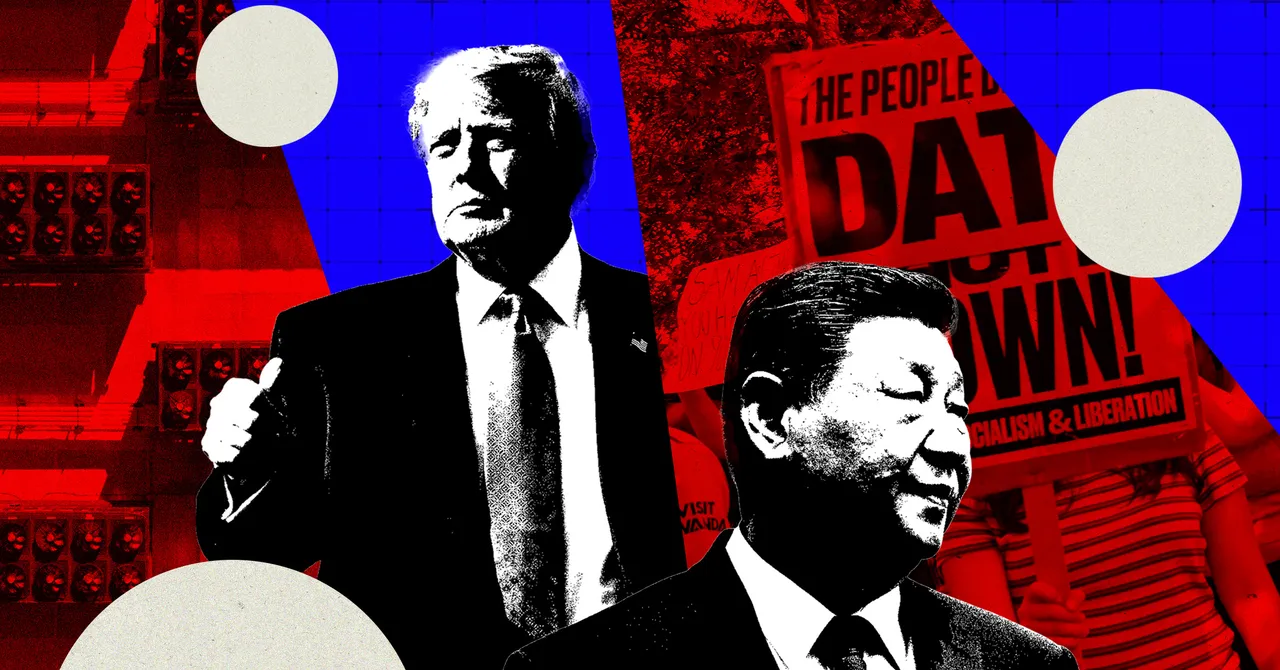
Some Republicans are now backing away from the issue despite President Donald Trump’s strong support for data center expansion. At the same time, other Republicans and prominent technology executives are reviving an older argument: that China is responsible for growing public opposition to data centers.
In late August, X announced that it had identified 200 China-linked accounts allegedly helping spread anti-data center messages on the platform. The report prompted a wave of alarming headlines and social media posts. Axios reported that China was secretly fueling opposition to US data centers. Pro-data center politicians and right-wing commentators used X to amplify the claims. President Trump also weighed in, writing on Truth Social that “China can no longer be complacent with this anti-data center movement.” He defended data center development in a Truth Social post published days after X released its findings.
The claim that Americans oppose data centers because of foreign influence overlooks more likely explanations, including environmental concerns, the political power of major technology companies, local opposition to industrial development, and broader skepticism about artificial intelligence. This argument has circulated for months. In the spring, several reports from right-wing policy groups were used by lawmakers and commentators to suggest that the Chinese Communist Party was deliberately planting anti-data center messages among Americans. In June, OpenAI reported blocking a group of users it said had ties to the Chinese government and were “testing narratives against AI infrastructure.”
However, the evidence that Chinese influence is driving US opposition to data centers remains limited. A China expert told me earlier this year that several widely circulated reports alleging foreign interference relied largely on speculation and insinuation rather than hard evidence. In its June report, OpenAI acknowledged that the accounts it identified appeared to be exploiting existing concerns about data centers—not creating them. X’s recent account removal may involve some of the same accounts identified by OpenAI: They used similar hashtags and images, and some shared links to the same obscure local news stories. Even if X identified 200,000 accounts connected to one bot network, 200 anti-data center accounts would represent only a tiny fraction of the broader online conversation.
Do technology commentators and Republicans continue to blame China because they know something the public does not? Graphika, a social media analytics firm that tracks online sentiment about data centers, told me in June that most of the protests it had monitored were domestic. That assessment has not changed. “There is still little evidence of significant foreign interference,” Tyler Williams, Graphika’s vice president of information, told me this week.
Source: www.wired.com