


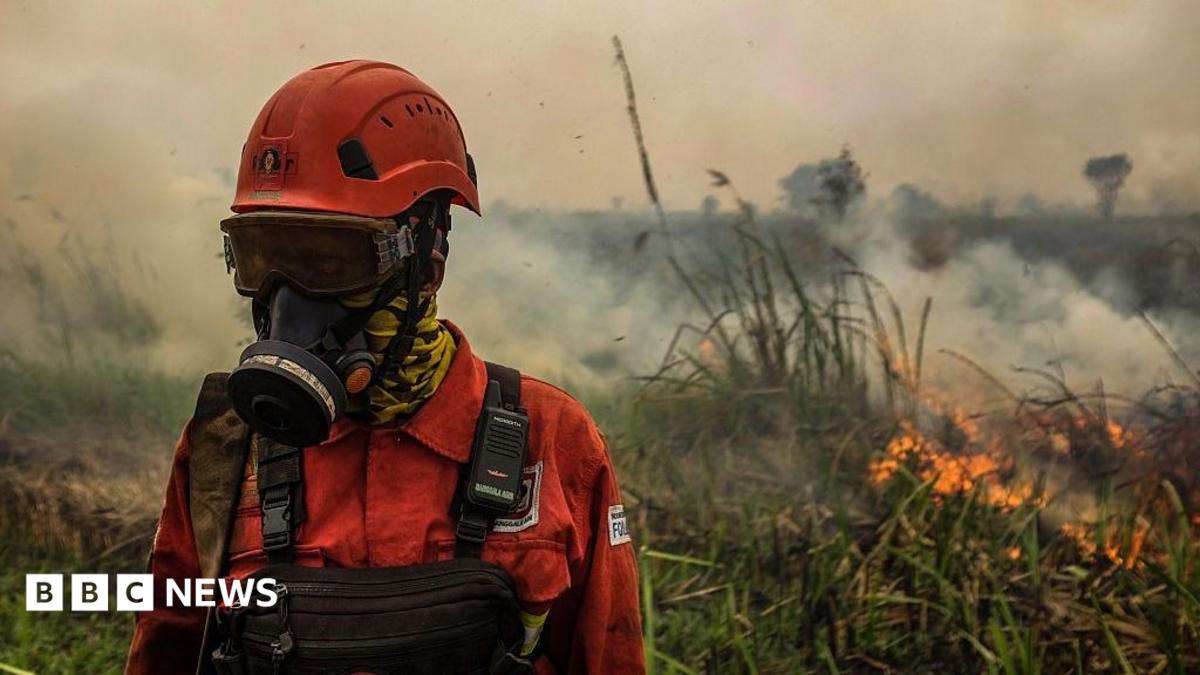
Toxic wildfire smoke has blanketed parts of Indonesia and spread across Malaysia, Singapore and the Philippines as fires continue to burn for weeks.
Millions of people across Southeast Asia are being exposed to hazardous air pollution and dense smog. In some areas, pollution levels have reached more than 15 times the World Health Organization’s recommended limit, creating “severely unhealthy” conditions.
Many of the wildfires burning in Sumatra and Indonesian Borneo began in mid-July. The fires have been intensified by a so-called Super El Niño, which is worsening drought conditions across the region.
Indonesia’s Ministry of Health recorded more than 50,000 respiratory infection cases linked to land and forest fires between July and August.
More than 12,000 of those cases involved children under five, highlighting the serious health risks posed by Indonesia’s wildfire haze.
Rizma Noor Fatima, a 19-year-old school assistant in Banjarbaru, South Kalimantan, told the BBC that the smoke inside her classroom became so thick she “couldn’t even see her feet.”
“Even though we were inside the house and everything was closed, the fog still came in,” she said. “We’ve been living with this since we were born. It’s the same thing every year, so we’ve almost given up. But this year it’s even worse.”
Misbah, a 23-year-old mother from the nearby village of Pengayuan, said her three-year-old daughter developed a “cough, sore throat and runny nose” after the haze spread through the area.
Residents on the Philippine island of Palawan, approximately 1,300 kilometers away, reported similar symptoms, including irritated eyes, noses and throats caused by the regional air pollution.
“We are currently experiencing a mild headache,” said Dr. Precious Banyas Mellado. “My cousin, who was never allergic to anything, started developing allergies. This is the first time my husband has had itchy eyes and throat.”
Malaysia is also reporting a rise in asthma and conjunctivitis cases as wildfire smoke crosses the border and air quality deteriorates in parts of the country.
Source: www.bbc.co.uk