


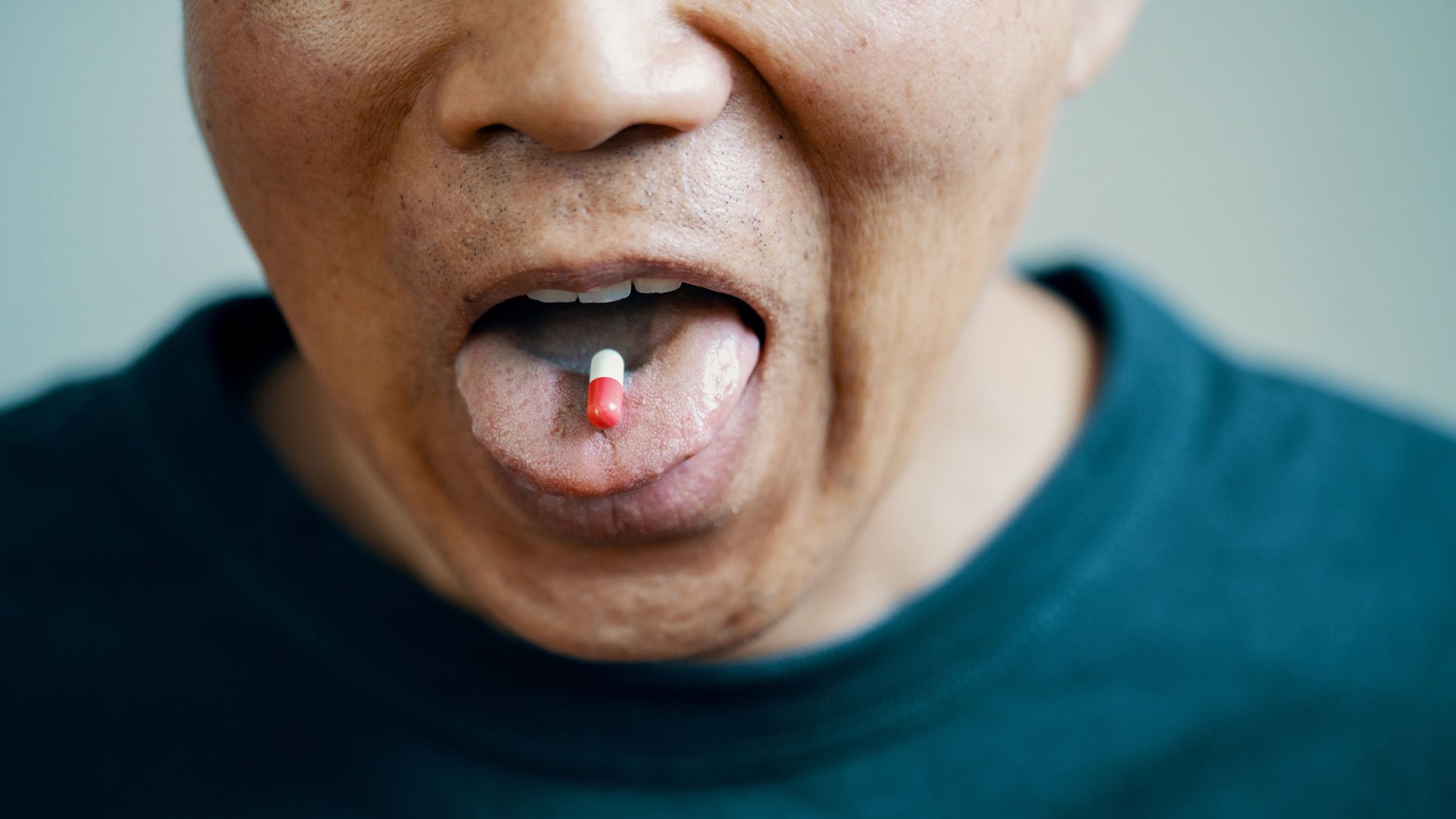
Swallowable Paper Battery Powers Medical Devices Inside the Body for Up to 3 Days
Scientists have developed a thin, paper-like battery that can be swallowed to power temporary medical devices inside the gastrointestinal tract. The battery gradually degrades after completing its job, potentially eliminating the need for surgery to remove some devices.
So far, researchers have tested the bioabsorbable battery only in pigs. The prototypes powered medical devices for up to three days. If future studies show that the technology is safe and effective in humans, it could eventually be used in temporary ingestible devices designed to detect bleeding, deliver drugs or stimulate tissues and organs.
How does the swallowable battery work?
Traditional batteries used in ingestible medical devices can be relatively large and must remain sealed to prevent their internal materials from leaking into surrounding tissue. The new battery is designed to gradually break down in the acidic gastrointestinal tract and be safely absorbed without leaving harmful debris or toxic byproducts.
The battery is made from several layers. A magnesium alloy serves as the anode, or negative terminal, while the cathode, or positive terminal, contains molybdenum trioxide and activated carbon. A biodegradable electrolyte between the two sides enables the battery to generate electrical current.
Earlier biodegradable battery prototypes have been developed for temporary medical and wearable electronics. The new design uses cellulose nanofibrils as a binder, creating a thin, porous and paper-like structure.
“The paper structure improves the strength and control of degradation of the battery, while also allowing it to generate electricity,” Giovanni Traverso, director of the Massachusetts Institute of Technology’s Translational Engineering Institute, told Live Science in an email.
Reza Ghodssi, a professor of electrical and computer engineering at the University of Maryland who was not involved in the study, said the technology could help reduce the size of ingestible devices.
“The battery is one of the components that takes up the most space within an ingestible device, so anything that can reduce the size of the capsule while still providing the necessary power is very promising.”
Wax coatings control how long the battery lasts
To prevent stomach acid from destroying the battery too quickly, the researchers coated the prototypes with beeswax. Some versions also included candelilla wax, which comes from the desert shrub Euphorbia antisyphilitica, to provide longer-lasting protection.
“Wax coatings are more than just packaging,” Traverso said. “This is a critical design element that controls functional life.”
The researchers created two versions of the battery, including one small enough to fit inside a standard gelatin capsule. In laboratory tests, the smaller battery generated approximately 1.77 volts and stored and delivered 2 milliamp hours per square centimeter—enough to power low-power electronic devices.
The larger version generated approximately 1.84 volts and had a maximum capacity of 3.5 milliamp hours. That could potentially support devices requiring more power, although Ghodssi said the battery’s capacity remains limited.
“For this technology to be even more promising, we need an order of magnitude higher capacity.”
Reza Ghodssi
Battery powered medical devices in pigs
The researchers placed each battery prototype inside a 3D-printed capsule and administered it orally to pigs using an endoscope. Both versions operated for up to three days as their voltage and capacity gradually declined.
The larger battery’s voltage fell from about 1.8 volts to 1.6 volts after one day and approximately 1.45 volts by the third day. The smaller battery dropped from about 1.7 volts to 1.35 volts over the same period.
“It is very impressive that the battery can operate in a stable and reliable manner when the entire device passes through the GI system in a large animal model.”
The team used the batteries to power two types of experimental medical devices inside the pigs.
Wireless RFID tracking
The smaller battery powered a wireless RFID, or radio-frequency identification, tag. The researchers placed the tag in the esophagus, where it communicated with a receiver up to 5 feet (1.5 meters) away. This allowed them to detect when a pig swallowed a drug.
Similar RFID-based sensors have previously been tested in humans, although the device used in this study was experimental.
Electrical stimulation of the stomach
The larger battery powered a capsule that electrically stimulated the stomach. The stimulation increased levels of the hunger-related hormone ghrelin in the pigs’ blood without causing visible tissue damage at the stimulation site.
Gastric electrical stimulation is already used in people with severe gastroparesis, a condition that slows the rate at which the stomach empties. However, the battery-powered capsule tested in this study was experimental.
Why the entire device must eventually biodegrade
Although the battery and its biodegradable components were destroyed, the electronic circuit board used in the stomach-stimulation experiment was not. The pigs passed the circuit board naturally.
“Making all parts of the device bioabsorbable could potentially eliminate the risk of leftover components becoming stuck in the gastrointestinal tract,” said John Rogers, a bioelectronics researcher and materials scientist at Northwestern University who was not involved in the study.
What happens next?
The researchers’ biggest challenge is controlling the battery’s operating life and making its failure more predictable, Traverso said.
The team found differences between individual battery cells, which they attributed to structural factors including the amount of contact between layers, electrolyte distribution and wax-coating thickness. They are working to standardize manufacturing and adjust the coatings so the batteries can be designed to operate for specific periods ranging from hours to days.
The researchers also plan to conduct longer tests under conditions that more closely mimic the human gastrointestinal tract. Traverso said early clinical trials of the RFID system could begin within about two years.
The findings were published in Nature Chemical Engineering in the study, “Bioabsorbable batteries for temporarily ingestible bioelectronics.”
Source: www.livescience.com