


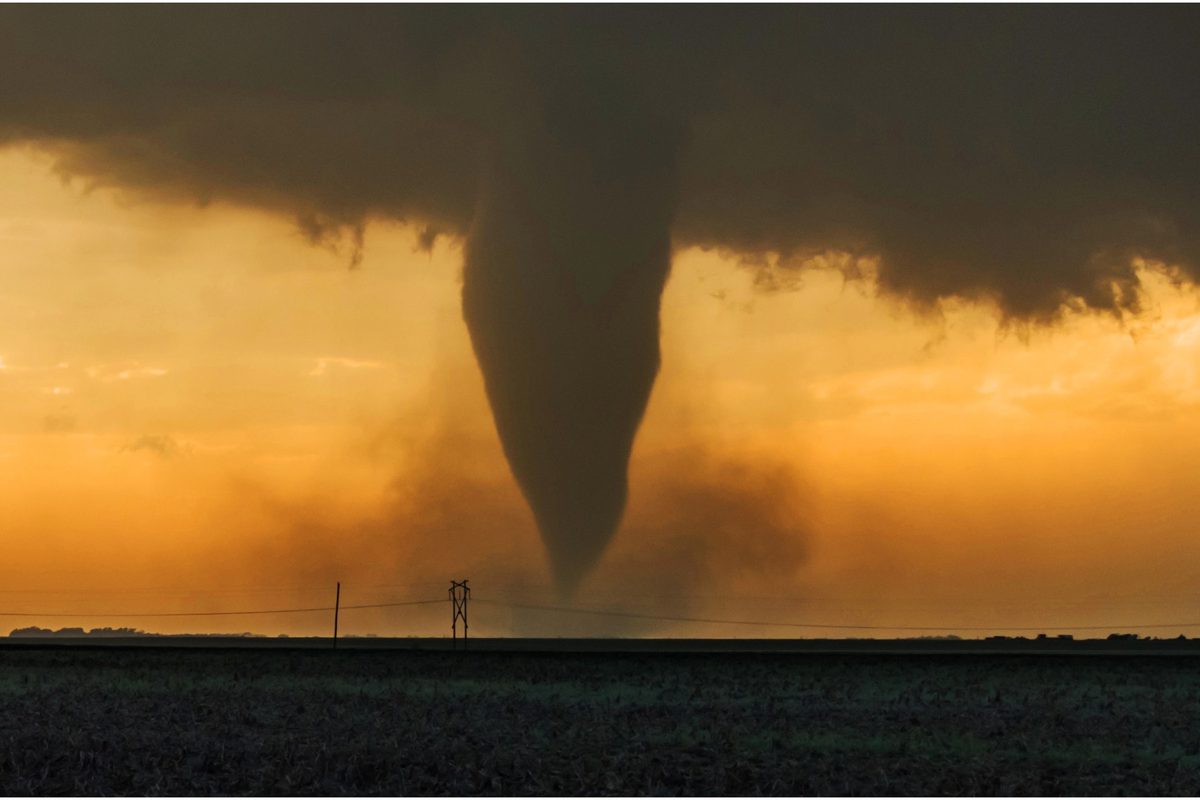
On a Monday night in April 2026, five tornadoes struck, including one significant touchdown in the Kansas City area that tore through buildings in Ottawa, Kansas.
Tornadoes are not uncommon in Kansas. However, the National Weather Service (NWS), responsible for predicting these severe weather events, was seemingly caught off guard with an afternoon forecast indicating no tornadoes were expected.
It’s challenging to pinpoint why such forecasts fail.
Several weather balloon launches in the region faced delays or failed that morning. This may have contributed to the inaccurate forecasts, potentially stemming from staffing shortages due to significant budget cuts during the Trump administration.
In 2025 alone, the National Oceanic and Atmospheric Administration (NOAA) saw over 1,000 employees, including numerous senior NWS meteorologists, laid off or accepted buyouts.
Despite public outcry, the administration has worked to reverse these layoffs, rehiring hundreds while insisting, according to a spokesperson, that there is “no evidence of deterioration in NOAA’s weather models.”
However, outside meteorologists caution that, a year post-cuts, the Bureau of Meteorology remains critically understaffed during peak weather events.
“Those of us closely monitoring severe weather forecasts have noticed the Storm Prediction Center’s predictions are often ‘less than perfect’ lately,” stated William Gallus, a meteorologist at the University of Iowa.
This isn’t merely a matter of inconvenience. Precise forecasting is essential for mitigating damage from extreme weather events, including intensifying hurricanes and unprecedented heat waves, which are becoming increasingly frequent and severe due to climate change.
Adding to this complexity is the potential for a “Super El Niño” in the Pacific, likely leading to increased flooding on the West Coast and elevated global temperatures.
“Residents of Kansas should never doubt whether the systems in place to protect them during severe weather are fully operational,” asserted Democratic Rep. Sharice Davids, representative of the tornado-affected area, in a statement.
In April, her office requested information from the Trump administration regarding the weather balloon delays and their potential role in the forecasting errors but has yet to receive a response.
Clouds Gather
While on paper, weather agencies may appear to be recovering—Congress largely ignored the proposed budget cuts, leading to the NWS filling 280 positions since hiring resumed—the agency is still operating with hundreds fewer employees than before the cuts.
Even with the potential to restore the workforce completly, replacing experienced senior meteorologists and other seasoned staff cannot happen overnight, argued Brian Tan, a meteorologist at the University at Albany in New York.
“Much of the organizational experience and knowledge that has been lost cannot be easily regained.”
Craig McLean, former NOAA acting chief scientist, agrees. “The scale of hiring we see now highlights how the Trump administration’s actions have adversely impacted the agency,” he told BBC Science Focus.
The loss of staff translates into thousands of years of experience in areas like weather forecasting and climate modeling. “When you lose 27,000 years of expertise, the agency cannot function the same way,” McLean emphasized.
However, experts do not predict that this disruption will entirely cripple U.S. weather operations. “We are not regressing to the dark ages of weather prediction,” Tan noted, adding confidence that existing models will continue to offer generally reliable forecasts based on their current accuracy.
What may suffer in the long run is the rate of improvement in weather forecasting accuracy, largely dependent on research from universities and NOAA-run laboratories, many of which faced severe cuts last year, notably the Geophysical Fluid Dynamics Institute in Princeton, New Jersey.
Alarming is the Trump administration’s intentions to “dismantle” the National Center for Atmospheric Research in Colorado, which serves as a significant hub for climate and weather research. This center, currently managed by a coalition of over 100 universities, may face legal action to avoid disbandment.
Read More:
Into the Storm
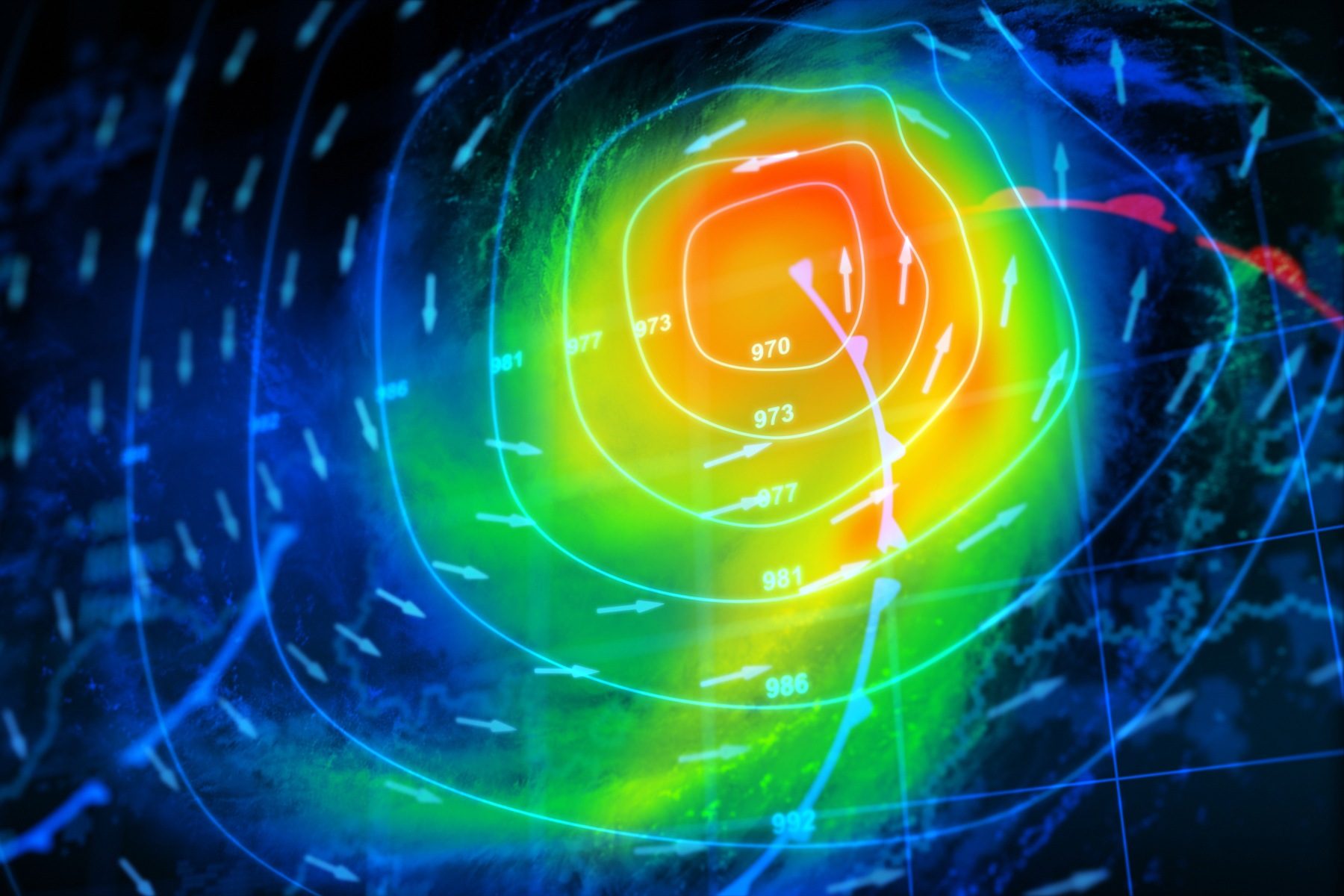
Adding uncertainty to the future of weather forecasting in the United States is the advent of AI. A variety of AI weather prediction models have emerged recently, some outperforming traditional models on critical benchmarks.
Traditional forecasting relies on massive physics simulations, processed by supercomputers that solve millions of atmospheric equations to project future weather scenarios.
In contrast, AI models analyze decades of historical weather data, learning to identify patterns preceding certain conditions.
This shift results in increased efficiency; some AI models can run on standard laptops instead of expensive supercomputers. This could enhance accuracy and speed while allowing for localized information.
The Trump administration prioritized these AI advancements at NOAA to enhance their prediction capabilities. However, officials have clarified that this technology is meant to complement existing forecasting methods, not replace them.
According to NOAA, the new AI model serves as “an addition to its suite of weather models, not a substitute,” as reported by BBC Science Focus.
Nevertheless, there are growing concerns that the NWS may turn to AI tools to reduce human intervention in the forecasting process, causing anxiety over future report quality. Anxiety is rising among professionals.
“Humans play a crucial role, even on the data collection front,” said Jeffrey Schrader, a Columbia University researcher studying weather forecasting.
His research indicates forecasts generated by human meteorologists are on average 20% more accurate than those produced solely by statistical models, attributing it to local weather knowledge.
Experienced forecasters understand how local terrains affect weather patterns and where traditional models often fall short. This nuanced understanding is yet to be captured by any algorithm.
“Experienced meteorologists contribute immense value,” Schrader said, arguing their role extends beyond mere interpretation of predictions.
The relationships and trust they foster within their communities, particularly with emergency services and local officials, are equally vital for ensuring public safety during severe weather events.
It is crucial to acknowledge that existing AI models have limitations, especially for extreme weather events, as statistically based models only hold reliability when predicting occurrences documented within the dataset. Events outside this scope can lead to inaccurate forecasts.
This May, researchers from Germany and Switzerland found that AI prediction accuracy often lags behind physics-based models, particularly when forecasting record-breaking conditions. The AI systems consistently underestimated excessive heat and overestimated extreme cold.
Alarmingly, their performance declined as events became more extreme.
Inaccurate forecasts always pose risks. Increased risks are anticipated as climate change exacerbates extreme conditions.
The researchers discovered that forecast discrepancies as small as 1 degree could significantly impact mortality rates during heatwaves, mirroring effects seen with cold waves. Findings suggest forecasting errors can substantially heighten risks.
“Without human oversight, the algorithm’s predictions may become skewed and far from accurate,” Schrader warns.
Moreover, AI models cannot eliminate the need for fundamental weather observations. AI’s efficacy hinges on consistent data collection; the best AI systems are rendered ineffective if weather balloons aren’t launched or hurricane hunters aren’t dispatched.
“Having the technology alone isn’t sufficient,” Tan asserts. “People are essential.”
Read More:
Source: www.sciencefocus.com