


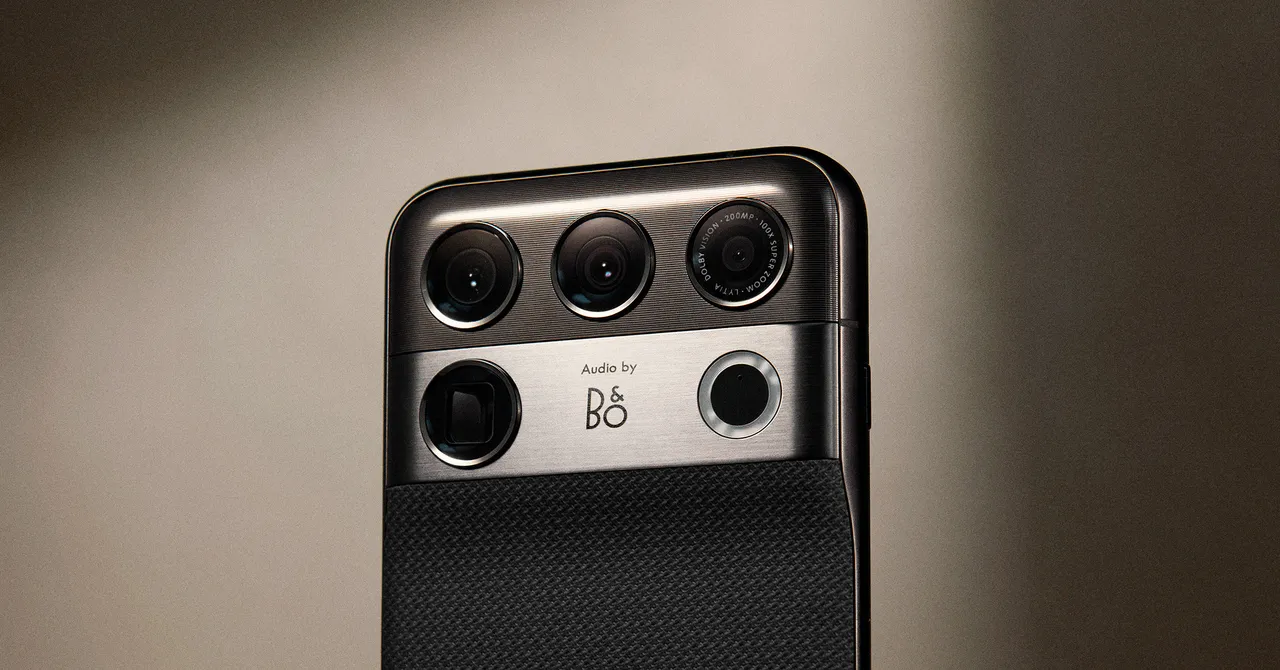
Motorola’s Signature 27 is positioned as a high-end smartphone built around an unusually bright 6.8-inch display, advanced camera hardware and Qualcomm’s next-generation flagship processor. The phone combines a claimed peak brightness of 12,000 nits with tandem OLED technology, a 50-megapixel Sony sensor using LOFIC, a 200-megapixel periscope camera and a dedicated event-based vision sensor designed to reduce motion blur.
A 12,000-nit tandem OLED display
Motorola claims its “Extreme AMOLED Duo” panel is the brightest smartphone display on the market, reaching a maximum brightness of 12,000 nits. The panel uses tandem OLED technology, which stacks two OLED layers on top of each other, similar to the approach Apple debuted with the iPad Pro and touchscreen MacBook.
For context, Apple’s new display has a peak brightness of about 2,000 nits, while most smartphones currently reach about 3,600 nits—enough to keep the screen readable in harsh sunlight. Chinese brands including Honor and Huawei have recently advertised brightness levels of up to 10,000 nits or more, although those figures rarely apply to the entire display and are typically limited to a small area during HDR playback. Motorola’s brightness claim should therefore be treated as a specification-sheet figure rather than a typical viewing level.
Motorola says the tandem OLED design improves energy efficiency by reducing power consumption and extending battery life. The company also claims the display could last up to 121% longer than regular AMOLED panels. Other display features include 1.5K resolution, Dolby Vision support and “Pantone Validated” color calibration intended to produce accurate colors.
Camera system focuses on dynamic range and motion
Motorola’s camera technology has become more competitive in recent years, and the company is positioning the Signature 27 as a top-end imaging device. Its 50-megapixel Sony Lytia L910 main camera is Sony’s first sensor to use LOFIC, or Lateral Overflow Integration Capacitor, technology. LOFIC can significantly increase dynamic range in a single exposure, which could improve results in difficult lighting by reducing crushed shadows and blown-out skies.
The phone also includes a 200-megapixel periscope telephoto camera with 3x optical magnification and up to 100x digital zoom. Motorola says generative AI powers the digital zoom, using an approach similar to features offered by Google and Samsung on their respective devices.
A 50-megapixel ultrawide camera with 4K video support and a 50-megapixel front-facing camera complete the imaging system. For video, Motorola says its new enhancement engine uses AI to optimize color, contrast and dynamic range. The company also claims that improved stabilization will produce smoother footage.
An event-based sensor for moving subjects
The apparent fourth camera on the rear is actually a dedicated “event-based vision sensor,” or EVS. Motorola describes it as the first sensor of its kind on a smartphone. It works with the company’s Action Shot mode to detect movement and freeze motion, with the aim of producing sharper photos of moving subjects with less motion blur.
Snapdragon processor and upgraded cooling
The Signature 27 is among the first smartphones to use Qualcomm’s Snapdragon 8 Elite Extreme Gen 6 chip, which was announced in September. The processor is expected to appear in many flagship Android smartphones in 2027.
Motorola says the phone’s cooling system includes a thermal chamber that is 40% larger, helping the processor maintain performance for longer periods. The Signature 27 comes with 12 GB of RAM and 512 GB of storage.
Source: www.wired.com