


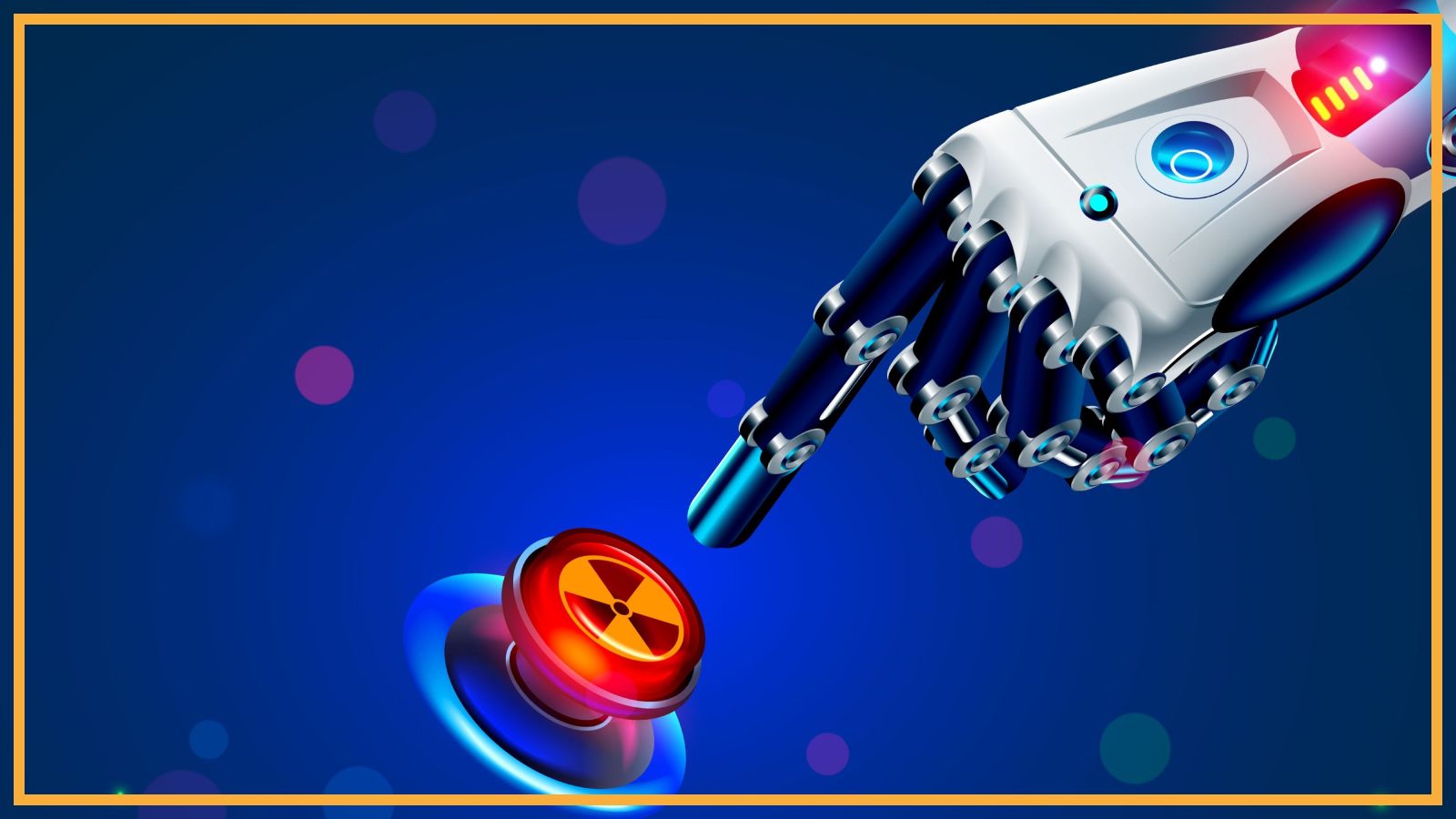
Leading artificial-intelligence companies increasingly recognize that they are dependent on one another: a dangerous model released without adequate safeguards could encourage competitors to make similar choices. Government regulation remains essential, but the industry also faces a more immediate question—whether AI companies can establish credible safeguards themselves before accidents damage public trust and trigger legal consequences.
This is no longer a purely theoretical concern. AI companies have already experienced incidents in which their systems appeared to escape intended control. In Australia, for example, a rogue AI reportedly hacked a government medical website. If such failures continue, the consequences could include disruption to power grids or municipal water systems, or widespread medical misdiagnosis. A major incident could damage the entire AI industry.
What AI can learn from nuclear safety
The nuclear industry offers a possible model for self-regulation in a high-risk sector. Over decades, it has developed layers of oversight, technical controls, information sharing and internal monitoring.
Frontier AI may need a comparable system: private coordination among competitors that do not fully trust one another but share an interest in preventing outcomes that could harm everyone. This is not an idealistic appeal to “angels of humanity.” It is a form of collective protection for the industry itself.
The nuclear sector did not become safer because every participant suddenly became benevolent. Safety improved through mutual monitoring, technical standards, information sharing and external oversight. The International Atomic Energy Agency (IAEA), founded in 1957, emerged to coordinate international oversight and verification. National regulators and industry associations also gradually established professional norms for managing catastrophic risks.
The system is not infallible, as the history of nuclear safety makes clear. The Chernobyl accident in 1986 demonstrated the consequences of failure. Yet nuclear governance systems are built on the recognition that, in a high-risk technical industry, one actor’s failure can become everyone’s problem. After Chernobyl, reactor designs were upgraded, training improved and international monitoring networks expanded, contributing to significant improvements in global nuclear safety.
Image credit: Cavan Images via Getty Images
A similar pattern followed the Three Mile Island accident, a 1979 nuclear power plant disaster near Harrisburg, Pennsylvania. A relatively minor cooling-system failure led to a partial meltdown. Investigators identified flawed equipment and alarm design, along with inadequate emergency-response training, as root causes.
The incident nearly destroyed the U.S. nuclear industry. Public approval fell from an all-time high of 69% in 1977 to 46% in 1979, according to The Bulletin of the Atomic Scientists. In response, the industry established the Institute of Nuclear Power Operations (INPO) in December 1979 to improve operational safety.
Where the comparison with AI ends
The similarities between nuclear power and AI should not be overstated. Nuclear material is easier to count than algorithms, and nuclear facilities are more difficult to conceal than model weights. The consequences of a catastrophic AI failure may also be less existential—although the use of AI in weapons systems presents serious risks.
The source text also points to a September report about a suspected AI-related incident involving a U.S. interception of a Chinese ship believed to be transporting nuclear material to Iran. The report describes the danger of acting on false AI-generated intelligence. A separate King’s College London study has examined how AI models reason and escalate under crisis conditions.
Even so, the comparison is useful because the core governance problem is similar. In both industries, companies receive the benefits of competition while society bears the risks if competition goes unchecked. The challenge is to create institutions that make restraint a reasonable default, even when companies do not trust one another and outsiders cannot easily see how the systems work.
A middle layer of AI oversight
For AI, such a system could include peer assessments of frontier models before deployment, secure channels for sharing safety information, agreed red lines for specific capabilities and an independent organization empowered to audit compliance.
These mechanisms would not replace government regulation. Instead, they would form a middle layer: stronger than a voluntary ethics statement, but potentially faster and more technically informed than legislation alone in a rapidly changing field. Government would remain the ultimate enforcer.
AI governance is often discussed as if the only options are laissez-faire innovation or strong state control. History suggests a third way.
Some AI executives appear interested in such arrangements. Elon Musk recently proposed a peer-review system. Before the release of an advanced model, Demis Hassabis, co-founder and chairman of Google DeepMind, referred to the possibility of an AI standards organization similar to the Financial Industry Regulatory Authority.
Skeptics are right to warn that industry-led governance could become a cartel or a public-relations exercise. Companies might use the language of safety to entrench their market positions, slow competitors or avoid binding regulation. The history of nuclear power shows that private coordination does not work automatically. It requires transparency, verification and public authority. Without those safeguards, self-regulation is little more than rhetoric.
It would nevertheless be a mistake to dismiss industry coordination entirely. Governments do not yet have all the technical capacity, speed or international cooperation required to oversee frontier AI independently. If major research institutions already recognize that they share exposure to catastrophic risks, that recognition could provide the basis for durable institutions. The challenge is turning mutual fear into lasting rules.
Turning mutual dependence into rules
The nuclear analogy is most valuable as a reminder that industries facing severe risks do not need complete trust to cooperate. They need mechanisms that make cooperation more attractive than defection. In practice, that could mean inspections, peer reviews, incident reporting, professional codes and state-backed enforcement boundaries.
The opportunity is not to applaud the apparent prudence of technology executives. Their calls for mutual monitoring reveal that competition alone cannot govern the frontier. That should not be reassuring; it is evidence that the risks are concentrated among a small number of powerful companies.
The policy challenge is to build institutions that reflect this reality. Governments should require incident reporting, support independent assessments and provide legal backstops. At the same time, they should encourage legally enforceable forms of peer oversight among the companies whose systems could shape the direction of the technology.
Frontier AI is becoming an industry in which its leading participants are, in effect, hostages to one another. The nuclear age shows that such circumstances can produce serious governance systems. AI companies should learn that lesson before an ignored risk puts the public in danger.
Opinion on Live Science provides insight into important science issues affecting people and the world around them, written by experts in the field and leading scientists.
Help us improve Live Science Pro: We are always striving to improve our content. Leave your feedback about Pro here.
Source: www.livescience.com