


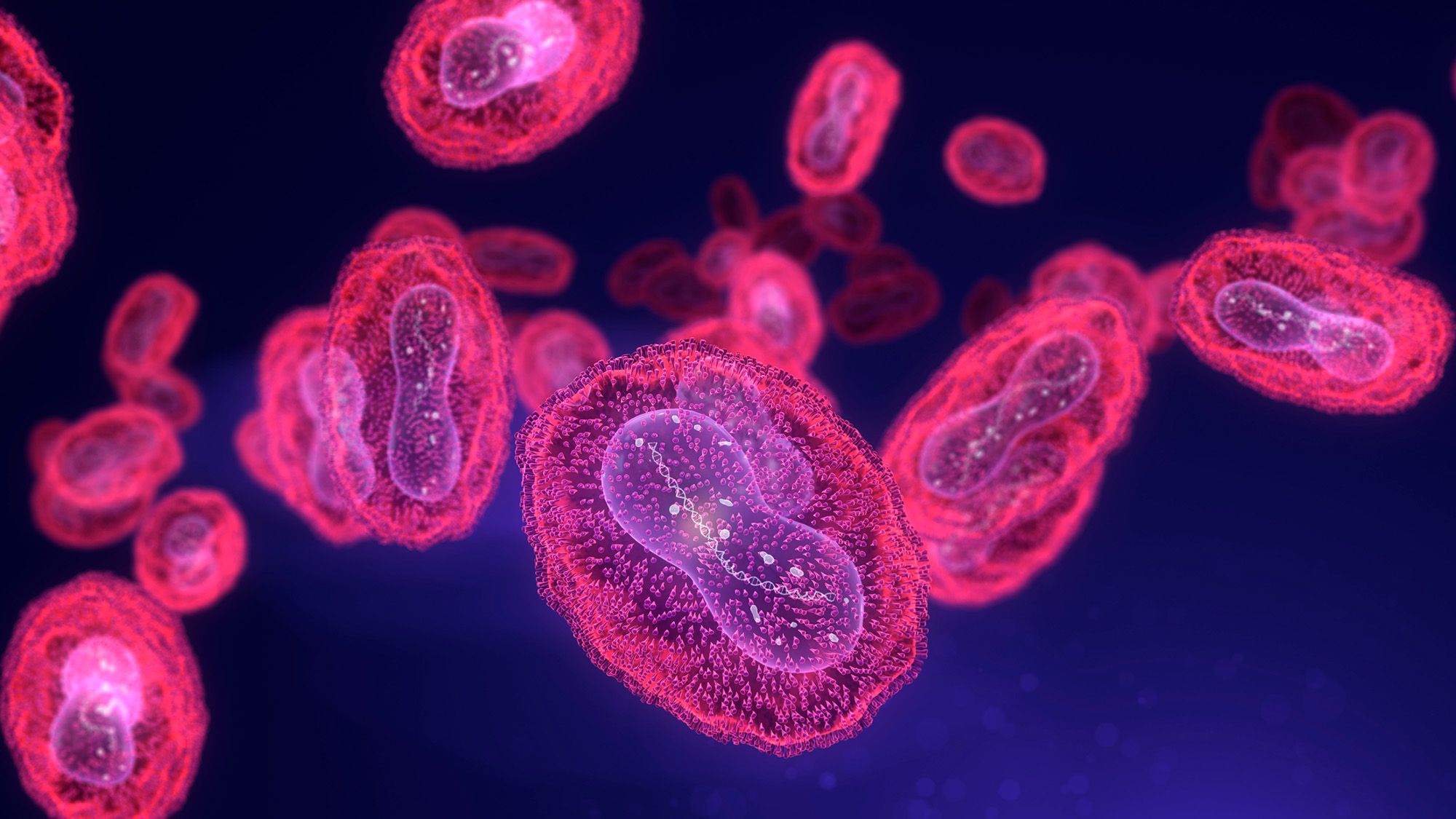
Mpox May Become Endemic in the U.S. as Cases Continue Despite Vaccine Availability
Mpox, formerly called monkeypox, spread around the world in 2022, causing tens of thousands of cases in countries where the infection had previously been rare. Although the disease has largely disappeared from headlines, it continues to circulate in the United States—and recent data suggests it may eventually become endemic, meaning it could persist consistently in the country.
Mpox previously appeared in the U.S. sporadically through travelers who had visited African countries where the disease is endemic and through imported infected animals that transmitted the virus to people.
Cases have fallen substantially since the 2022 outbreak, but they have not disappeared. A report published in August found approximately 2,800 U.S. cases in 2024 and more than 2,500 in 2025. Only a small fraction of those cases were linked to travel, and nearly all analyzed viral samples descended from the strain that caused the 2022 outbreak.
In other words, once mpox arrived in the United States, it never completely went away.
“There’s no set threshold for what constitutes endemicity of monkeypox virus (MPXV) in the United States. But each year provides further evidence of this transition.”
Ryan Standford, epidemiologist with the CDC’s Poxvirus and Rabies Branch
Why is mpox still spreading in the U.S.?
Experts say one likely explanation is that too few people at increased risk have received both doses of the mpox vaccine, JYNNEOS. Together, the two doses are estimated to be 66% to 90% effective.
However, low vaccination coverage may not be the only reason mpox continues to circulate. Researchers are still investigating how the virus has managed to persist at relatively low levels across the country.
“We don’t quite know how it’s able to persist at such low numbers across the entire country,” said Joel Wertheim, a professor of medicine in the Division of Infectious Diseases and Global Public Health at the University of California, San Diego.
Public health efforts have also declined since the emergency phase of the 2022 outbreak ended. Without sustained vaccination, testing, surveillance and education, eliminating mpox from the U.S. is unlikely.
“We have vaccines, testing, and a much stronger understanding of the disease than we did in 2022,” Dr. Demetre Daskalakis, chief medical officer of Callen-Lorde, told Live Science. “Our focus now should be making sure those tools remain accessible, especially for communities that continue to face ongoing risk.”
People at increased risk should know that mpox has not disappeared.
Who is at risk of mpox in the United States?
In the U.S., mpox has primarily affected men who have sex with men and their sexual partners. Current vaccine recommendations are focused on this group and other people at increased risk.
Mpox primarily spreads through close person-to-person contact, including contact during sex. Men who have sex with men are not inherently more likely to become infected. Instead, the pattern reflects the fact that the 2022 outbreak began within a particular sexual network and has continued within that network.
“The mpox virus rediscovered the same transmission network that HIV had explored decades earlier,” Wertheim said.
In a paper published in 2025, Wertheim and his colleagues described how mpox spread through densely connected clusters in New York City during the 2022 outbreak. As people in those networks gained immunity through infection or vaccination, case numbers fell to the persistent trickle seen today.
Wertheim said he was not surprised that mpox has remained largely within the same network rather than spreading widely into new groups.
“From an evolutionary, ecological perspective, it’s not hugely successful. It’s sort of barely hanging on as an STI.”
Joel Wertheim, University of California, San Diego
How vaccination affects mpox transmission
The CDC’s Center for Forecasting and Outbreak Analytics modeled how much immunity may be needed to stop mpox transmission among people at increased risk.
Researchers estimated that group by counting men who have sex with men who either take HIV-preventing medication or have HIV, then adding 25% to account for other people in the same sexual network. The total was estimated at approximately 2 million people.
According to the CDC’s modeling, between 21% and 35% of that group would need immunity from vaccination or previous infection to prevent an outbreak larger than the one in 2022. If more than 50% had immunity, the probability of sustained local transmission would become very small.
Current case numbers suggest the U.S. has not reached that 50% threshold, which would amount to roughly 1 million complete vaccinations or past infections.
The August report also suggests that vaccination coverage remains too low. Vaccination status was missing for approximately 62% of reported cases. Among cases with known vaccination status, 76% occurred in unvaccinated people, 10% in people who had received one dose and 14% in people who had received two doses.
In a subset of 860 cases, unvaccinated people had nearly 10 times higher odds of hospitalization for mpox than fully vaccinated people.
Public health attention and mpox vaccination have declined
It is difficult to determine how many people at increased risk are fully vaccinated because national vaccination data is no longer being tracked consistently.
“My understanding is that there’s no mandatory reporting on mpox vaccination data,” Wertheim said.
The CDC previously monitored vaccination trends by comparing the number of vaccinated people with the estimated at-risk population. That tracking stopped in early 2024, when approximately 23% of the at-risk population had received both vaccine doses.
Some states, including New York, once required clinicians to report mpox vaccination numbers to state health departments. That reporting is now voluntary, according to a spokesperson for the New York State Department of Health.
“As the emergency phase faded from public attention, awareness and risk perception may have declined,” Daskalakis said. Public health messaging about mpox and vaccination has also decreased.
Daskalakis said some federal health officials had removed plain-language mpox guidance from government websites, making it more difficult to maintain public awareness and support LGBTQ+ health initiatives.
Why the mpox vaccine does not eliminate all infections
Although JYNNEOS substantially lowers the risk of severe mpox, it is not perfect, said Rachel Roper, a professor of microbiology and immunology at East Carolina University.
Mpox can enter the body through broken skin, the respiratory tract or mucous membranes, including the tissues lining the eyes, nose, mouth, anus and genitals. The vaccine produces strong systemic immunity, but it may provide less protection against the virus’s initial effects at mucous membranes.
Because mpox is largely spreading through sexual contact involving mucous membranes, this gap in protection may contribute to continued transmission.
There is also some evidence that asymptomatic infection may contribute to transmission, Daskalakis said. If people can spread the virus without obvious symptoms, eliminating local transmission becomes more difficult.
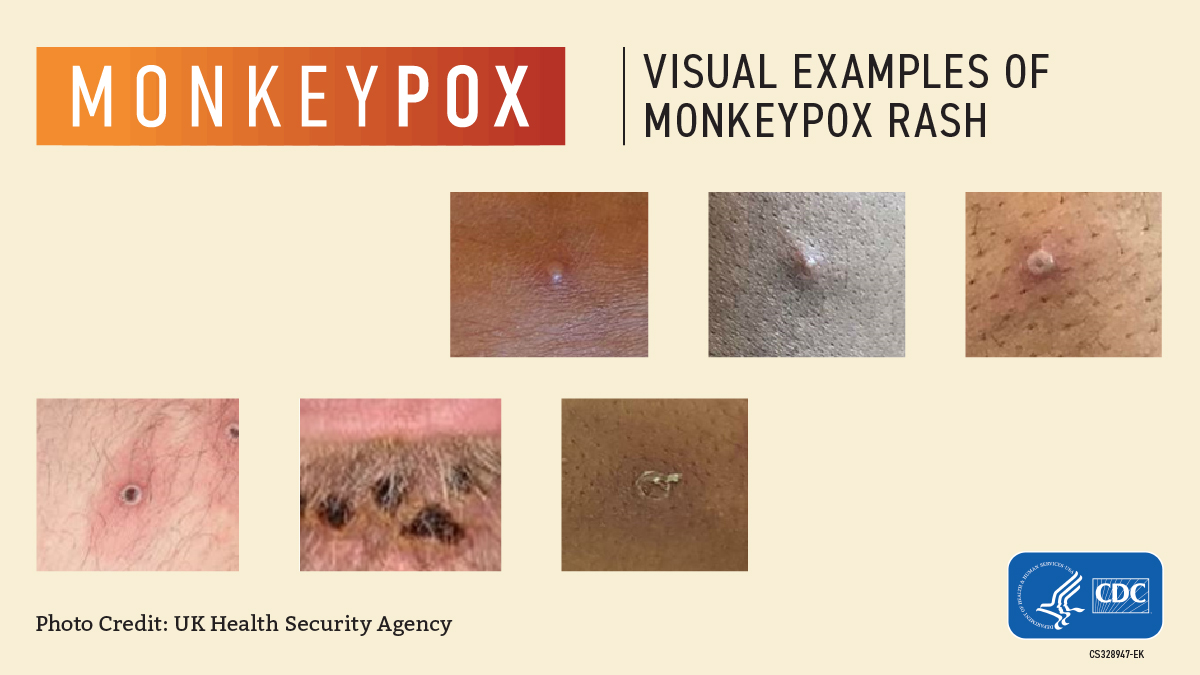
What can be done to prevent mpox from becoming endemic?
Because mpox is already established in some U.S. sexual networks, preventing endemic transmission entirely may become increasingly difficult, Standford said.
Federal funding cuts could further weaken efforts to control the virus, Daskalakis said. Potentially affected services include Medicaid, mental-health programs, housing support and HIV services such as the Ryan White HIV/AIDS Program.
Still, current trends do not suggest a return to 2022 case levels. Just under 1,000 mpox cases have been reported in the U.S. so far in 2026, according to the CDC. Monthly case numbers have generally declined, suggesting that the situation is currently better than it was in 2025.
“We sort of seem to be on this razor’s edge between endemicity and extinction. And it’s not really clear which way it’ll go.”
Joel Wertheim, University of California, San Diego
Preventing sustained transmission will require healthcare providers to remain prepared to identify and manage mpox cases. Clear communication about vaccination will also be essential.
“One lesson from 2022 was that trusted messengers matter,” Daskalakis said. Callen-Lorde works with LGBTQ+ communities to provide information and vaccination opportunities through routine healthcare visits, sexual health services, HIV prevention programs and community outreach.
Beyond vaccination, healthcare providers should educate patients about how mpox spreads and how to reduce their risk.
“Vaccination coverage is a very important factor, but it is not the only one,” Standford said.
Ending local mpox transmission will also require continued investment in disease surveillance, vaccination, testing and treatment capacity. The JYNNEOS vaccine is commercially available to clinics and remains in adequate supply, Daskalakis said.
“The fact that we’re seeing ongoing circulation underscores the need for sustained prevention efforts rather than viewing mpox as a resolved public health issue,” he said. “Infectious diseases don’t disappear simply because public attention shifts.”
This article is for informational purposes only and is not intended to offer medical advice.
Source: Sandford, R., Tuttle, A., Aeschleman, L., et al. (2026), “Monkeypox Virus Surveillance — United States, 2024–2025,” Morbidity and Mortality Weekly Report, 75:406–412.
Source: www.livescience.com