


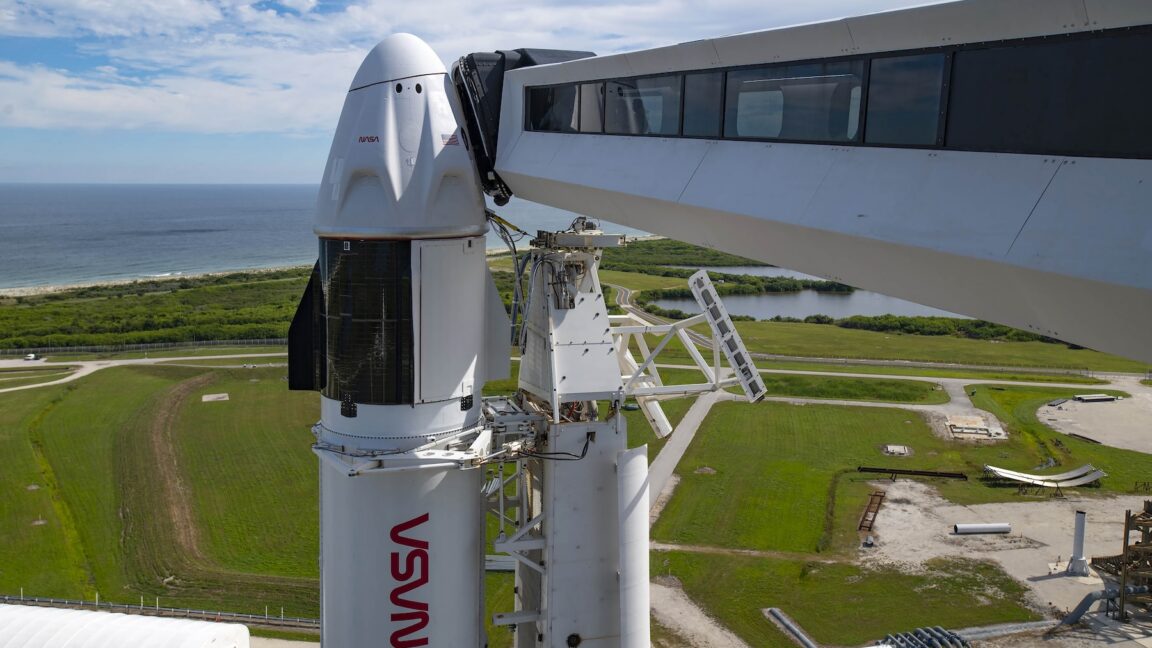
NASA’s Low Earth Orbit Economy Faces a New Crisis
For two decades, NASA has worked to build a commercial economy in low Earth orbit, primarily by supporting operations at the International Space Station (ISS).
Twenty years ago, NASA launched a program to help develop private spacecraft capable of transporting cargo to the space station. The agency aimed to “facilitate private sector efforts to develop and operate safe, reliable, and cost-effective commercial space transportation systems,” according to its program documentation.
In recent years, that goal has expanded into a broader commercial space ecosystem encompassing transportation, private space stations, manufacturing, tourism, and other activities. NASA was expected to serve as one of many customers in this emerging low Earth orbit market.
In April 2024, NASA described its vision this way:
“NASA supports a robust commercial space economy that advances American industry and fosters technology discovery through space work and research. NASA remains committed to fostering innovation and collaboration within America’s space industry.”
Just two years later, however, questions are growing about whether that vision is feasible. As the second space race intensifies, NASA has shifted its attention toward establishing a robust base on the Moon. SpaceX has also announced that it no longer wants to remain in the business of sending astronauts into low Earth orbit.
As a result, ambitious plans for a human-centered low Earth orbit economy appear to be taking a new direction.
What happened to NASA’s commercial space economy?
Ars spoke with several industry insiders to better understand what is driving the uncertainty and why it matters for the future of commercial spaceflight.
What caused the crisis?
In recent months, SpaceX has made clear to NASA that it no longer wants to fly its Crew Dragon spacecraft or Falcon 9 rocket on missions to low Earth orbit.
The company has agreed to support the International Space Station through 2030, after which it plans to retire Crew Dragon. SpaceX has also notified companies developing private low Earth orbit space stations—including Axiom Space, Voyager Space, and Vasto Space—that they cannot order Crew Dragon missions to their habitats.
That decision raises significant questions about the future of private astronaut missions, commercial space stations, and NASA’s long-running effort to establish a sustainable economy in low Earth orbit.
Source: arstechnica.com