


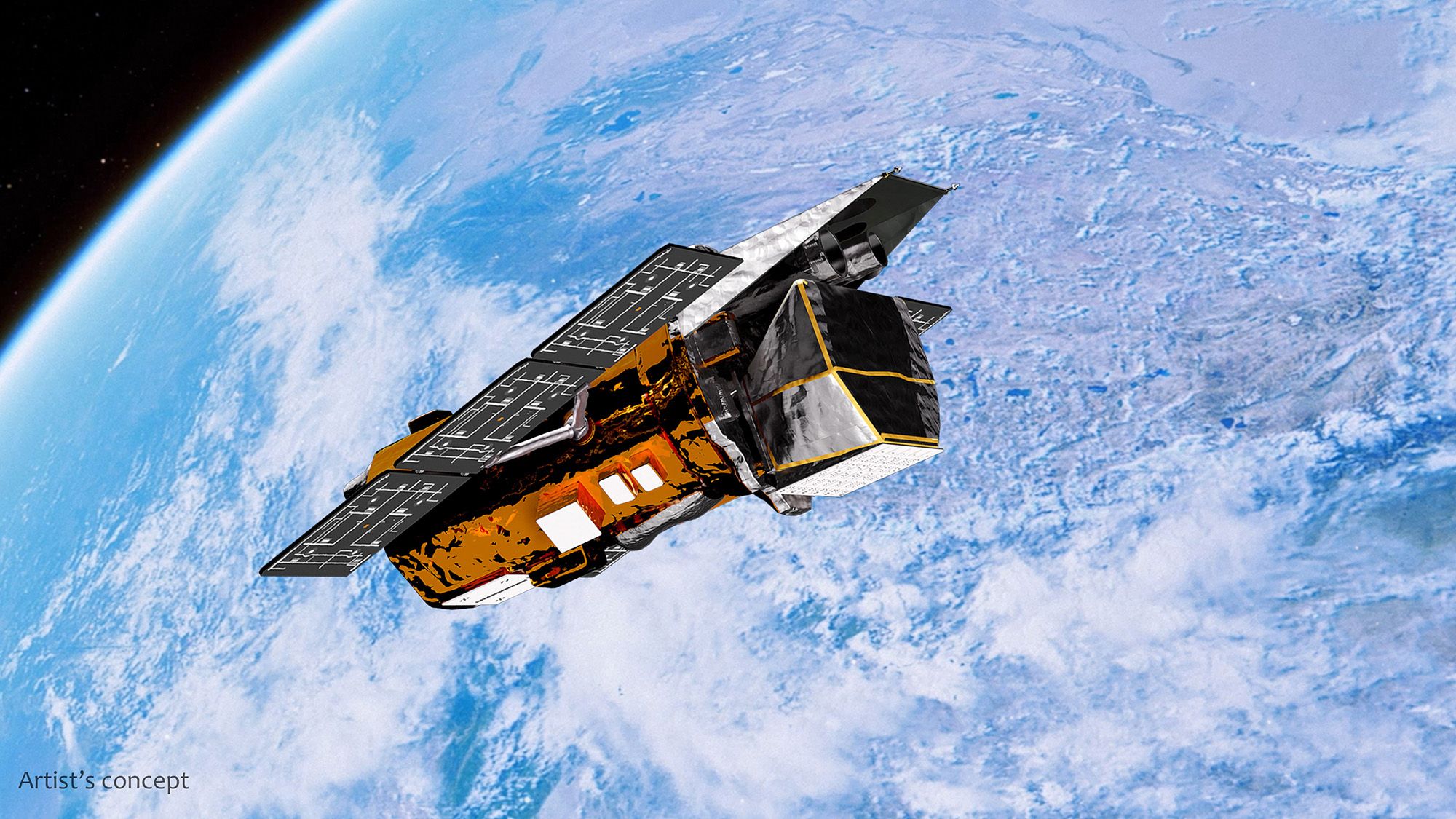
NASA’s Neil Gehrels Swift Observatory has ended its scientific mission after more than 20 years of tracking gamma-ray bursts and other rapidly changing cosmic events. The pioneering space telescope stopped making reliable observations after its orbit decayed to about 171 miles (275 kilometers) above Earth, and NASA expects it to re-enter the atmosphere and break apart within the next few weeks.
Swift’s mission comes to an end
According to a NASA announcement, the Swift team suspended scientific operations on Tuesday, October 20, after the observatory’s orbit became too low for dependable measurements of the universe.
Swift has been losing altitude for some time, partly because intense solar activity increases atmospheric drag on satellites in low Earth orbit. The spacecraft’s orbit is now too low for it to maintain reliable observations, and it will continue descending until it reaches the point of re-entry.
NASA expects Swift to break up as it passes through Earth’s atmosphere “within the next few weeks.”
A mission that lasted far beyond its original plan
NASA launched Swift in November 2004 with a primary mission planned to last just two years. Instead, the observatory operated for 22 years—more than 10 times its expected lifespan.
During that time, Swift observed thousands of explosive cosmic events, including supernovae and intense gamma-ray bursts. NASA says data from the mission contributed to about 7,000 scientific papers, including research into stellar destruction associated with black holes.
Swift’s rapid response transformed observations
Designed as a multiwavelength observatory, Swift studied the sky in optical, ultraviolet and X-ray light. This combination allowed it to track the aftermath of powerful bursts of energy.
Its ability to respond quickly was one of its greatest advantages. When an explosion appeared somewhere in the sky, engineers could point Swift toward it and begin investigating the event within minutes, NASA said.
“Swift was designed as a satellite specifically for the study of gamma-ray bursts, explosions that come and go so quickly that we couldn’t aim them with large telescopes to see the details,” S. Bradley Cenko, the mission’s principal investigator at NASA Goddard Space Flight Center, said in a statement.
Swift’s rapid observations “played a major role in advancing our understanding of our changing universe and were part of a revolution in astrophysics,” he added.
Sean Domagal-Goldman, director of the Astrophysics Division at NASA Headquarters, also recognized the observatory’s contribution to astrophysics.
Source: www.livescience.com