


8
Denisovan Fossils Found in China Reveal the Ancient Human Relative’s Forearm for the First Time
Scientists have identified five Denisovan fossils from Bianfu Cave in China’s Yunnan province, expanding the known range of this mysterious archaic human group and providing the first direct evidence of Denisovan forearm anatomy.
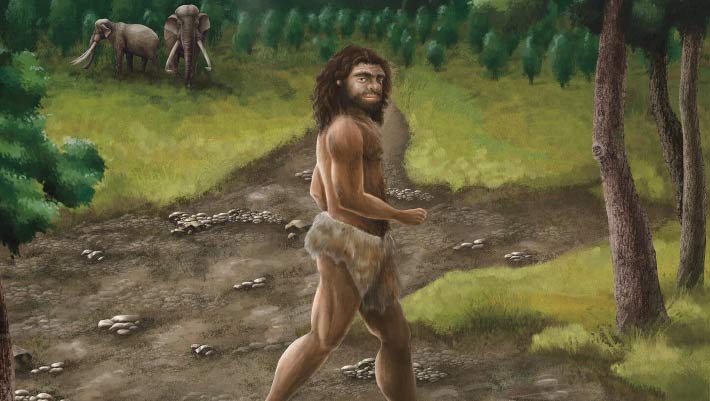
An artist’s reconstruction of Denisovans during the Pleistocene. Image credit: Cheng-Han Sun.
Denisovans are an extinct group of archaic humans known primarily through DNA recovered from fossils discovered in Asia. Although genetic evidence suggests that Denisovans occupied a broad region, their physical appearance and adaptations remain poorly understood because relatively few fossils have been identified.
“The Denisovans are a genetically defined group of archaic humans that are thought to have been widely distributed throughout Asia,” said lead author Dr. Qiao Meifu of the Institute of Vertebrate Paleontology and Paleoanthropology at the Chinese Academy of Sciences.
“However, distributional disparities have long existed in southwestern China because of the limited number of fossil remains, especially postcranial fossils.”
To investigate the site, researchers analyzed more than 60,000 bone fragments recovered from Bianfu Cave in Yunnan province. Using zooarchaeology by mass spectrometry and proteomic sequence analysis, they identified five specimens as Denisovan remains.
The fossils include two skull fragments, part of a radius—the bone located in the forearm—and two teeth. Researchers estimate that the remains date from approximately 190,000 to 70,000 years ago.
The discovery makes Bianfu Cave one of the richest Denisovan sites outside Siberia. It also provides important evidence about how these ancient humans may have adapted to different environments across Asia.
First Denisovan Radius Reveals Unique Limb Anatomy
The Denisovan radius is the most significant find among the newly identified fossils. Until now, Denisovan limb anatomy had been inferred mainly from a finger bone and several ribs discovered at other sites.
The forearm fragment displays a distinctive combination of characteristics. Its head and neck are relatively robust and resemble features observed in Neanderthals, while the overall shape and cross-section are more similar to those of modern humans.
This combination suggests that Denisovans possessed a unique pattern of physical adaptations that may have helped them survive in diverse Asian environments.
The skull fragments also show thick bone and features comparable to those found in Homo heidelbergensis and other archaic human groups from East Asia.
Denisovan Range Extended Across Asia
Bianfu Cave lies along a major migration corridor connecting the Qinghai-Tibetan Plateau with eastern, southern and southeastern Asia. Its location helps fill a significant gap in the fossil record of Denisovan populations.
“This fills a critical geographic gap in the known distribution of Denisovans,” the researchers said.
The new evidence indicates that Denisovans occupied a vast area stretching from Siberia and northeastern China through the Qinghai-Tibetan Plateau and into the Taiwan Strait region and the Yunnan-Guizhou Plateau in southwestern China.
The findings provide new clues about Denisovan evolution, migration and anatomy, while highlighting the importance of southwestern China for understanding the history of archaic humans in Asia.
The study was published in the journal Nature.
_____
H. Rao and colleagues. Ancient proteins have identified various Denisovan sites in southwestern China. Nature, published September 9, 2026. doi: 10.1038/s41586-026-10976-9
Source: www.sci.news