


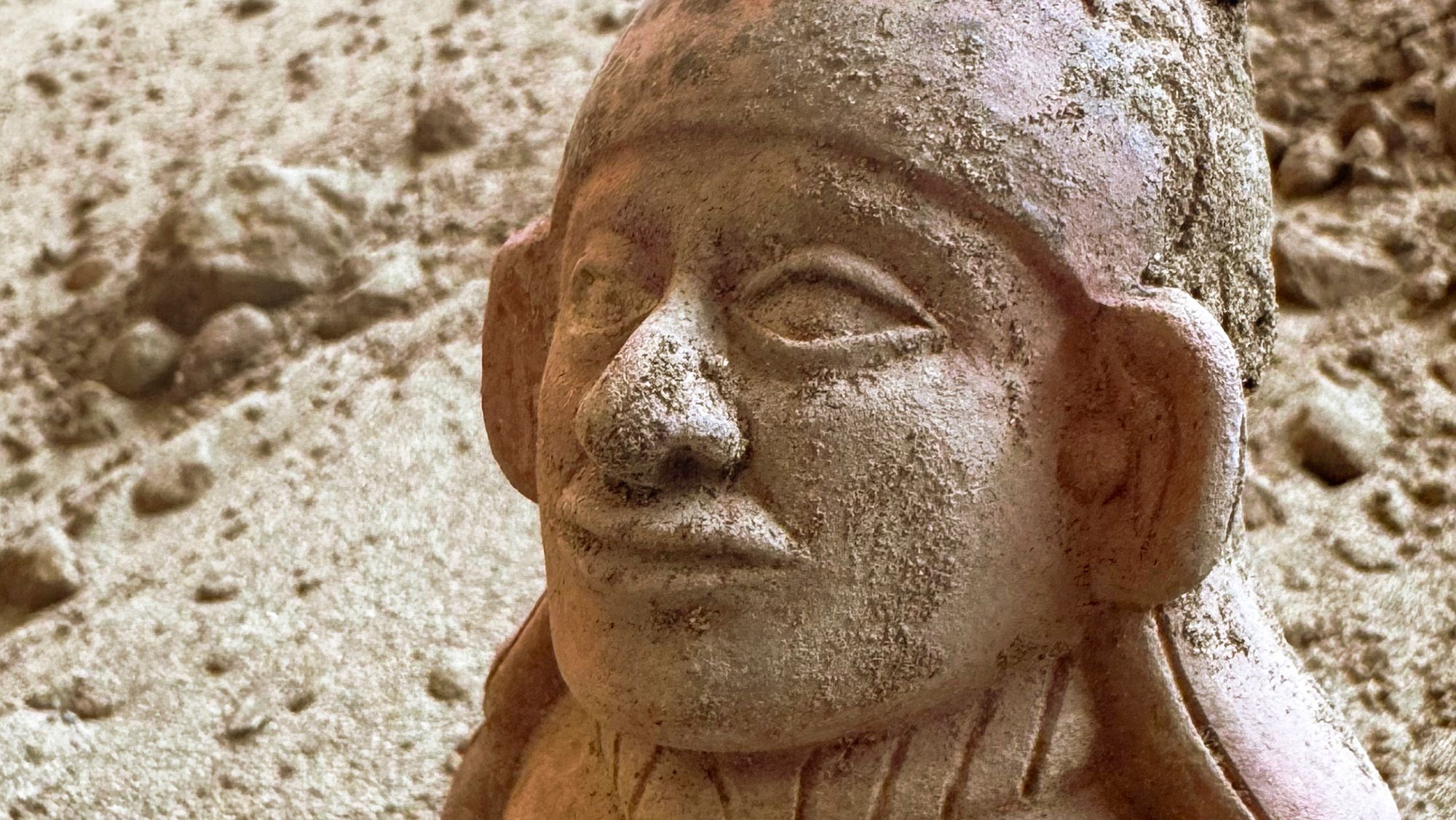
Archaeologists in northern Peru have uncovered an elaborate 1,500-year-old tomb containing the remains of a child who may have held an elite position in Moche society. The burial included 32 ceramic objects, two copper artifacts and vessels depicting defeated warriors and supernatural figures—an unusual combination for a child’s grave that is prompting researchers to reconsider Moche funeral practices.
An unusually lavish burial
The Moche, also known as the Mochica, developed along the northern coast of present-day Peru from the 3rd to 9th century. They transformed desert landscapes into agricultural land and left behind monumental temples, waterways, pottery, metalwork, textiles and distinctive art. Although the Moche had no written language, their material culture provides evidence of a complex society.
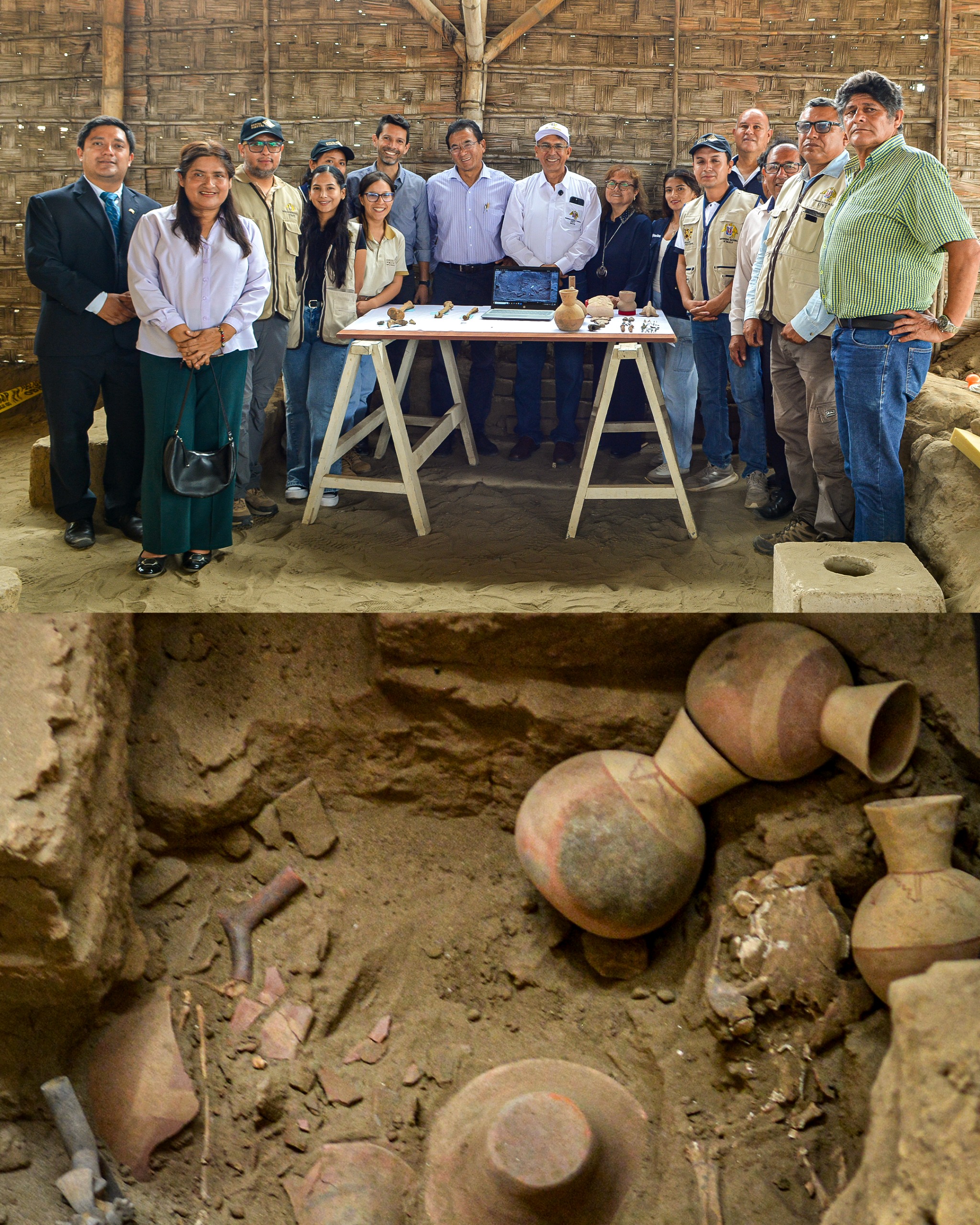
The excavation team found the tomb within the Ule Platform at the Huacas de Moche archaeological site. The platform is a mausoleum attached to the Huaca de la Luna temple, whose courtyard archaeologists call the “Court of the Serpent.”
More than 80 burials have been discovered at the site so far, but this is the only known child burial there to have received such an elaborate assemblage. The grave dates to the sixth or seventh century, according to Carlos Rengifo-Chunga, head of the Huacas de Moche Archaeological Project at the University of Trujillo.
The grave was large compared with the child’s remains—Rengifo-Chunga said an adult could easily have fit inside it. The small skeleton likely belonged to an infant no more than 2 years old. The child’s sex is unknown.
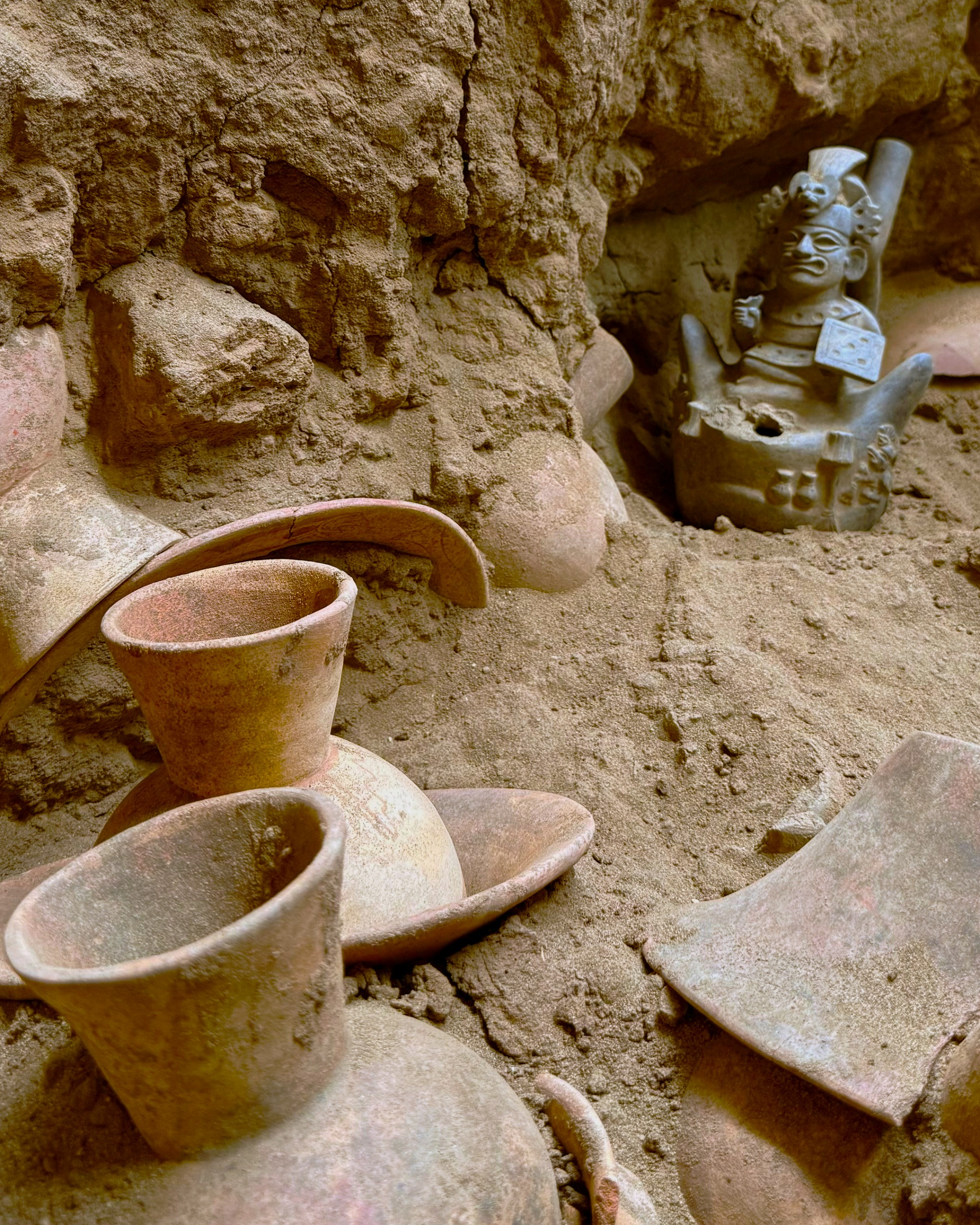
The burial goods included 32 pieces of Moche pottery, as well as two copper objects: a mask-like disk that covered the child’s face and a crescent-shaped object placed over the feet. The pottery included vessels showing prisoners with ropes around their necks and figures representing gods.
Rengifo-Chunga said the child’s elaborate funeral ritual, the use of copper and the tomb’s location suggest that the child belonged to an elite class of Moche society.
Images of warriors and sacrifice
Two of the ceramic objects depict defeated warriors connected with what researchers call “combat rituals,” a recurring theme in Moche art. In these scenes, two warriors fight; the loser is stripped of clothing and weapons, tied by the neck with a rope and offered as a human sacrifice, Rengifo-Chunga said.
“Usually, this type of vessel is thought to represent something related to the deceased’s life,” Rengifo-Chunga said. For example, such a vessel might indicate that a person participated in battles.
Young children were not permitted to take part in these activities, however, and archaeologists would not normally expect to find elements of adult rituals in a child’s burial. “This expands our knowledge of Moche funeral practices,” Rengifo-Chunga said.
A possible bird-human deity
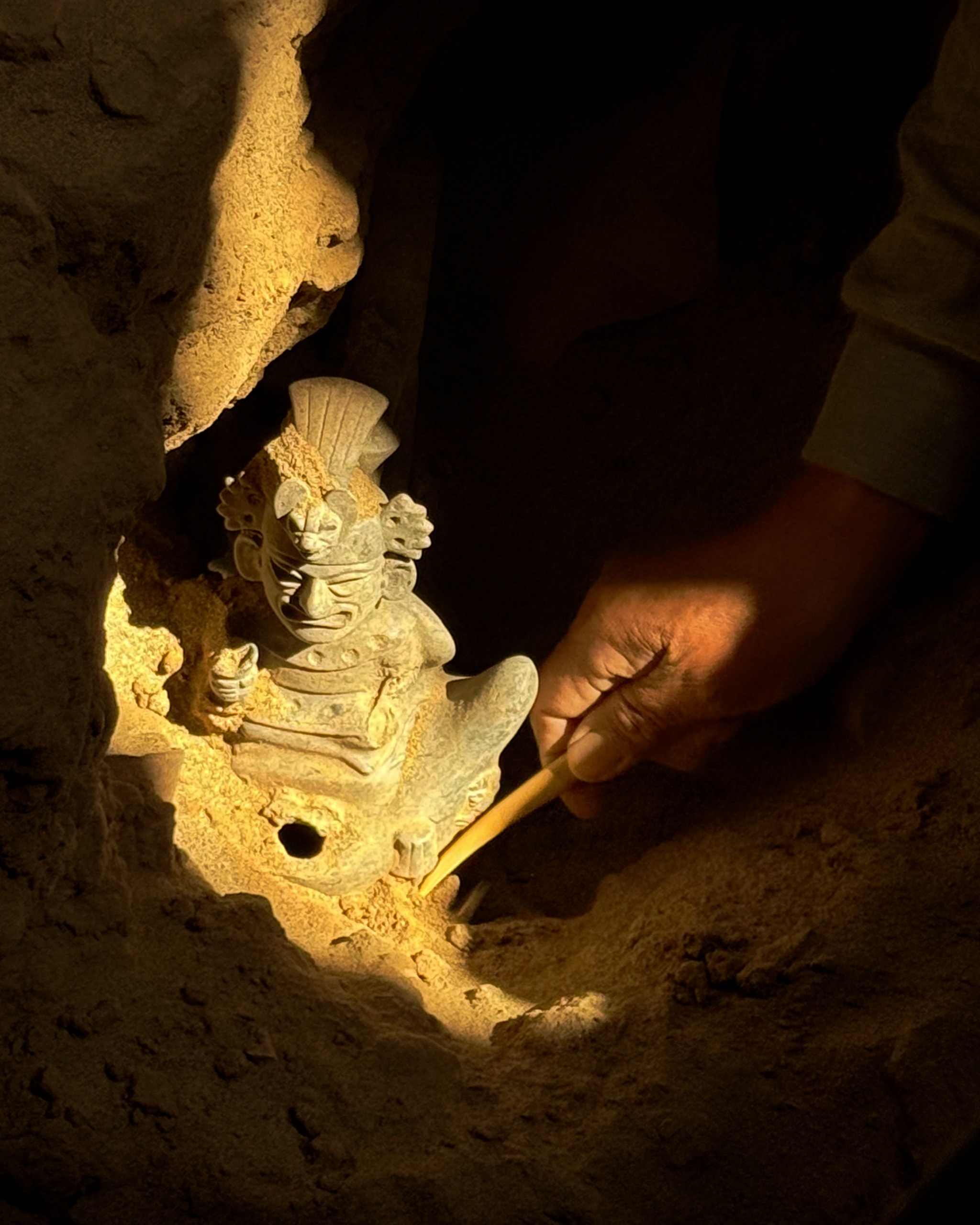
Another vessel depicts a putative god with a human body, bird wings and a bird tail. The figure holds a square shield in one hand and a goblet in the other, while two bird “assistants” in ceremonial clothing stand nearby.
Some scholars might interpret the figure as a god in disguise, Rengifo-Chunga said. Researchers still need to determine whether it represents a known Moche deity or a previously unidentified addition to the Moche pantheon.
The discovery also contributes to a broader debate about Moche religion: whether the pantheon consisted of many distinct gods or a smaller number of deities capable of transforming into different forms. Moche portrait vessels, including examples discussed by the Metropolitan Museum of Art, are among the culture’s best-known artistic traditions.
The artifacts are currently being kept in a laboratory at the Santiago Uceda Castillo Museum in Peru, where they will undergo conservation treatment.
Source: www.livescience.com