


How Light-Sensitive Algae Helped Scientists Control Neurons
To understand what specialized neurons do, scientists need a way to control them and observe how an animal’s behavior changes. One approach is to hijack the cells’ signaling systems and force them to send ion-based impulses.
Why controlling neurons is difficult
The Nobel Committee notes that the basic idea behind this approach was clear enough that researchers tried several methods before developing optogenetics. However, the “easiest way” was far from easy.
Many early techniques were never widely adopted because they required inserting multiple genes, supplying nerve cells with highly specific chemicals, or using lasers powerful enough to physically damage cells.
The algae that helped unlock optogenetics
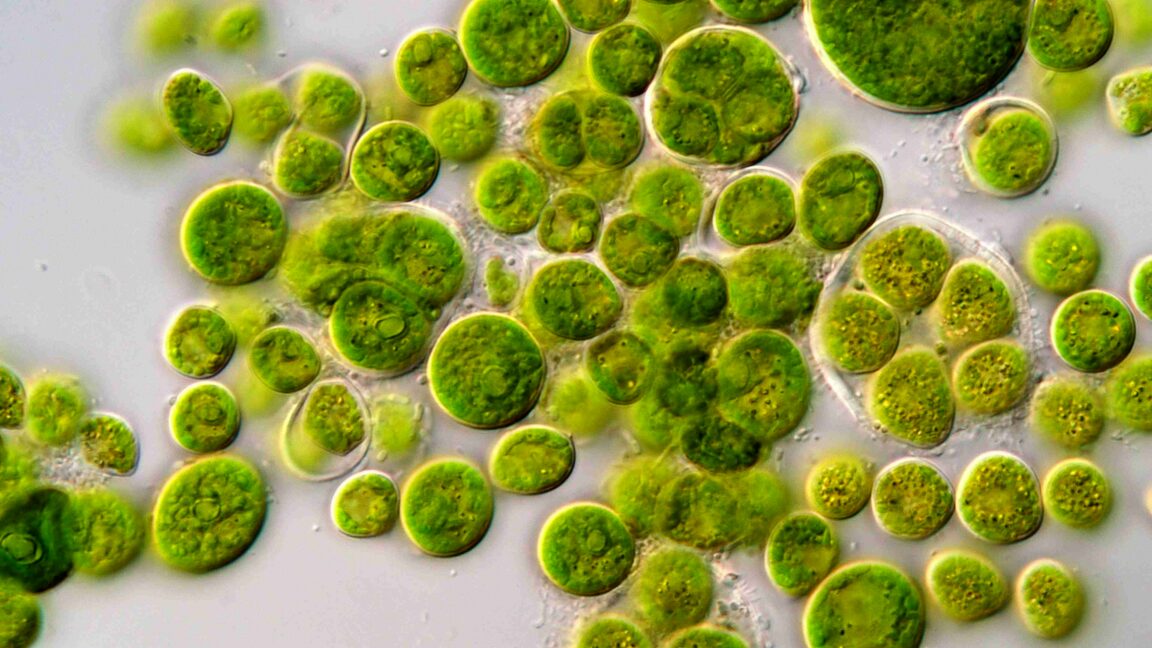
The breakthrough came from a single-celled alga called Chlamydomonas. Although each organism consists of just one cell, it has a complex structure, including two flagella that help it move and an eyespot that detects traveling light. Scientists had already studied Chlamydomonas as a model for understanding fundamental biological processes.
How light triggers ion flow
Ernst Hegemann, who was working at Humboldt University in Berlin at the time, and his colleagues connected electrodes to Chlamydomonas cells. They found that a flash of light caused a rapid influx of ions, suggesting that light triggered the opening of ion channels.
When other scientists began analyzing the messenger RNA produced by Chlamydomonas, Hegemann identified several genes resembling the light-activated ion pumps found in archaeal species.
Using RNA interference to confirm the genes’ role
Researchers suspected that these genes caused the light-induced ion flow. Hegemann used RNA interference to suppress their activity, which restricted the movement of light-sensitive ions. The result provided clear evidence that the genes were involved in light sensing in the organism.
This work helped establish the biological foundation for optogenetics: using light-sensitive proteins to control ion movement and, ultimately, the activity of nerve cells.
Source: arstechnica.com