


Why a Suspected Plague Death in Siberia Is Unlikely to Spark a Wider Outbreak
A researcher’s death at a laboratory in Irkutsk has raised concerns about a possible pneumonic plague outbreak. Biosecurity experts say the public-health risk is low, but warn that a lack of transparency could undermine trust.
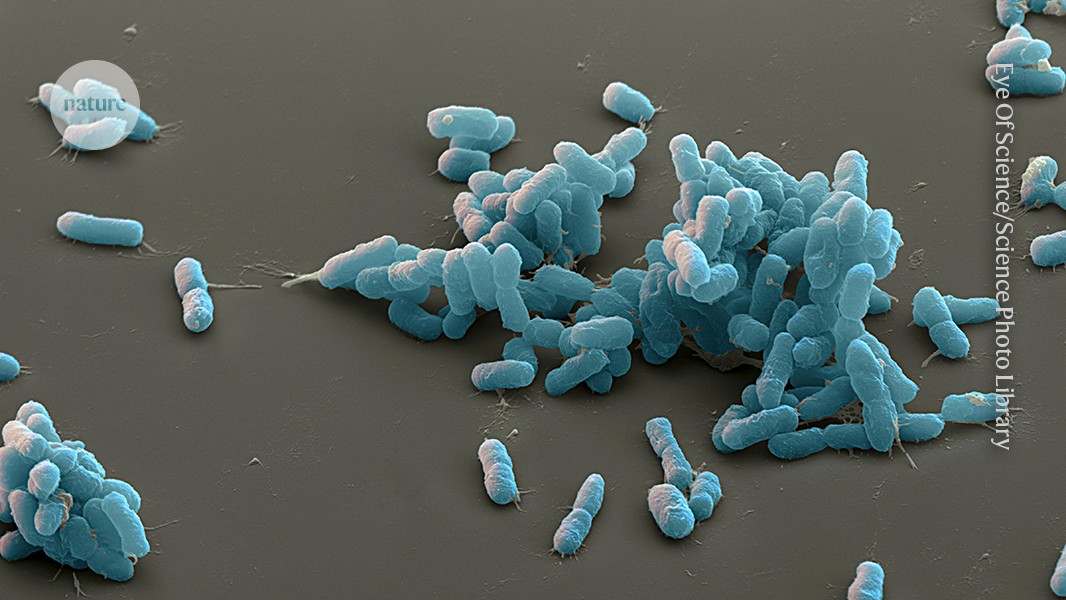
The plague bacterium Yersinia pestis, shown in an electron microscopy image, circulates naturally in wild rodents in some parts of the world.
Credit: Eye Of Science/Science Photo Library
The death of a 28-year-old researcher in a Siberian laboratory from probable pneumonic plague has sparked international concern about a possible wider outbreak. Biosecurity experts say that scenario is highly unlikely. Their main concern is the lack of transparency surrounding the incident.
According to news reports, around 200 people at the laboratory may have been exposed and quarantined. Russian public-health regulators, however, said there was “no emergency” at the Irkutsk Institute for Epidemic Control and that the researcher died from pneumonia of “unknown cause.”
The combination of official reticence and unconfirmed rumors about a laboratory accident has prompted increased demands for epidemiological data from the World Health Organization (WHO) and the US government.
It was not until 7 October—five days after the researcher’s death—that Russian authorities revealed she had been vaccinated against plague. They also said that “thousands of tests” had shown that neither she nor other people who may have been infected had tested positive for the dangerous pathogen.
Russia has dismissed concerns about secrecy. A Kremlin official told CNN that the country was continuing to provide information to the WHO “in accordance with established practice.”
The risk of a wider outbreak is minimal. The bacteria that cause plague can be treated with antibiotics. Nevertheless, the incident highlights vulnerabilities in global disease surveillance, says Gregory Koblenz, a biosecurity policy expert and laboratory-safety researcher at George Mason University near Washington, DC.
Nature spoke to Koblenz about why fears of a pandemic are misplaced—and why government secrecy can be dangerous during incidents involving high-risk pathogens.

Gregory Koblenz studies laboratory safety at George Mason University near Washington, DC.
Credit: Rod Lamkey/Abaca Press/Shutterstock
Why a suspected plague case is unlikely to become a pandemic
The Black Death occurred around 600 years ago, when sanitation and modern medicine were far less advanced. Today, public-health systems are much better equipped to respond to epidemics.
After the COVID-19 pandemic, some people have speculated that the incident could become a new coronavirus-like crisis. SARS-CoV-2 was a new virus with poorly understood immunology, and there were no established antiviral drugs or vaccines when it emerged.
Plague, by contrast, is a well-studied and well-characterized bacterial disease. Several antibiotics can treat it, and vaccines are available. The WHO said during a press briefing on 6 October that the risk to people living in Irkutsk was low, the risk across Russia was even lower, and the risk to Europe and the rest of the world was very low.
Read the WHO’s briefing on the suspected plague death in Irkutsk.
Is there evidence that the Irkutsk laboratory was researching biological weapons?
There are legitimate public-health reasons to conduct research on plague because the disease is endemic in parts of the region. Laboratories may study Yersinia pestis to develop diagnostic and detection methods.
Koblenz says he is not aware of historical evidence linking the Irkutsk laboratory to Russia’s biological-weapons programme. Russia has at least three known military facilities conducting biological-weapons research, he says, making those facilities the main hubs for such activities.
It is therefore unhelpful, he argues, to conflate this incident at a public-health institute with Russia’s biological-weapons research. The idea that all public-health laboratories are secretly involved in biological-weapons development is unfounded.
Separately, Russia inherited the world’s largest biological-weapons programme after the Soviet Union collapsed. For roughly the past decade, the programme has been updated, according to a US State Department report. This is a serious concern because it would violate the 1972 Biological Weapons Convention, which internationally banned the development, production and stockpiling of biological weapons.
Source: www.nature.com