


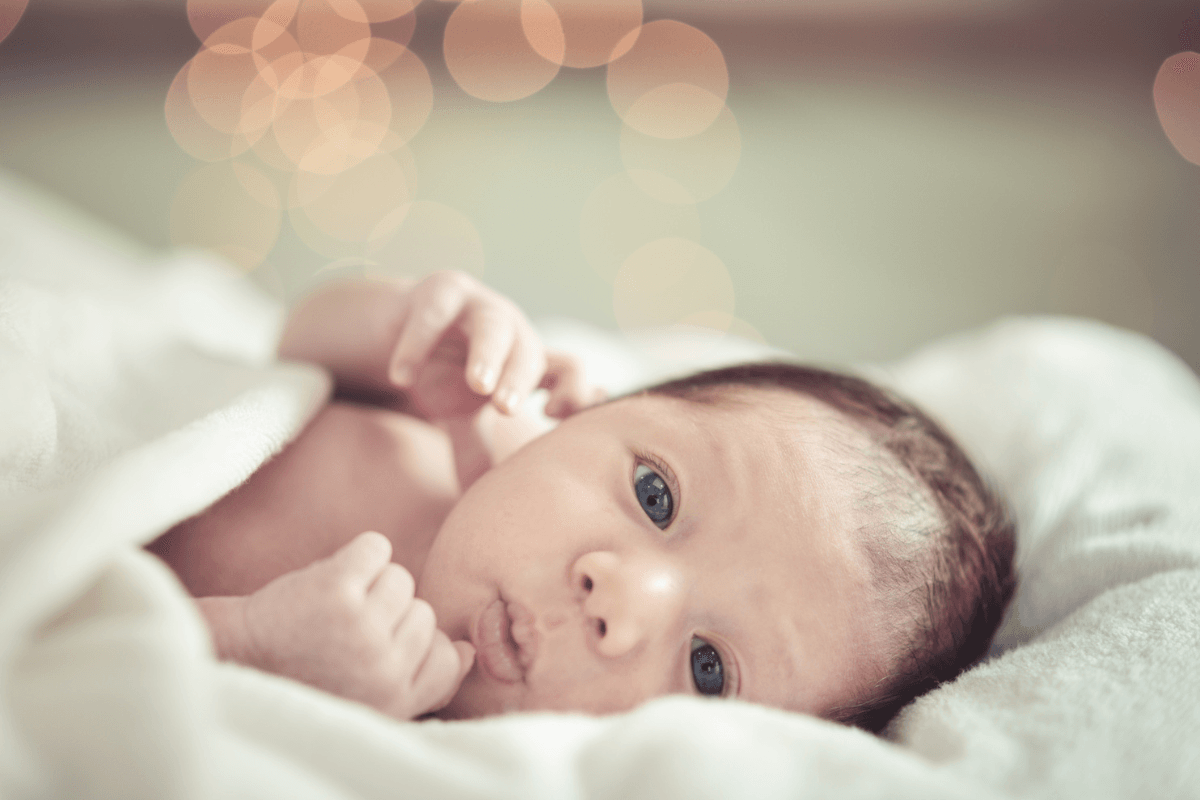
If you’re reading this, you likely consider yourself conscious. You probably also believe that your loved ones, acquaintances, and even your quirky neighbors share this awareness.
Given that they are human and act similarly to you, it’s intuitive to assume they perceive the world in comparable ways. But what about tiny infants who cannot articulate their experiences? None of us remember what it was like to be that young. So, are they conscious? And what about the unborn baby?
These thought-provoking questions have sparked the curiosity of neuroscientists in recent years. Neuroscientist Dr. Joel Froelich refers to it as the “frontier” of science.
“Surprisingly, there is little research on when consciousness begins,” he explains in BBC Science Focus. “For a long time, consciousness was mainly the territory of philosophers. It was almost taboo in neuroscience to study until about 10 or 20 years ago.”
However, neuroscientists have now developed fascinating methods to comprehend what consciousness might feel like in newborns and fetuses, aiming to answer the critical question: When does consciousness truly begin?
Investigating Consciousness Clusters
According to a study by Froelich and philosopher Tim Bain, insight into this profound question may emerge in the next five months.
Research indicates that babies exhibit clear signs of being awake and engaged with their surroundings.
The findings stem from a “cluster-based” approach. Instead of searching for a single marker of consciousness, this method identifies a combination of cues, such as patterns in brain activity, responses to stimuli, and other indicators of awareness.
“You shouldn’t rely solely on one marker,” Froelich cautions. “However, if multiple small markers converge, that’s a strong sign that consciousness may be at play.”
This raises the question: Are infants younger than 5 months unconscious? It becomes intriguing. While young infants may not exhibit every sign of consciousness, they do show some indicators, and akin markers may exist in fetuses.
Key Indicators of Consciousness
Neuroscientists like Froelich emphasize that one of the primary markers of a conscious brain is the default mode network. This network comprises brain regions that activate during rest, daydreaming, remembering, and planning for the future.
Using functional magnetic resonance imaging (fMRI), researchers have discovered that newborns possess a simplified version of this default mode network.
Additionally, the local-global effect is significant. Froelich explains that the ability to recognize changing patterns indicates working memory and possibly consciousness.
For instance, consider the following sequence:
- Beep beep beep
- Beep beep beep
- Beep beep beep
- Beep beep beep
Did you notice the alteration in the last sequence? Congratulations! That may suggest you’re conscious.
“By repeating this pattern multiple times, your brain learns to anticipate a deviation in the last tone,” Froelich elaborates. “When presented with a new sequence that breaks this expected pattern, even without local deviations, you can detect a global deviation—something that disrupts the norm.”
Dr. Froehlich observed this local and global effect in newborns, but research from the University of Tübingen, Germany, extends this further. They discovered that fetuses also show evidence of these phenomena. Employing a technique called magnetoencephalography, they measured the magnetic fields generated by fetal brain signals by placing a device on the pregnant abdomen.

Illuminating Fetal Awareness
Another potential marker of consciousness could be behavioral attention. Froelich and Bain observed that infants as young as 4 months can selectively direct their focus.
Encouragingly, there is preliminary evidence suggesting that fetuses can demonstrate similar behavior.
In a 2017 study, Professor Vincent Reid and a team from Lancaster University illuminated three lights—arranged to resemble eyes and a mouth—into the womb of pregnant women. Using ultrasound, they assessed the fetus’s reactions.
As the lights shifted, they noted that the fetus moved its head to focus on the lights.
“There’s no consensus on whether the fetus perceives something like a face or merely a blur of light,” Froelich remarks.
However, a team of neuroscientists in Turin, Italy, replicated the experiment and tracked fetal eye movements, discovering that fetal lenses do respond to light, possibly recognizing aspects like faces.
The Onset of Consciousness
These studies indicate that neuroscientists can perform assessments suggesting that early infants and even fetuses may possess some level of consciousness.
Yet, there’s a pressing ethical question regarding the commencement of consciousness and its implications for abortion rights. Froelich reassures, “It’s essential to note that our discussions primarily pertain to the last trimester of pregnancy, a period where legal abortion limits often apply. Most abortions occur significantly earlier, generally within the first trimester.”
Before the late stages of pregnancy, it is plausible that consciousness is still developing, happening prior to the maturation of the thalamus—a brain region linked to sensory processing and recognized as the gateway to consciousness.
The thalamus doesn’t establish connections with the cerebral cortex until around the third trimester, or 24 to 26 weeks of gestation,” Froelich explains. “Until then, as far as we understand, true consciousness—with sensations and perceptions—does not emerge.”
Nonetheless, research by neuroscientists like Froelich could significantly alter how we define consciousness in other entities.
As artificial intelligence progresses, Froelich suggests that it may be essential to formulate a comprehensive “theory of consciousness.” He asserts, “If we can determine ‘consciousness begins at this stage’ for humans, we can apply similar criteria to other systems to draw valid comparisons.”
Read More:
Source: www.sciencefocus.com