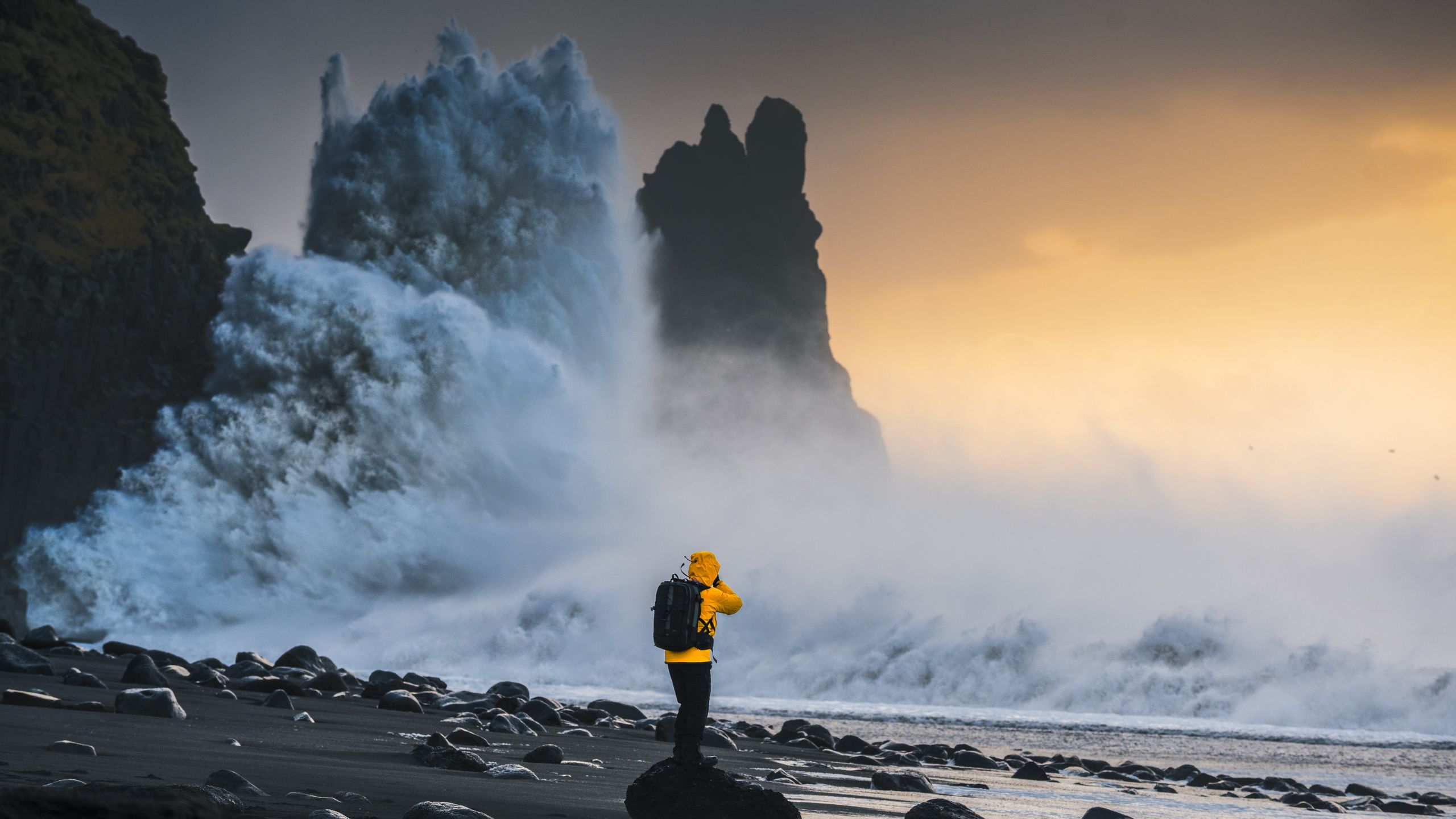
In an increasingly warming world, coastal flooding is becoming alarmingly frequent, threatening numerous communities that are now more vulnerable than ever due to climate change.
Recent studies indicate that what was once perceived as a once-in-a-century flood now occurs approximately every 10 years. This research, published on June 10 in the journal Nature Climate Change, reveals that human-induced climate change has significantly increased the frequency of extreme coastal sea level rises, quadrupling them since 1900.
The findings were shared alongside another study that confirmed significant human impacts on rising sea levels. A link to the study can be found in Scientific Progress. They reported that human activities fundamentally drove around 58% of extreme water level exceedances between 2000 and 2018, highlighting the impact of activities like storm surges and abnormal sea level rises.
Given the rising potential for ocean destruction of coastal communities, Live Science interviewed Senke Dangendorf, the lead author of the Nature Climate Change study, to learn more about future implications. Here’s what he discussed:
Senke Dangendorf is the David and Jane Flowery Associate Professor at Tulane University, specializing in River and Coastal Science and Engineering.
Patrick Pester: How do you distinguish between human-driven sea level rise and natural factors?
Senke Dangendorf: The foundation for this research relies heavily on observational data, though such data is often limited. We utilize over 100 tide gauges worldwide, providing multi-century records of sea level changes since the early 20th century. While we can conclude that sea levels are rising in these monitored areas, the broader context remains elusive. Thus, we deploy climate models used for projecting future changes.
When comparing these observations with model outputs, it’s crucial that the models accurately reflect real observations. Our study confirms that climate models effectively reproduce observed climate. This enables us to experiment with the models; for instance, by maintaining constant greenhouse gas levels and examining the effects of natural climate variations on observed changes.
Get the world’s most fascinating discoveries delivered straight to your inbox.
What once was a once-in-a-century event in 1900 has transformed into a situation where the global average has increased by 12-fold. In our experiments, we observed a significant human-driven influence, especially noted since the 1970s.
PP: What does this imply for coastal communities worldwide?
SD: A mere few centimeters of sea level increase might seem trivial, yet for those residing near coastlines, the ramifications are profound. I recall my time in Norfolk, Virginia, where communities thrived by the water in the 1950s and 60s. Flooding was almost nonexistent then, but escalating sea levels have amplified storm surges, leading to flooded roads that hinder commuting.
This can rapidly alter daily routines, and rising insurance costs exacerbate the burdens coastal communities face. Cumulatively, the financial toll can mirror that of a major hurricane’s landfall, making these floods a common experience and a direct result of rising sea levels.
For context, residents might only expect a once-in-a-century event to occur once in their lifetime, but those familiar with recent disasters like Hurricane Sandy may find the escalating frequency of such events as overwhelming and increasingly unmanageable.
PP: What are potential solutions?
SD: The opportunity exists to adapt. The silver lining is that we have confirmed human activities as the primary catalyst for these changes. This presents hope; if we choose to respond, we can initiate impactful actions.
We are currently addressing sea level rise, though responses to climate change often unfold slowly. Projections indicate that by 2060, anticipated changes will occur irrespective of current greenhouse gas emissions. While stopping emissions today will have lasting effects, we will still face rising sea levels. Therefore, it becomes essential to adapt while striving to mitigate climate change and prevent hazardous sea level increases.
As climate change accelerates, flooding becomes increasingly severe and damaging.
(Image credit: Roberto Westbrook via Getty Images)
PP: If sea levels remain on their upward trajectory, what will the world look like come 2060?
SD: According to the latest IPCC report, what was once deemed a once-in-a-century event could occur annually at 19% to 31% of tide stations by 2050. This indicates that in many regions, such floods could become commonplace.
Changes occur more rapidly at lower latitudes due to minimal climate variation. For example, the North Sea demonstrates a high tidal range, and while it can handle significant changes, the tropics are less adaptable to even a slight increase in sea levels.
To illustrate: imagine two hurdle runners. One represents the tropics, consistently leaping but always below the hurdle, while the other mirrors a variable North Sea runner, sometimes jumping high yet often falling short. A lowering of the hurdle mirrors rising sea levels, affecting the former far more than the latter. Consistent conditions make the tropics more susceptible to these changes.
Editor’s note: This interview has been edited and condensed for clarity.