


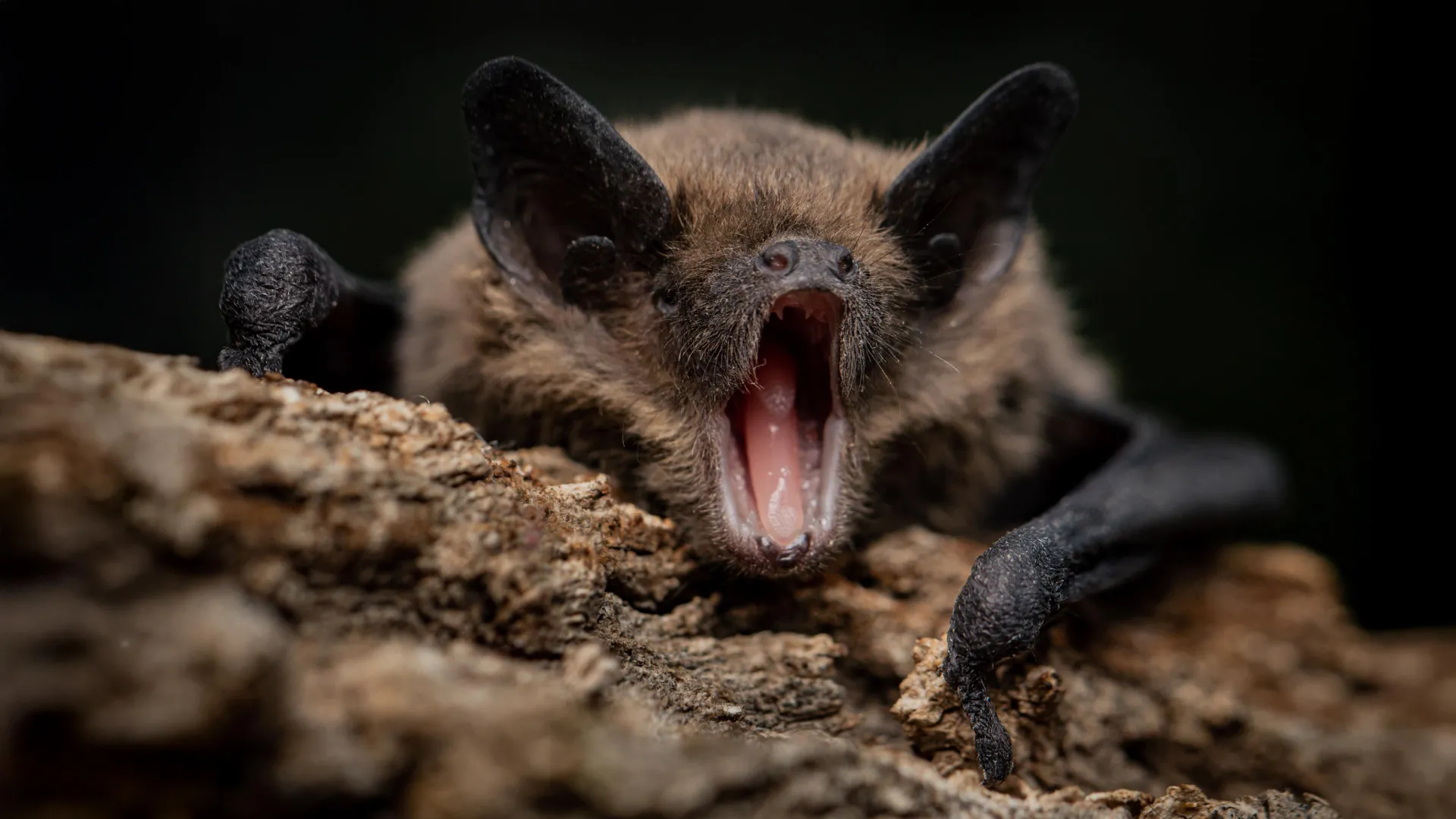
Scientists have long studied how bats can carry viruses that cause serious illness in humans while rarely becoming severely sick themselves. New research from Tulane University, Stanford University, and the Centers for Disease Control and Prevention may help explain this remarkable viral resilience.
Researchers have discovered that vesper bats, the world’s largest bat family, possess two distinct copies of a gene system involved in producing antibodies. These specialized proteins help the immune system recognize and fight infections. No other known mammal has been found to carry two separate heavy-chain antibody gene systems.
Published in Science Advances, the study offers new insight into the evolution of the mammalian immune system and how different species respond to infectious diseases.
“We’ve never seen anything like this in a mammal before,” said Hannah Frank, associate professor of ecology and evolutionary biology at Tulane University’s School of Science and Engineering and the study’s corresponding author. “This completely changes our understanding of how the mammalian immune system can be organized and raises exciting new questions about why bats have been so evolutionarily successful and how they respond to viruses.”
Vesper bats have a unique antibody system
The discovery was made in vesper bats, a diverse group that includes more than 500 species found on every continent except Antarctica. Their extraordinary evolutionary success has long interested scientists, and their unusual antibody system may help explain how these bats tolerate viral infections.
Antibodies are Y-shaped proteins made up of two heavy chains and two light chains. In humans and all other mammals studied to date, heavy-chain antibodies are produced from a single set of genes.
Frank and her colleagues found that vesper bats are different. These bats have two separate heavy-chain gene systems, which could give them additional ways to produce a wider variety of antibodies.
Research on bat immunity has traditionally focused on the innate immune system, the body’s first line of defense. Frank said the findings demonstrate why the adaptive immune system, which produces antibodies and develops targeted immune responses, also deserves greater attention.
“We think this discovery is an important piece of the puzzle,” Frank said. “Although it does not fully explain why bats can carry viruses so effectively, it reveals a level of immune diversity we did not know existed and opens an entirely new direction for research.”
Why bat immunity matters
Bats play vital ecological roles as pollinators, seed dispersers, and natural pest controllers. They are also natural hosts for many viruses, including pathogens that can sometimes spread to other animals or humans.
Understanding how bats coexist with viruses without developing severe disease could help researchers learn more about immune responses across species. This knowledge may also support improved strategies for reducing the risk of disease spillover and emerging infections.
“We’ve learned a tremendous amount about immunity by studying humans and laboratory mice,” Frank said. “But the natural world is much more diverse than that. Every time we study a species that has evolved differently, we have the opportunity to discover something entirely new.”
Source: www.sciencedaily.com