


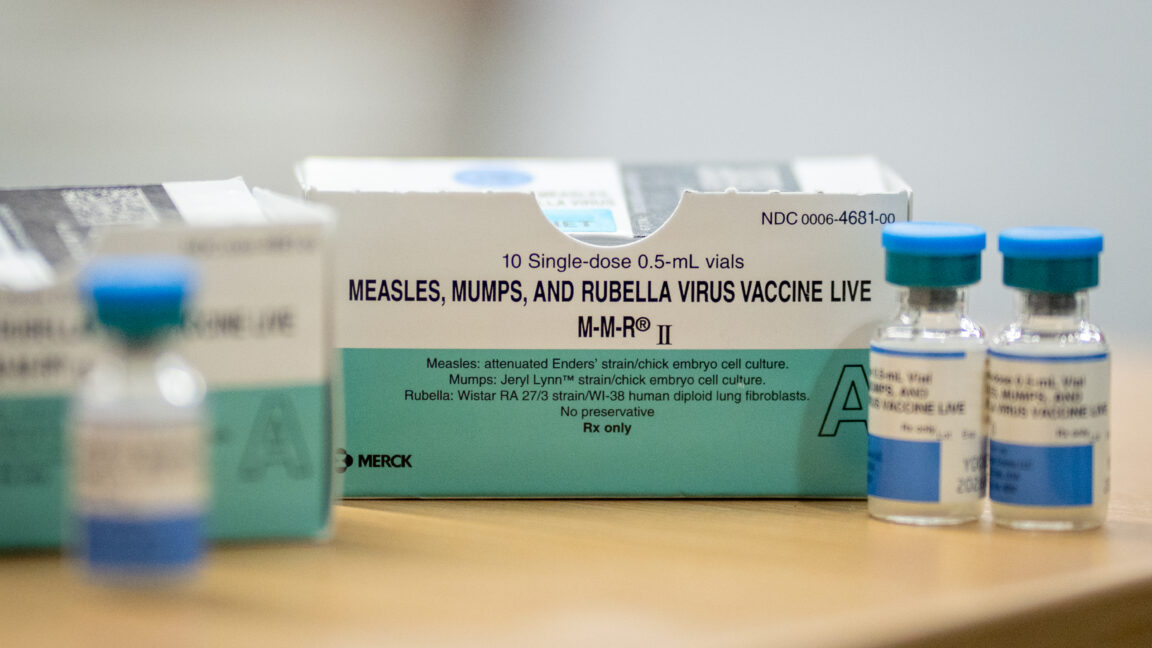
The United States could lose its measles-elimination status as outbreaks continue amid declining vaccination rates and widespread anti-vaccination misinformation. A panel of infectious disease experts convened by the Pan American Health Organization, the World Health Organization’s regional office, is scheduled to review data from 2025 and early 2026 from November 10 to 13. The review comes as officials dispute how measles-related deaths should be identified and counted, including a reported death in Pennsylvania.
Measles elimination status faces review
In 2000, the United States declared measles eradicated after a year without sustained domestic transmission, following years of high vaccination rates. The declaration marked a major public health victory against the most contagious virus on the planet.
Before vaccination, measles infected 3 million to 4 million people in the United States each year. The disease caused nearly 50,000 hospitalizations, about 1,000 cases of brain swelling, and 400 to 500 deaths annually.
The country’s elimination status is now likely to be revoked as measles outbreaks continue amid declining vaccination rates and anti-vaccination misinformation and rhetoric. The Pan American Health Organization’s regional monitoring and re-verification commission plans to consider data from 2025 and early 2026 when assessing whether measles has resurged in the United States.
Measles deaths become politicized
Under Secretary of Health Robert F. Kennedy Jr., who has opposed vaccines, several vaccine-preventable disease outbreaks have become politicized and controversial. That includes disputes over how to define and identify deaths associated with measles.
After Pennsylvania reported its first death, Kennedy falsely suggested that state officials had “fabricated” the death and reportedly ordered the Centers for Disease Control and Prevention to remove it from national data.
The CDC has since changed how it counts measles deaths, abandoning its long-standing practice of reporting deaths confirmed by state officials. The agency now relies on federal death records, which are extremely slow to process and are not intended to provide real-time information during an ongoing outbreak.
Dispute over a Pennsylvania death
The seventh unidentified death in Pennsylvania was reportedly that of a 39-year-old woman in Franklin County. The county coroner’s office announced the death on October 12. The coroner’s office said at the time that the death met the state’s definition of a measles-related death.
Under Pennsylvania standards, a death is considered measles-related if the person dies within 30 days of testing positive, displays clinical signs of infection, and has no other significant cause of death, such as a traffic accident.
Franklin County Coroner Jordan Connor described the death as “possible acute cardiac disease due to possible complications of measles.” Connor also reported that the woman had recently been diagnosed with and treated for measles.
In an email exchange with Ars Technica on Thursday, the state health department said that “no cases have been found in Franklin County” that meet the state’s criteria, but added that “the investigation is not yet complete.” The Franklin County coroner did not respond to a request for comment about the discrepancy.
The Philadelphia Inquirer has taken legal action to obtain more information about the woman’s death, including her name, which was suppressed by the coroner and sealed by a county judge.
This post has been updated to correct the name of the Franklin County coroner.
Source: arstechnica.com