


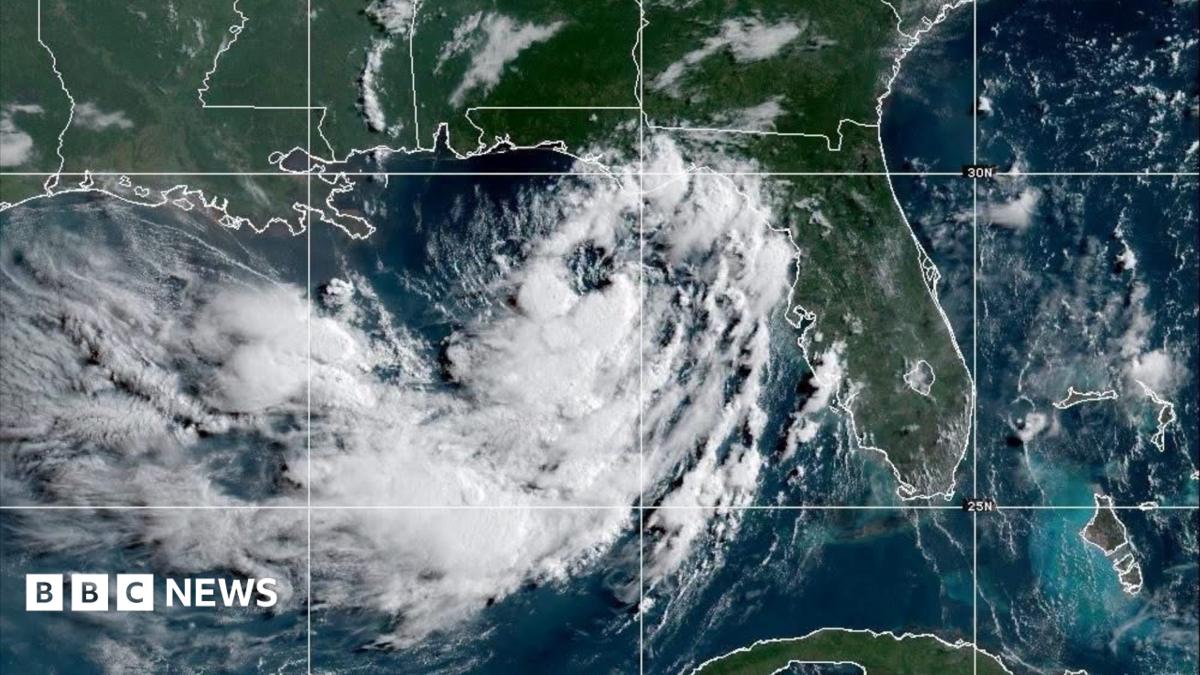
A swirling tropical storm off the U.S. Gulf Coast is projected to unleash heavy rainfall and “life-threatening storm surge” across the Southeast, as indicated by the National Hurricane Center (NHC).
Tropical Storm Virta is currently situated approximately 100 miles (165 kilometers) south of Panama City, Florida, with winds reaching 40 miles per hour (65 kilometers per hour) on Monday.
According to the Miami-based NHC, “Virta will traverse near or along the northern Gulf Coast over the coming days.”
As the storm shifts westward toward Texas, it may trigger flooding and storm surges in Alabama, Florida, Louisiana, and Mississippi. Some regions could experience up to 20 centimeters of rainfall by Friday, and “isolated” tornadoes are possible in Florida, according to forecasters.
In an update released Monday evening, it was reported that the tropical storm could intensify over the next few days, potentially making landfall in New Orleans, Louisiana, by Wednesday.
The bulletin noted that tropical storm-force winds are extending up to 110 miles outward from the storm’s center, with the system moving northwest at approximately 3 mph.
Forecasters stated, “A tropical storm watch is in effect west of the Ochloconee River in Florida, particularly near the borders of Jefferson and Plaquemines Parishes in Louisiana.”
Water levels are projected to rise between 1 to 4 feet along select sections of the Louisiana and Mississippi coastlines. Flash flooding could occur in urban areas.
The storm’s approach coincides with a wave of sweltering summer heat impacting the southern United States.
In response to the impending threat, sandbags are being distributed in New Orleans to mitigate flooding risks. Residents are encouraged to ensure their local stormwater drains are clear.
Virta is anticipated to weaken back to a tropical storm by Thursday and could dissipate by the weekend as it approaches the Texas coastline.
This is the second named storm of the season, following Tropical Storm Arthur, which brought flooding to the United States last month.
Source: www.bbc.co.uk