


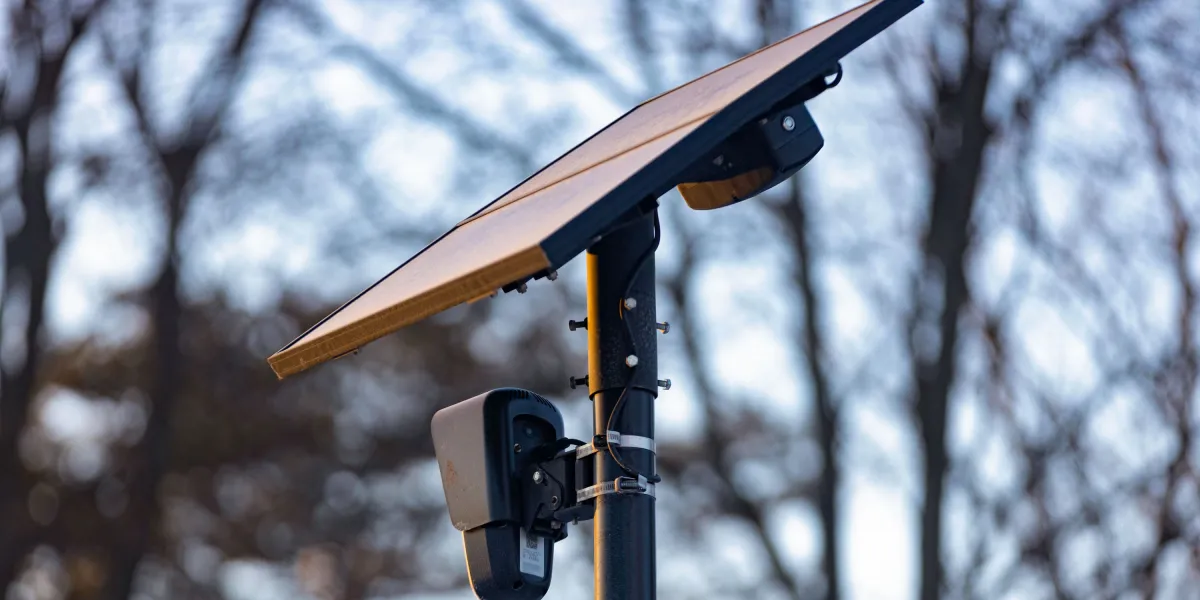
Flock Safety is requiring police officers to enter a valid criminal case number before conducting searches through its license plate reader network. The requirement, which was introduced as an optional feature last year, is now mandatory and is intended to ensure that every law enforcement search has a legitimate investigative purpose.
Entering a case number is a basic safeguard supported by civil rights groups, but similar protections have been easy for authorities to bypass. The ACLU recently found that when Flock Safety previously asked officers to provide a reason for a search, some entered vague terms such as “investigation” or ignored the prompt entirely. At one Oregon police station, an officer reportedly responded, “Heh heh,” 20 times. Because Flock Safety does not verify case numbers, officers could still potentially circumvent the new requirement.
To address that concern, Flock Safety announced that its automated auditing system will now be mandatory for participating agencies. The tool analyzes police search activity and alerts administrators to potentially suspicious searches. However, Flock Safety has not released detailed information about the system’s accuracy, and independent evaluators have not yet assessed its effectiveness.
Flock Safety is also introducing changes designed to address growing concerns about how much data its camera network collects and which agencies can access it. The company now recommends retaining data for seven days instead of 30, although agencies can disable the shorter retention period. Departments can also limit searches of another agency’s camera data to specific, stated purposes. For example, a search may be allowed for a “kidnapping” investigation but prohibited for “immigration” enforcement. This safeguard still depends on officers accurately reporting the reason for each search.
The policy changes come as criticism of Flock Safety’s surveillance technology continues to grow. Tucker Carlson has argued that the company’s technology is contributing to a “slave state,” while some cities have reportedly canceled their contracts with Flock Safety amid privacy and immigration concerns. In February, NPR reported that at least 30 cities may have ended their agreements with the company in the previous year, although activist group Deflock says the number could be higher.
Some states and local governments have banned automated license plate readers, while others continue to permit their use. Several agencies are also switching from Flock Safety to competitors such as Axon and Motorola. Flock Safety maintains that cancellations represent only a small portion of its customer base, which includes approximately 5,000 law enforcement agencies.
Source: www.technologyreview.com