


El Soprao Amber Fossils Reveal a 105-Million-Year-Old Cretaceous Forest in Spain
The El Soprao fossil site in Cantabria, northern Spain, contains rare blue-purple amber packed with exceptionally preserved ancient organisms, according to a new review.
A major Early Cretaceous amber deposit
The El Soprao site was discovered accidentally during road construction in 2005. It was not recognized as a major fossil deposit until two geologists identified its significance in 2007.
Since then, excavations have uncovered more than 1,500 arthropod specimens preserved in amber, fossilized tree resin that can capture ancient life in remarkable detail.
“In the Iberian Peninsula, fossilized plant resin, or amber, occurs over a wide stratigraphic range in the Mesozoic, from the Carnian in the Late Triassic to the Maastrichtian in the Late Cretaceous, but rarely in the Cenozoic,” said lead author Dr. Alba Sánchez-Garcia of the University of Valencia and her colleagues.
“Albian amber from the Early Cretaceous is the most fossiliferous and of critical importance because it allows for the reconstruction of terrestrial ecosystems during a period of great biological change characterized by the rapid diversification of flowering plants.”
Why El Soprao amber is unusual
The El Soprao deposit is distinctive because of both the quality and the unusual character of its amber. Some pieces display a striking blue-purple hue caused by a compound called guaiazulene.
Many inclusions preserve anatomical details at the microstructural level. This allows scientists to investigate not only what ancient organisms looked like, but also how they behaved.
The amber formed during the Albian age of the Early Cretaceous, approximately 105 million years ago. This was a pivotal period when flowering plants began to emerge in forests still dominated by gymnosperms.
“Regarding the origin of the plant, research suggests that one of the El Soprao resin producers may have belonged to the coniferous family Cheilolepidaceae,” the paleontologists said.
Ancient behavior preserved in amber
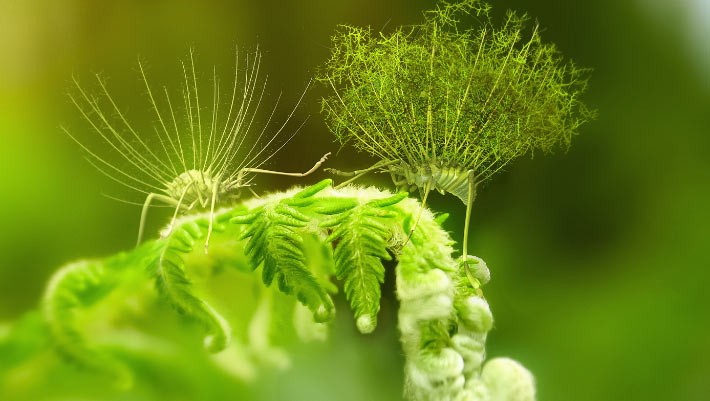
The deposit has yielded the oldest mites known to science, lacewing larvae that camouflaged themselves with plant debris, and flies carrying pollen from an extinct group of gymnosperms on their bodies. Some of the flies appear to have been preserved while feeding.
These fossils provide direct evidence of pollination before flowering plants became ecologically dominant.
Feathers from theropod dinosaurs have also been discovered in El Soprao amber. Some appear to have been plucked from living animals after they brushed against sticky resin.
“Biological inclusions are generally preserved three-dimensionally and exhibit high anatomical fidelity,” the researchers noted.
Based on observations of broken inclusions and microscopic tomography data, most specimens appear to be hollow castings.
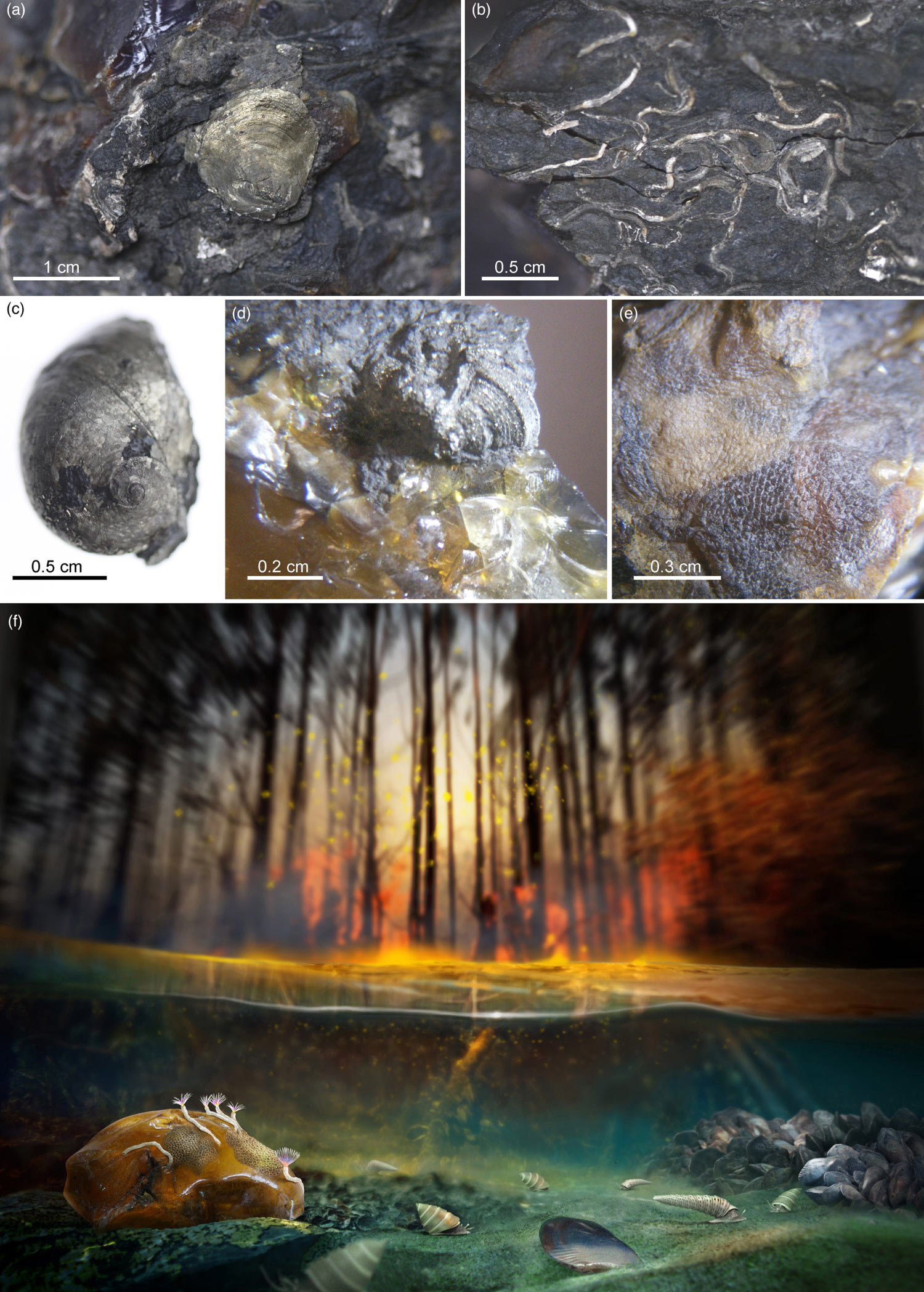
The researchers also noted that amber marks are rare, although several examples are known, including wing marks and a shaft carved into a large amber stream by Fresnelopsis.
Dozens of species discovered
At least 40 named species have been identified in the El Soprao deposit. Of these, 32 are new to science. The fossils range from crustaceans and spiders to numerous groups of insects.
Despite nearly two decades of research, important questions remain unanswered. One mystery is the complete absence of ants from El Soprao and other Spanish amber deposits, even though ants are found in amber of a similar age elsewhere in the world.
“Interdisciplinary research at the El Soprao fossil site, including continued fieldwork, aims to refine the interpretation of taphonomic pathways and ecological patterns through the application of cutting-edge techniques and analytical approaches,” the scientists said.
They added that the site represents a Konservat-Lagerstätte—a fossil deposit known for exceptional preservation—and provides an important reference for understanding the structure and functioning of Cretaceous forest ecosystems during a critical period of global change.
Read the paper, published August 13, 2026, in the Journal of the Geological Society.
Alba Sánchez-Garcia et al. 2026. “El Soprao Konservat-Lagerstätte: An important Cretaceous amber deposit from Spain.” Journal of the Geological Society 183 (5): jgs2025-022. doi: 10.1144/jgs2026-022.
Source: www.sci.news