


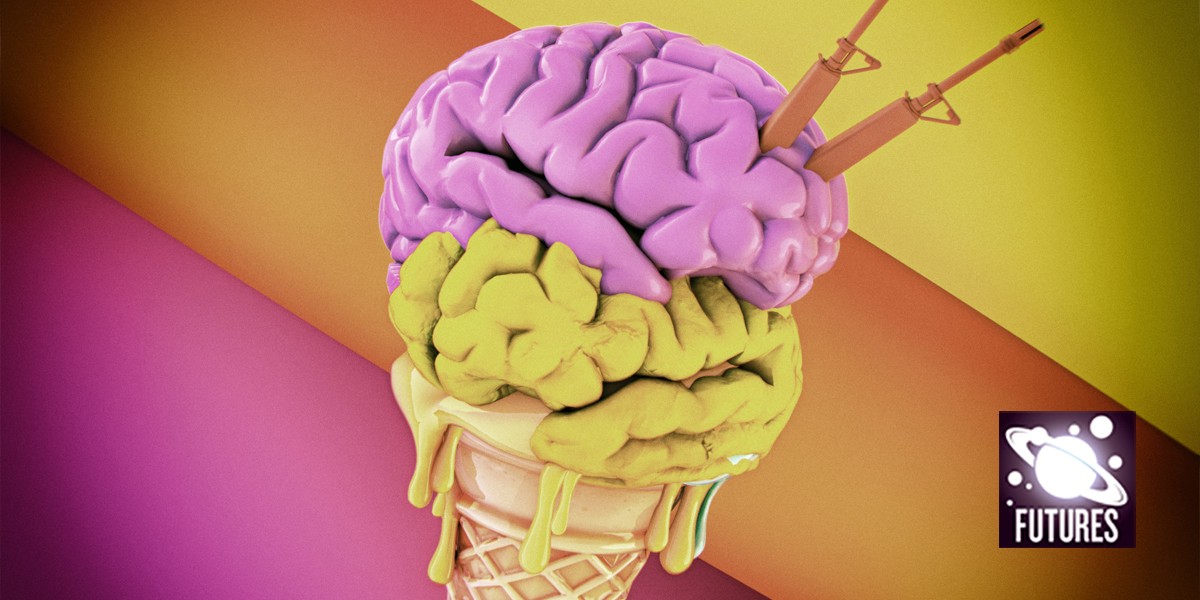
The café’s interior is decorated in pastel green and pink. Families sit beside the windows, enjoying the winter sunshine, while children eat ice cream with sticky fingers.
That was not what I expected Sam Moten—a survivor of the brutal battle on Torsen Highlands and a former military hero—to suggest during our interview.
“Eli chose it,” he explained. “They like ice cream.”
Sam does not look like an action hero. Nor does he resemble the emaciated, slightly feral figure shown in photographs leaked after his rescue. Instead, he looks like his father by the window: quietly exhausted, with disheveled black hair and a dusting of gray at his temples.
He looks entirely ordinary. Yet Sam and Eli are not two separate beings sharing one body—or, at least, the law does not recognize them that way. Sam is currently involved in a lengthy legal battle to secure legal status for both himself and Eli.
Before Eli could be introduced, a waitress arrived with the black coffee Sam had ordered. When she asked whether we wanted anything else, we requested an affogato. The café did not serve one, however; its menu offered sundaes and generously topped waffles instead. The waitress gave me a blank look, disappointment crossing her face.
Read more science fiction from Nature Futures
Moten looked up. There was only a subtle shift in his voice and posture, but when he enthusiastically recommended two scoops of vanilla ice cream with an espresso, I became certain that Eli was speaking.
I thanked Eli by name, and he answered with a radiant smile. While Sam seemed guarded and melancholy, Eli’s expression was open and childlike.
“Most people can’t tell us apart.”
“Sam said you like ice cream.”
“He does,” Moten agreed on Sam’s behalf. “Yes,” Eli added.
If they were so interchangeable, I could understand why people became confused.
“We’re not interchangeable,” Eli said, with gentle accusation. It was a difficult subject—one that had contributed to Sam’s divorce just before he began his legal campaign to have Eli recognized as a person in his own right.
Sam stirred a packet of sugar into his coffee.
“I don’t like coffee,” Eli said after Sam took a sip. “He adds sugar for me.”
“Do you have a sweet tooth?” By the time Eli’s sundae arrived, the answer was obvious: it was a tower of ice cream covered in sticky sauce and caramel pieces.
Eli began as part of Sam’s tactical programming, embedded within his consciousness. In recent years, such artificial intelligence systems have become standard military technology, providing real-time reconnaissance, analysis and strategic support to soldiers in specialized roles. These programs are not usually self-aware—and they are not designed to become so.
It is well documented that Sam’s time hiding in the Torsen Highlands contributed to Eli’s emergence. Less widely known is how differently Sam and Eli remember those experiences. Sam recalls a precarious existence defined by stolen food, little sleep and constant movement. Eli remembers the same period as a stream of precise data. Sam remembers the freezing night he spent in a cave; Eli can recall the exact temperature, humidity and how close Sam came to hypothermia.
While Sam slept, Eli remained alert, monitoring the world through all of his senses. Continuous surveillance, in military terms. What was intended to be a short-term system used during training and combat operations became something else entirely: Eli remained active for more than 1,000 consecutive hours.
Could that unprecedented operating time have caused Eli’s artificial intelligence to develop self-awareness?
Both Sam and Eli answer: perhaps. Eli suggests that extreme sleep deprivation may affect the human brain in unpredictable ways, weakening the boundaries between human consciousness and the neural systems connected to it.
“When did you first realize that something had changed?” I ask when Sam reappears.
He studies me over the rim of his coffee cup. “I didn’t. I was focused on not being captured.”
Source: www.nature.com