


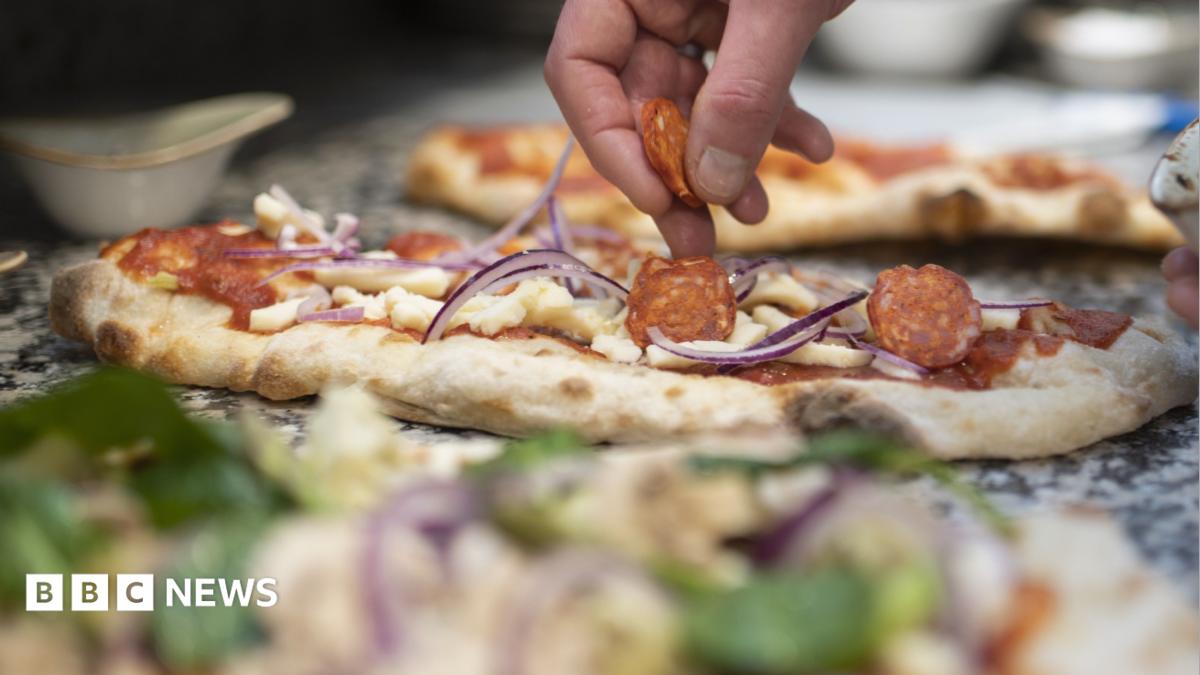
The pizza robot industry has been marked by ambitious promises, costly failures, and lost fortunes. Several companies have entered the automated pizza market and later disappeared, including Zume, external, Patsy, external, and Basil Street, external, a company focused on pizza vending machines and automated food service.
Fast food may appear to be an ideal industry for automation, but developing reliable pizza-making robots has proven more challenging than expected. The technology could also affect entry-level jobs in restaurants and hospitality. This raises an important question: will the future of pizza be dominated by robots?
“We haven’t yet seen the success stories that some people were hoping for come to fruition,” said Sara Senatore, a senior restaurant analyst at Bank of America. The bank has financial interests in several major pizza chains, including Papa John’s and Domino’s.
Senatore noted that food-preparation robots can be unreliable, sometimes dropping ingredients or placing them incorrectly. By comparison, she said, “Humans are very efficient at making pizza.”
Despite his criticism of Picnic, Kindel remains optimistic about restaurant automation. He supports the idea of customers ordering from a kiosk and receiving a freshly prepared pizza within minutes. “For example, we want to be able to walk up to some kind of kiosk, place an order, and have a fresh pizza made for us,” he told the BBC.
Kindel once made all of his dough by hand, but an elbow tendon injury led him to explore automated equipment. He is now developing his own pizza-making robot.
The machine produces square, loaf-shaped pizzas and draws inspiration from the way 3D printers operate. Kindel declined to reveal additional technical details, but said a fully operational version could be ready by summer 2027.
Although he admits to having “no experience” in robotics, Kindel believes the opportunity is worth pursuing. He said the failed pizza robot company Picnic generated valuable data and helped advance automated food technology. In his view, it is only a matter of time before pizza robots become commercially successful.
Kindel also argues that fully autonomous pizza machines do not necessarily threaten human employment. He previously used a Picnic robot at T-Mobile Park, the home stadium of the Seattle Mariners baseball team.
A conventional pizza operation using the equipment typically requires about 10 workers. With automation, that number can fall to two. However, Kindel said the other eight employees remained on staff, taking on customer service and pizza-promotion duties throughout the stadium.
“There were a lot more people who could hand out pizza,” Kindel said. “It was very fast.”
Source: www.bbc.co.uk