



In response to high retraction rates, India, Peru and Vietnam have introduced guidelines and disciplinary measures to address research misconduct.
Credit: designer491/iStock via Getty
Governments and research funders in countries with expanding scientific communities are introducing stricter rules to improve research integrity. These measures include reducing bonuses, limiting access to research grants and lowering the rankings of institutions associated with research misconduct.
The reforms come amid growing concern about research fraud worldwide. A May audit of biomedical publications found that the rate of fabricated citations was 12 times higher in 2025 than in 2023.1 Later that month, an analysis of 33,000 cancer studies found that approximately 12% were linked to suspected paper-mill activity.2
Responsibility for identifying research misconduct has traditionally been handled from the bottom up. Journal editors retract problematic papers, universities investigate their researchers, and independent organizations such as Retraction Watch document integrity concerns. In some cases, researchers identify errors themselves and correct the scientific record.

Researchers say retractions due to honest mistakes can be extremely stressful.
Now, however, a growing top-down approach is emerging, particularly in countries with developing research systems. Governments and funding agencies are increasingly restricting grants and professional opportunities for scientists accused of violating research ethics. The policies address a broad range of problems, including plagiarism, data fabrication, image manipulation, citation fraud and peer-review misconduct.
Elizabeth Bick, an independent research-integrity consultant based in the San Francisco Bay Area, California, supports stronger measures to address serious research misconduct. “There needs to be some sort of sanction to deal with misconduct,” she says. “If we did not have a chance of getting a ticket, we would all be speeding. There is cut-throat competition in science, and if people who cheat produce better papers, why would others not cheat? We need to see consequences that warn others.”
Bick says external enforcement is necessary because universities may be reluctant to discipline their own researchers for fear of reputational damage. “Universities do not do a good job of holding people accountable,” she explains. “It needs to be done by an institution with teeth.”
But how effective will these new systems be in preventing harmful research? And could they discourage honest researchers from reporting errors or correcting the scientific record?
Redesigning research-integrity rules
India, which is rapidly rising in the Nature Index rankings, has introduced several measures aimed at reducing research fraud and improving scientific integrity.
In May, the Anusandhan National Research Foundation (ANRF), one of India’s largest research funders, introduced rules requiring applicants to disclose whether they have had a paper retracted and explain their publication record over the previous five years.
Applicants must also confirm that their grant proposal, or a substantial part of it, was not generated by an artificial-intelligence tool. ANRF said it may use a combination of tools to assess the potential use of AI in grant applications.
The changes follow an announcement last year that India’s National Institutional Ranking Framework, which publishes annual rankings of research institutions, would penalize universities with large numbers of retracted papers. Retractions can result in negative points that affect an institution’s overall ranking.

Citation black market: Plan to sell fake references alarms scientists
Achar Agrawal, a data scientist based in Raipur, India, says the reforms are intended to encourage universities to prevent questionable research from being published rather than responding only after misconduct is discovered. Agrawal established India Research Watch, an online platform run by volunteers that tracks research-integrity concerns.
“We feel this is important because this is the first step, and the first step is always the most difficult,” Agrawal says. He notes that more work is needed to ensure that research standards improve over time. For example, the ANRF requirement to disclose retractions is voluntary and applies only to the previous five years. It is also unclear how researchers’ declarations will be verified.
“But I think it is still very important, even if it is not fully implemented, even just as a signal,” he says.
Agrawal believes the ANRF measures could mark the beginning of a broader shift towards top-down research-integrity enforcement in India. “This will likely have a knock-on effect, as ANRF is one of the largest funding agencies in India,” he says. “Research institutions that want their researchers to win grants will probably become more selective when hiring scientists.”
Financial penalties for research misconduct
Peru is also strengthening its response to research fraud. Under a measure announced by the government in March, researchers found to have committed “acts that violate ethics and scientific integrity” could lose access to research-related bonuses if their papers are retracted.
Peruvian academics involved in one or more research projects are typically eligible for a monthly bonus of 2,617 to 4,435 Peruvian soles (US$780 to US$1,320). Under the new rules, academics who have had one or more papers retracted within the previous three years are not eligible for the payment.
The policy follows a 2024 government survey that identified an alleged paper-mill network operating in Peru. Percy Mayta-Tristan, vice-president for research at the Southern University of Sciences in Lima, says reform is needed.
“We have great researchers, but we have not encouraged them to publish their research in a good way,” he says.
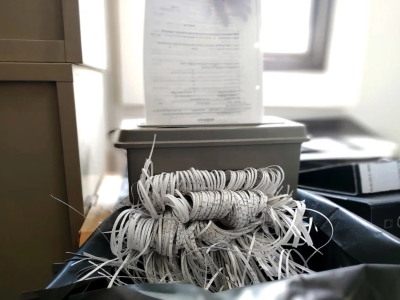
India penalizes universities with too many retractions
However, financial penalties could also affect researchers whose papers are retracted because of genuine errors, incomplete methods or inadequate methodological transparency. Bick says the rules should distinguish between honest mistakes and deliberate or negligent misconduct.
“We want to encourage people who find major errors in their papers to retract or republish, and that is a good thing,” she says.
The Vietnamese government has also announced a framework for research integrity. The plan includes disciplinary measures such as written warnings, mandatory public apologies and repayment of research funds. Research-integrity violations will also be recorded in a national database.
Source: www.nature.com