


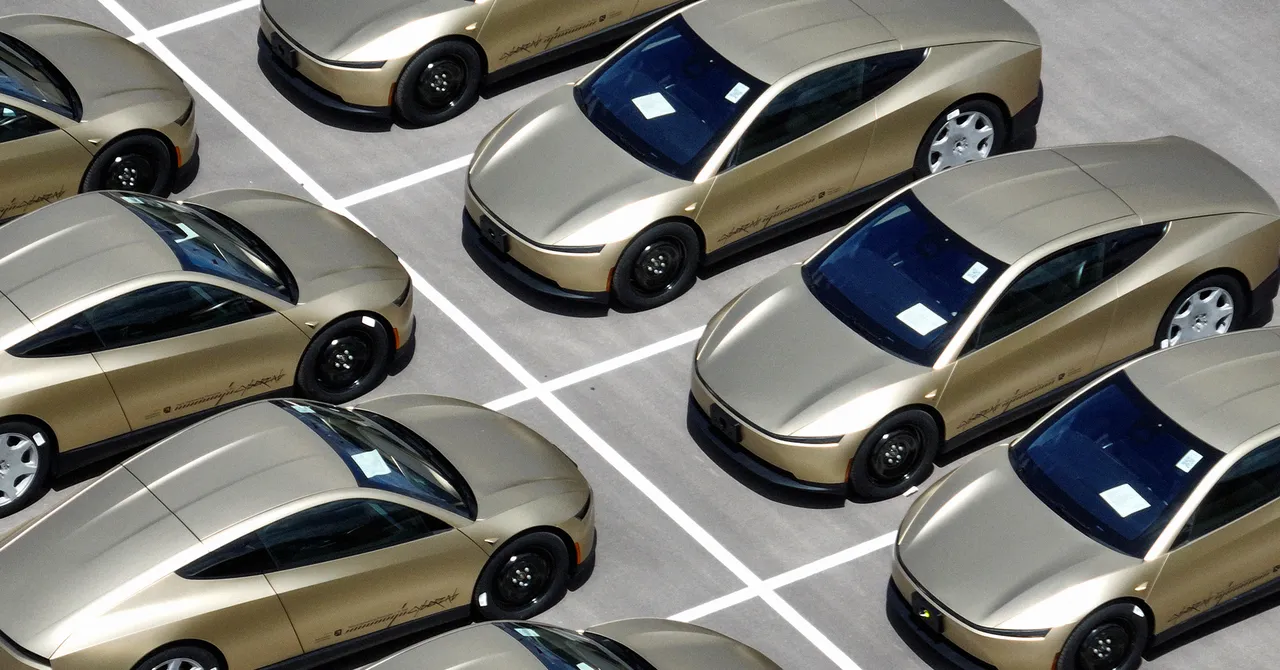
Tesla CyberCab launch events usually generate worldwide attention. Fans gather at the venue, electronic music fills the room, and CEO Elon Musk eventually takes the stage for product demonstrations, bold predictions, and sometimes a surprise “one more thing” announcement. Investors and Tesla enthusiasts watch closely, sharing updates across social media.
However, Tesla’s public-road debut of the CyberCab, its fully autonomous vehicle designed to transform the company and the broader transportation industry, was notably low-key. The Austin event was not livestreamed, and many attendees were reportedly Tesla influencers who were barred from posting about it until several hours after the program began. Musk also did not make an appearance.
The limited-access debut was an unusual introduction for the matte-gold, two-seat CyberCab, which Tesla first unveiled in 2024. Tesla currently has 45 vehicles without steering wheels or pedals registered with its robotaxi network in Texas. After the press embargo ended Thursday night, influencers who attended the event began sharing positive reviews and video clips from their first CyberCab rides.
The Tesla CyberCab is a critical vehicle for the company. Musk and other Tesla executives have argued that investors should no longer view Tesla solely as an automaker. “In fact, you should think of us as an AI robotics company,” Musk said last year. He also stated that investors who do not believe Tesla can lead the autonomous-driving industry should not invest in the company. Musk said that success in artificial intelligence and robotics could make Tesla not only the world’s most valuable company, but potentially more than three times as valuable as Nvidia, the current market leader.
Tesla has struggled to deliver the autonomous-driving milestones needed to satisfy Wall Street. In 2013, Musk predicted that Tesla vehicles would drive 90% of their miles autonomously within three years, but that target was not met. He later forecast that 1 million Tesla self-driving cars would be on the road by 2020. Today, 420 Tesla robotaxis are registered in Texas. Musk also predicted that robotaxi networks would reach 50% of the U.S. population by 2026. Tesla now needs a major breakthrough in robotics and autonomous transportation.
Tesla’s Robotaxi Progress
Tesla officially launched its robotaxi service in Austin last June using modified Model Y vehicles. At launch, each vehicle included a human safety monitor in the passenger seat who could intervene if the autonomous-driving system made a mistake. Tesla has since said it removed human monitors from many of its vehicles. The service now transports passengers in several cities across Texas and Florida, while Tesla has also received authorization to operate in Arizona and Nevada. In California, ride-hailing regulations require a human driver behind the wheel because Tesla does not yet have a driverless operating permit.
Tesla executives believe the company can win the autonomous-driving race because its vehicles rely primarily on relatively inexpensive cameras. Tesla says this approach makes its robotaxis cheaper than competing systems from companies such as Waymo and Zoox, which use more costly combinations of radar and lidar technology.
Despite Tesla’s ambitions, competing automakers and autonomous-driving companies continue to make progress. Ashok Elswamy, Tesla’s head of AI software, announced Thursday that Tesla vehicles had completed a combined 1 million miles without human drivers. Waymo, which operates in 14 U.S. metropolitan areas, reached 1 million driverless passenger miles in January 2023.
Tesla’s CyberCab strategy extends beyond operating an Uber-style robotaxi network. The company plans to sell vehicles without steering wheels or pedals directly to customers by the end of 2026, according to a post Musk made several months ago. That plan could require significant changes to existing vehicle-safety laws. Tesla also intends to allow some owners to operate their own CyberCab fleets. The company’s interest form allows customers to indicate whether they are interested in purchasing a CyberCab fleet vehicle.
Unresolved Regulatory Questions
Significant questions remain about how Tesla CyberCabs can legally operate on public roads. Federal vehicle-safety rules generally require cars to include equipment such as a steering wheel, brake pedal, and systems designed for human drivers. Last month, the federal government granted the first exemption to Amazon subsidiary Zoox for its box-shaped autonomous vehicles, which do not include traditional human controls. Federal officials also announced plans this summer to accelerate the creation of rules that could make it easier to deploy large numbers of driverless vehicles without steering wheels or pedals. Those regulations have not yet been finalized.
A spokesperson for the National Highway Traffic Safety Administration told WIRED that Tesla has not submitted an exemption request for the CyberCab. “NHTSA is in contact with Tesla and is evaluating the situation,” the spokesperson said. Tesla executives said that Tesla may not need to apply for an exemption.
Source: www.wired.com