


Before healthcare robots can effectively operate, they must understand the intricacies of the physical world. Human anatomy can differ significantly; instruments must be able to bend, push, or slide and interact with biological tissues under various conditions. Additionally, imaging data may often be noisy or incomplete. Developers encounter rare edge cases that aren’t always predictable, complicating the learning process.
This situation leads to a major bottleneck in medical robotics—gathering the extensive and diverse data necessary to train, test, and enhance robotic behavior.
Introducing the NVIDIA Medical Physics Simulation framework—a groundbreaking open-source, GPU-accelerated feature integrated within NVIDIA Isaac for Healthcare. This framework empowers medical robotics developers to model anatomy and device interactions, generate challenging scenarios, and rigorously test their systems prior to hardware implementation.
By merging anatomical and medical device behavior with sensor simulation and robotic learning, the framework allows developers to create reusable simulation environments, eliminating the need to construct custom scenes for every workflow. This advancement not only saves time but also accelerates the introduction of innovative solutions to the market.
Being open source, the Medical Physics Simulation framework enables healthcare robotics developers to examine and modify the system to fit their specific devices and workflows, creating a GPU-accelerated foundation that aligns seamlessly with the broader NVIDIA ecosystem.
Transparency is crucial in medical technology, and open source provides access to data, models, and weights that inform system behavior. This access allows developers to reproduce outcomes, evaluate performance across varied anatomies and scenarios, pinpoint limitations, and gather evidence needed for regulatory approval.
Virtual Training Field for Medical Robots
In the realm of physics AI, experience equates to data in motion. Developers must prepare robots to respond aptly to alterations in anatomical structure, device behavior, environmental conditions, or unexpected policy failures.
Medical Physics Simulation enables teams to mimic anatomical structures, device interactions, friction, and sensor inputs, assessing robotic responses in varying environments. Powered by NVIDIA Isaac for Healthcare and built on cutting-edge technologies like CUDA, Warp, Newton, and generative AI, the framework can run numerous parallel simulation environments, allowing teams to explore various scenarios and identify potential failure points early in development.
For robotic developers, this transforms simulations from bespoke projects into scalable infrastructures. For instance, we demonstrate a capacity for 8,192 robot training environments operating in parallel with GPU-native simulations, drastically reducing training times from over 5 hours to less than 2 minutes.
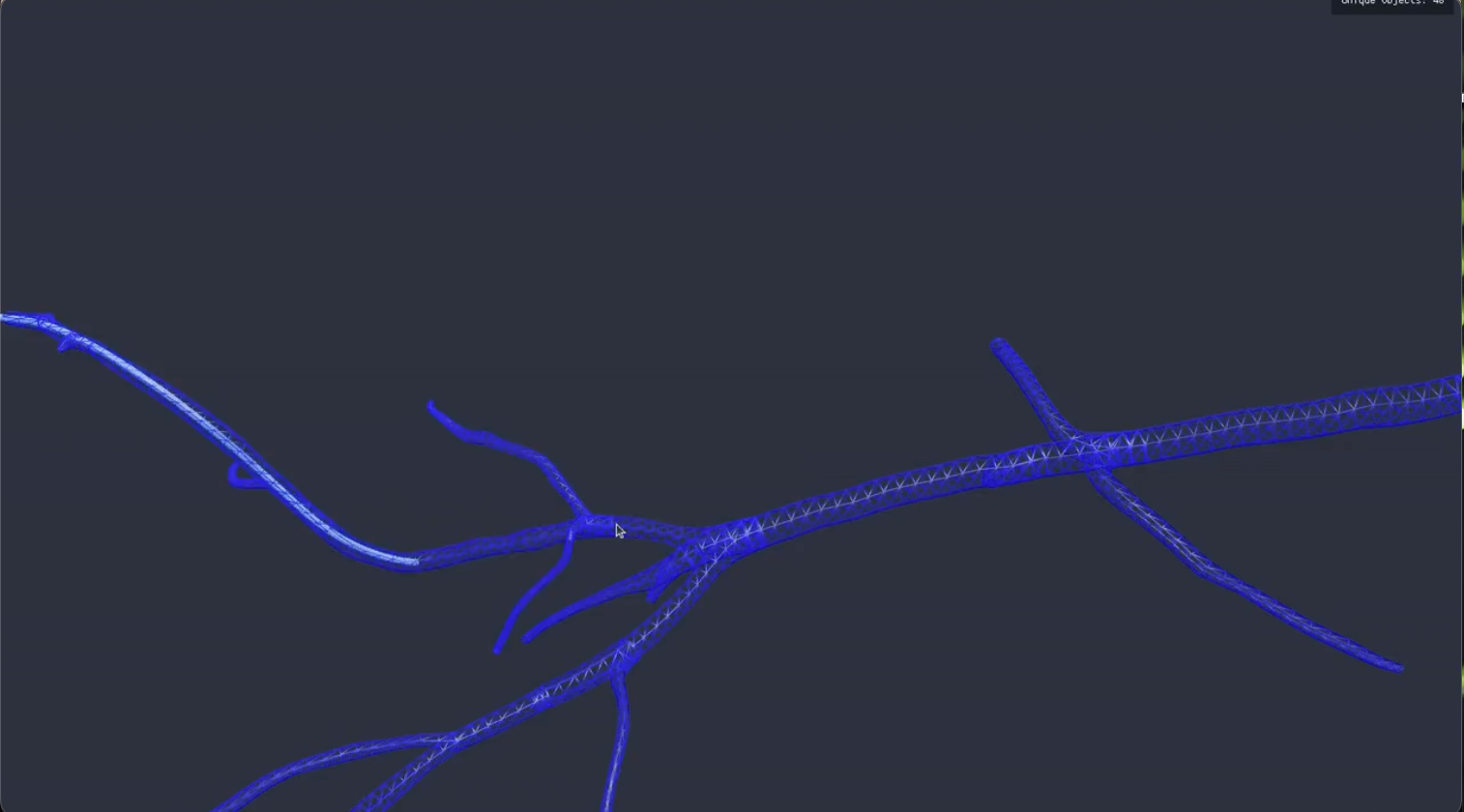
This framework allows developers to connect vascular anatomy, flexible instruments like catheters and guidewires, simulated X-ray imaging, and reinforcement learning, extending beyond initial applications to accommodate additional devices, anatomies, sensors, and healthcare robots.
The Medical Physics Simulation encompasses classical physics simulation alongside generative AI methods. Classical simulation effectively models known physical principles such as contact, friction, and motion, while the generative AI capabilities enable real-time modeling of visual scene dynamics based on procedural data.
This combined approach provides developers with an enhanced method for designing and testing healthcare robotic systems in virtual settings before physical prototypes and lab testing initiatives.
An Ecosystem Building the Future of Medical Robots
As a leader in medical robotics, NVIDIA applies simulation-driven development to tackle specific surgical challenges.
CMR Surgical and Cambridge Consultants (part of Capgemini) utilize Cosmos H Dreams to learn interaction physics for soft tissue surgery and produce patient-specific simulations. CMR contributed around 500 hours of anonymized clinical data from the Versius Surgical Robotic System to the Open-H Example dataset for various surgical procedures, including cholecystectomy, prostatectomy, hernia repair, and hysterectomy.
“The open source model accelerates responsible innovation founded on shared knowledge, enabling us to offer more consistent care and improved outcomes for patients globally,” said Chris Fryer, Chief Technology Officer at CMR Surgical.
Johnson & Johnson MedTech employs Isaac for Healthcare’s medical physics simulation and Cosmos-based models to create a digital twin of the endoluminal MONARCH platform in urology for complex anatomy and kidney stone scenarios.
XCath utilizes medical physics simulation to develop endovascular autonomy policies, while Inner Logic leverages NVIDIA Medical Physics Simulation to accelerate advancements in medical technologies through synthetic data, validate device mechanisms, and produce in silico evidence supporting regulatory pathways.
Medtronic Structural Heart is exploring the application of medical physics simulation with simulated X-ray sensing for catheter navigation studies.
A New Layer in the Isaac for Healthcare Stack
As a modular addition within NVIDIA Isaac for Healthcare, Medical Physics Simulation can function independently or alongside Digital Twin Pipelines, Medical Sensor Simulation, and NVIDIA Open Models and Policies.
Developers are encouraged to explore the open-source Medical Physics Simulation framework, review available reference workflows, and begin constructing simulation environments tailored for your device, anatomical, and healthcare robotics applications.
Source: blogs.nvidia.com