


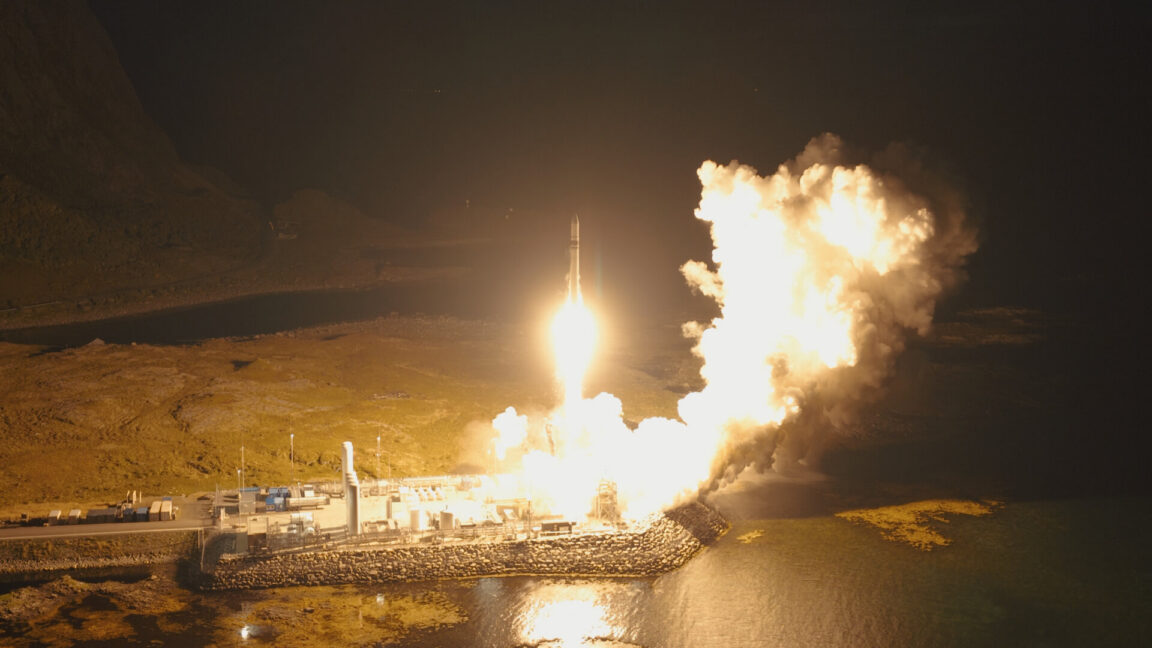
Reaching orbit was no easy feat. Europe has a well-established space industry and an impressive history of exploration, but the rapid growth and innovation of its commercial launch sector are less widely known.
“Especially in early 2018, when there was frankly no established ‘new space’ industry on this side of the Atlantic, people said it would never work,” Isar Aerospace CEO Daniel Metzler told reporters at a Sunday press conference. “People will always say this won’t work or that won’t work until you prove them wrong. Giving up is not in our DNA.”
Isar Aerospace took eight years to reach orbit with its Spectrum rocket, a timeline comparable to that of other successful commercial rocket startups in the Western world. During that period, the German company raised approximately $1 billion through multiple private funding rounds and expanded to about 500 employees. That funding made Isar Aerospace one of Europe’s best-capitalized private launch companies.
“In general, I think you vastly overestimate what you can achieve in the short term, but underestimate what you can accomplish in the long term,” Metzler said. “Let’s not forget the human element behind all of this. We had engineers, technicians, operators, and a strong support team. They had a dream and, against all odds, that team delivered.”
Isar Aerospace’s Spectrum rocket is scheduled to launch from Norway’s Andøya Spaceport.
Credit: Isar Aerospace
Building an autonomous European launch industry
Isar Aerospace’s progress is welcome news for the European Space Agency and the broader European space industry, which needs reliable, cost-effective rockets to place satellites into orbit. Europe’s established launch providers, Arianespace and Avio, rely on billions of euros in government support to develop and operate their launch systems. Their Ariane 6 and Vega C rockets have demonstrated reliability, but they remain only marginally competitive in the global commercial launch market, even with government subsidies.
Source: arstechnica.com