


Two New Stick Insect Species Discovered in Tropical Queensland
Entomologists have described two previously unrecognized species of Anchiale, a genus of large, winged stick insects found across tropical Australia. The researchers also restored one species to full status.
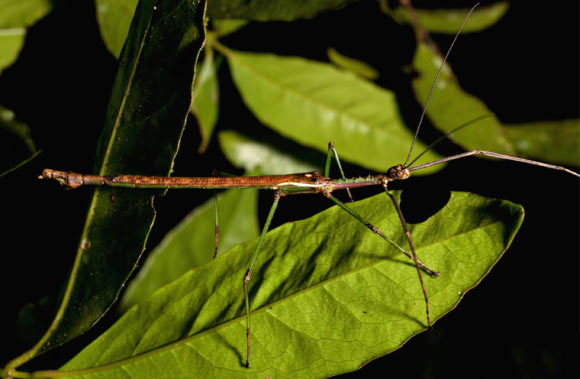
Anchiale mabiensis, male paratype. Image credit: Ross M. Coupland.” width=”580″ height=”379″ srcset=”https://cdn.sci.news/images/2026/09/image_15081_1-Anchiale-mabiensis.jpg 580w, https://cdn.sci.news/images/2026/09/image_15081_1-Anchiale-mabiensis-300×196.jpg 300w, https://cdn.sci.news/images/2026/09/image_15081_1-Anchiale-mabiensis-84×55.jpg 84w” sizes=”(max-width: 580px) 100vw, 580px”>
Anchiale mabiensis, a male paratype. Image credit: Ross M. Coupland.
“The genus Anchiale now comprises a total of 16 species that occur across most tropical regions of Australia, tentatively including French Polynesia,” said University of Sydney postdoctoral researcher Dr Braxton Jones and colleagues.
“This geographical range is relatively unique among Australian stick insects, which generally show strong endemism across many genera.”
Although Australian Anchiale species are among the most frequently observed stick insects, the genus had not undergone a comprehensive revision.
DNA analysis reveals five distinct species
For the new study, Dr Jones and his colleagues examined museum specimens as well as insects collected in the field. They also analyzed mitochondrial DNA from 32 Anchiale specimens.
The researchers identified five species, including two that are completely new to science.
“Taxonomy is often like detective work,” said Dr Jones.
“Among Australia’s most photographed and frequently reported insects, there are still species that have escaped scientific recognition.”
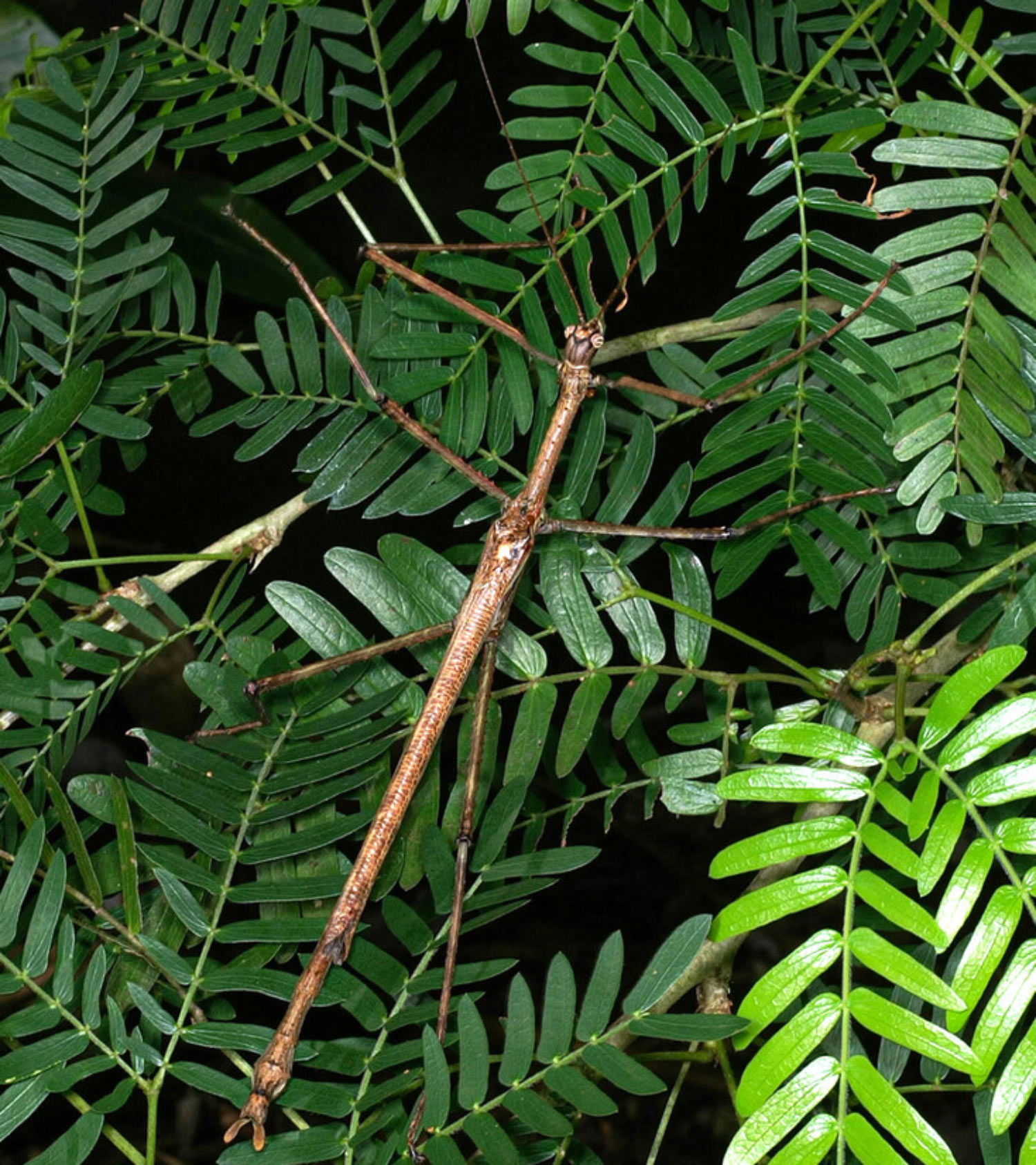 Anchiale robusta, a male. Image credit: Paul D. Block.
Anchiale mabiensis: a new stick insect from Mabi Forest
One of the new species, Anchiale mabiensis, is a relatively small and slender stick insect. Adult females measure approximately 11.5 cm (4.5 inches) in length.
The species has so far been recorded only in Queensland’s Mabi Forest, where it feeds on gray sassafras (Doryphora aromatica).
The eggs of Anchiale mabiensis are brown and less shiny than those of other Australian Anchiale species. They also have two or three rings on the lid.
The researchers say this is the first time such rings have been recorded in stick insects or in the order Orthoptera.
Anchiale robusta ranges across coastal rainforest
Another species, Anchiale robusta, has females that reach up to 16.2 cm (6.4 inches) in length.
It lives in coastal rainforest extending at least 450 km (280 miles) from Taree to north of Cooktown in Queensland.
The species feeds on a variety of plants, mostly acacias. Females may use a defensive display by flashing their darkly patterned hind wings.
Researchers restore Anchiale albopunctata to species status
The study also resolves a long-standing confusion over the identity of Anchiale albopunctata.
This stick insect, found in central Queensland, had been classified as a separate species, Anchiale briareus, for more than a century.
Based on anatomical and genetic evidence, the researchers restored Anchiale albopunctata to full species status.
“These discoveries demonstrate the importance of protecting threatened ecosystems and documenting Australia’s extraordinary biodiversity before we lose species without even discovering them,” Dr Jones said.
The study was published in the journal Austral Entomology.
_____
Braxton R. Jones et al. 2026. Australian taxonomic revision of Anchiale Stål, 1875 (Phasmida: Phasmatidae), with descriptions of two new species. Austral Entomology 65 (4): e70096. doi: 10.1111/aen.70096
Source: www.sci.news