


Nepal’s Rasuwa Disaster Tests the UN Loss and Damage Fund
As Nepal faces nearly US$5 billion in reconstruction costs after catastrophic floods, the UN fund designed to support climate-vulnerable countries must respond quickly and fairly.
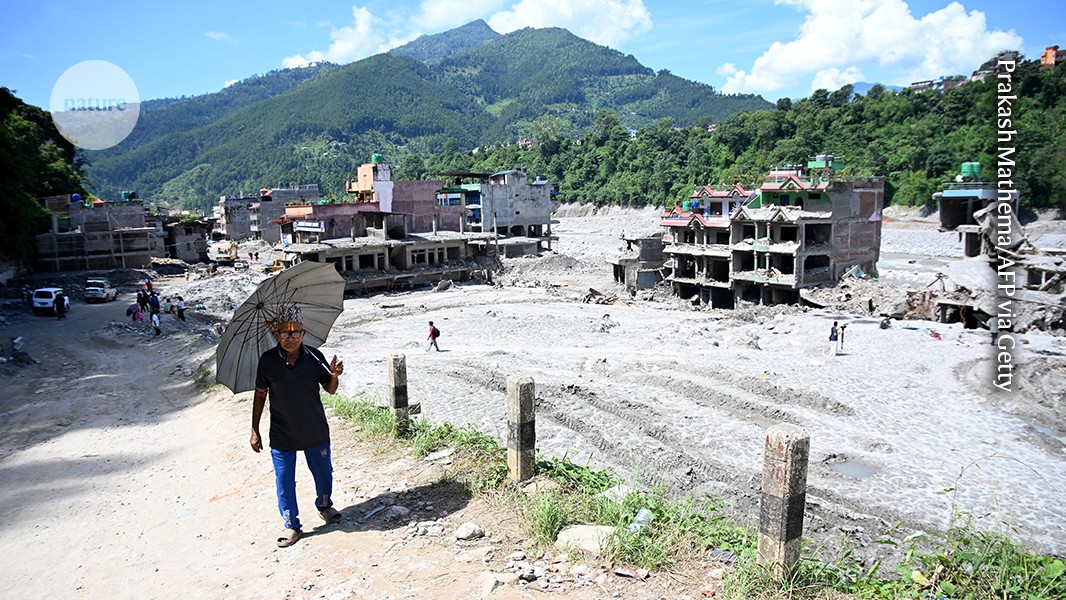
Flash floods caused by glacier collapse have caused catastrophic damage in Nepal.
Credit: Prakash Mathema/AFP via Getty
On August 26, a tsunami of water, mud and rocks struck Nepal’s Rasuwa region, killing more than 1,400 people and leaving around 6,000 missing. The government estimates that reconstruction will cost nearly US$5 billion—about 10% of Nepal’s gross domestic product.
As the country begins to rebuild, a crucial question is where the money will come from. Nepal accounts for just 0.01% of global carbon dioxide emissions, yet it is facing costs that are far too heavy for a small country to bear alone. The Rasuwa disaster is the first major operational test for the UN’s Loss and Damage Response Fund, which aims to help countries vulnerable to climate change pay for lost jobs, lives and infrastructure.
Nepal is still waiting for climate finance
One month after the disaster, Nepal’s response funding is still not in place. Five days after the floods, the Nepali government formally requested emergency financial assistance from the fund. The fund said it would respond with “urgency, compassion and careful consideration.” However, no further announcements are planned.
The Loss and Damage Fund was established in 2022 and remains in its early stages, but the slow response is concerning. One of its main roles is to provide rapid funding for humanitarian operations during emergencies. At present, however, countries have no expedited access pathway for applying for funding outside the scheduled application period.
The fund has also not yet outlined a framework for determining how climate change contributed to a disaster or how that contribution should affect funding decisions. Immediate action is needed before another catastrophe occurs.
Why the Rasuwa disaster matters
As an environmental scientist, I have studied changes in the Himalayas for more than 20 years. Countries such as Nepal need fast and equitable access to climate finance when disasters strike. Rasuwa must set a precedent for future emergencies.
The fund should take two steps in response to the Nepal disaster. First, it should make emergency allocations available immediately to cover urgent humanitarian operations and essential services. These allocations could be determined through a rational assessment of need and vulnerability. Established evidence already shows that global warming contributes to disaster risk.
Second, funding for reconstruction and long-term recovery should be provided within a few years, based on a broader assessment.
The challenge of attributing disasters to climate change
To take these steps, loss and damage funds will need stronger decision-making processes. One particularly difficult challenge will be determining how much weight to give the role of climate change when allocating money.
Many catastrophes result from a chain of events. A collapsing slope can trigger an avalanche of rocks and ice, which melts into a debris flow. The flow can then engulf additional sediment and cause flooding downstream. Uncertainty exists at every stage, making it difficult to determine how much climate change caused or intensified a disaster.
Several factors likely influenced the likelihood of the Rasuwa disaster and the scale of its damage. These include how long-term warming changed ice sheets, how much sediment was moved by floods, where downstream flooding occurred, and how exposed and prepared local communities were.
Climate evidence must not delay emergency aid
In a highly competitive funding environment, loss and damage funds need reliable evidence about climate’s influence on extreme events to protect their missions. But accurately identifying the causes of complex chain disasters takes time.
If aid is delayed until more evidence is collected, the human and economic costs could become severe. Countries could also be forced to rely on high-interest borrowing to pay for urgent recovery.
Careful consideration is needed to ensure that funding decisions do not disadvantage countries with fewer resources or those most vulnerable to climate change. Climate attribution requires access to extensive data, modelling infrastructure and specialist expertise. A country such as Nepal cannot be expected to have all these resources.
Source: www.nature.com