


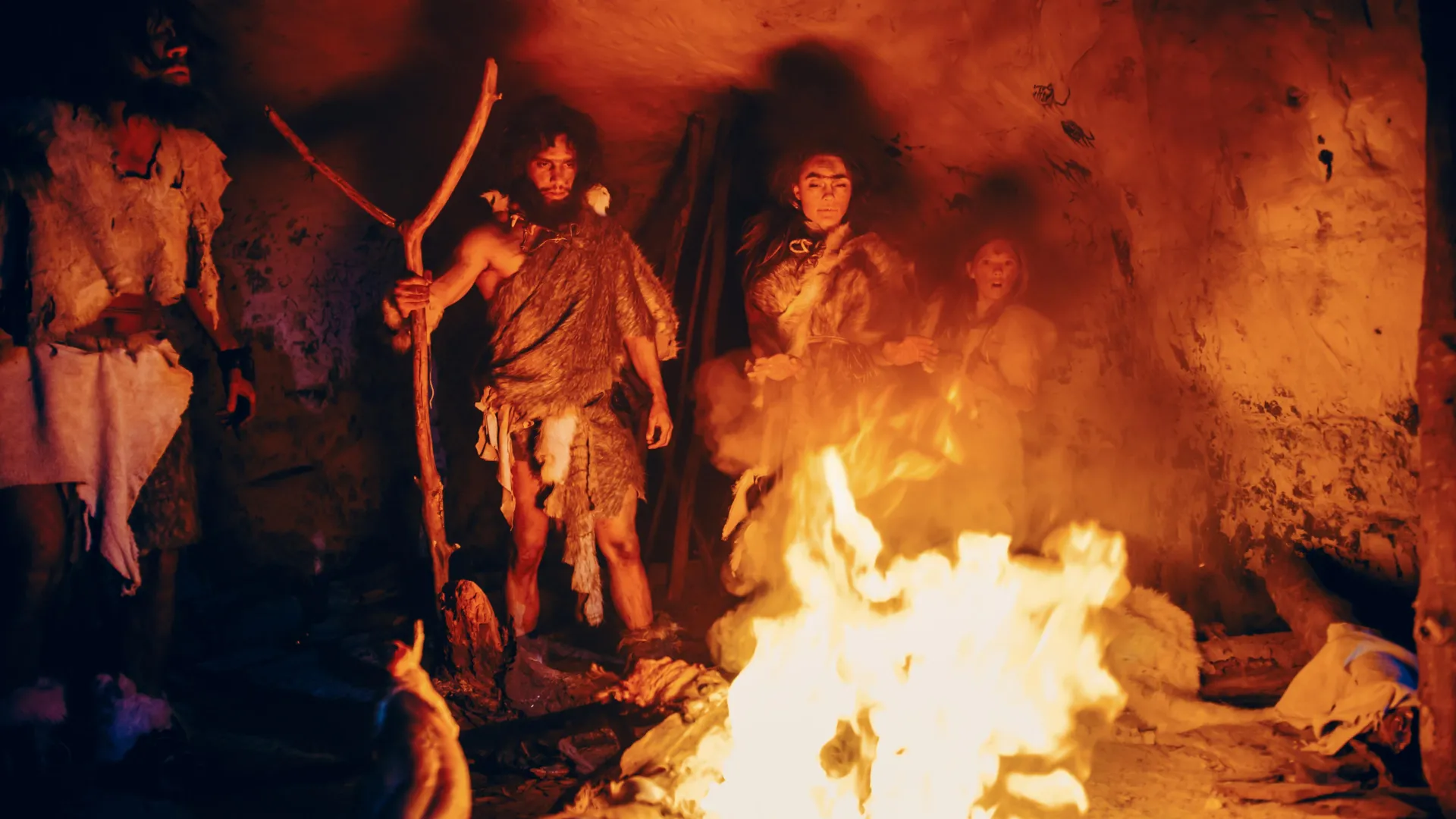
More than 30,000 years ago, Ice Age populations across Europe were connected by genetic exchanges spanning vast distances, according to new research. The findings challenge the long-held view that eastern and western European groups remained largely isolated and show that regional genetic continuity coexisted with wider networks of interaction.
An international team led by the University of Vienna reached these conclusions by analyzing ancient DNA from rare human remains preserved in caves, along with genetic material recovered from cave sediments. Published in Scientific Progress, the study offers new insight into how prehistoric Europeans interacted, exchanged genes and maintained populations through thousands of years of environmental change.
The research focuses on the Gravettians, one of Europe’s major Paleolithic cultures, which flourished across the continent from approximately 34,000 to 25,000 years ago. Archaeological discoveries have long suggested that Gravettian groups maintained connections over considerable distances. Earlier genetic evidence, however, indicated that eastern and western populations were relatively distinct.
By combining new genetic data with previously collected DNA, the researchers found that these populations were more interconnected than expected. They also identified evidence that some populations in southwestern Europe maintained their genetic ancestry for thousands of years.
A 30,000-year-old woman reveals hidden genetic connections
One of the most revealing discoveries came from the remains of a woman who lived in what is now southwestern France about 30,000 years ago. Found in Istritz Cave, her remains provided the oldest genome-wide genetic dataset obtained from modern humans in southwestern Europe.
Her DNA contained an unexpected combination of ancestry. Most of her genetic background was associated with western European populations, but she also had ancestry linked to central and eastern European groups.
Using genetic modeling, the researchers estimated that admixture between these populations occurred approximately 32,500 to 31,500 years ago. The finding suggests that genetic connections extended across much of Europe earlier than previously established.
“Our results show that eastern and western European populations were not as genetically isolated as previously thought,” said lead author Pere Gelabert of the Department of Evolutionary Anthropology at the University of Vienna. “Such long-distance gene flow adds a new dimension to our understanding of how Gravettian populations were connected.”
Researchers identified similar genetic characteristics in another ancient individual whose remains had previously been studied at Ormesson in France. Together with archaeological discoveries, the evidence strengthens the possibility that Istritz Cave was a meeting place for different prehistoric groups.
DNA from cave sediments reveals Ice Age survival
While some ancient Europeans exchanged genes across considerable distances, other populations appear to have maintained a continuous genetic presence in particular regions for thousands of years.
Evidence from Chuffin Cave in northern Spain suggests that people related to western European populations persisted in southwestern Europe for an extended period.
The researchers also used a technique that enables scientists to recover human DNA directly from cave deposits, even when identifiable human remains are absent. Small traces of genetic material left by ancient inhabitants can survive for thousands of years in soil and other sediments, providing information about people whose bones have not been found.
At El Miron Cave in Cantabria, Spain, researchers recovered human nuclear DNA from a sediment layer dating to about 22,000 years ago. Although the layer contained no human bones or teeth, it provided enough genetic information to determine the ancestry of the people who had occupied the site.
“Using sedimentary DNA, we can reconstruct genetic information from the time when human remains were missing,” said lead author Ron Pignasi of the Department of Evolutionary Anthropology at the University of Vienna, who led the study. “This gives us a way to link archaeological layers to the genetic ancestry of the people who lived at that location.”
The results indicate that ancestors of western Europeans persisted in the region through the last ice age, when giant ice sheets reached their maximum extent.
This supports the idea that the Iberian Peninsula, which includes present-day Spain and Portugal, served as an important refuge for prehistoric humans during the coldest period of the Ice Age.
A mother and son offer clues about prehistoric mating
Another important discovery came from southern Italy, where researchers examined the genetic remains of a boy known as Ostuni 1b. He is believed to have been the son of a previously studied woman, Ostuni 1.
Genetic analysis suggests that the boy’s father probably belonged to the same ancestral group as his mother. The parents were not closely related, however, indicating that mating patterns within these communities may have helped limit inbreeding.
The discovery adds to the emerging picture of prehistoric European society. Although some populations maintained relatively stable genetic ancestry within their home regions, they also participated in broader genetic exchange networks that spanned considerable distances.
Taken together, the findings indicate that long-term regional continuity and widespread genetic connectivity were not mutually exclusive. Both processes helped shape the population history of Ice Age Europe.
Building on these results, Gelabert and his colleagues are combining DNA recovered from ancient deposits with advanced proteomics, which examines proteins for clues about the past. Their goal is to investigate the early expansion of modern humans across Europe, including how modern humans interacted with carnivores at sites where bones and other organic remains were scarce.
Source: www.sciencedaily.com