


Close Menu
HitechubHitechub
    What's Hot
    Technology

    Japan Launches Probe to Collect First-Ever Samples From Mars’ Moon

    Science

    Half of Global Reservoirs at Risk of Soil Sedimentation by 2060: Impacts and Solutions

    Technology

    Reduce RAG Inference Costs by 6x by Filtering Irrelevant Content Before It Reaches the LLM

    Important Pages:
    • About Us
    • Privacy Policy
    • Terms & Conditions
    Facebook X (Twitter) Instagram Pinterest
    Facebook X (Twitter) Instagram
    HitechubHitechub
    Saturday, November 28
    • Shop
      • Fashion
        • Mens
        • Womens
        • Accessories
          • Handbags
          • Keychain
          • Masks
          • Money clicps
          • Neck Pillow
          • Rings
          • Towels
          • Wallets
        • Jewelry
        • Watches
        • T-shirts
        • Hawaiian shirts
        • Vests
        • Swim trunks
        • Swimsuits
      • Fun
        • Magic cubes
        • Magnifiers
        • Misc
        • Photo books
        • Puzzles
        • Toys
      • Home
        • Cleaning/Care
        • Mailbox covers
        • Mugs
        • Pot Holders
        • Spoon
      • Office and Electronics
        • Chairs
        • Office Supplies
        • IPad cases
        • Laptop stickers
        • Mouse pads
        • Notebooks
        • Pencil bags
        • Pens
        • Phone cases
      • Personalized
      • Pets
      • Sports
        • Cycling
          • Balaclava Mask
          • Bike Bell
          • Bike Computer
          • Bike Fender
          • Bike Grips
          • Bike Kickstand
          • Bike Light
          • Bike Locks
          • Bike Mitts
          • Bike Pumps
          • Bike Repair Stand
          • Bike Seat
          • Bike Trainer
          • Bike Wheels
          • BIKES
            • Folding Bikes
            • Road Bikes
          • Carbon Fiber Bike Products
          • Cycling Mask
          • Kid’ Bike Helmets
          • Inner Tube
          • Motorcycle Bag
          • Nylon Pedals
          • Adult Helmets
          • Photochromic Sunglasses
          • Soft Coolers
          • Suction Cup Bike Rack
          • Tool accessories
          • Winter Cloth
          • Heart Rate Monitor
        • Outdoors/Camping
          • Outdoor Bags
        • Sweatband
    • Technology
      1. AI
      2. Gadgets
      3. View All

      This is the most popular CEO in the world

      Sectors in which “Chat-GPT” is most often used

      Artificial intelligence has begun to “swallow” professions

      The unusual robot conductor of a concert in Seoul

      Here’s how you can tell if your phone is being tapped

      PlayStation 5 becomes a completely silent console and gets more space

      This is the first phone that can be used to park a car

      Best Gaming Laptops 2023: Powerful Portables for PC Games

      OpenAI Countersues Apple Over Alleged Trade Secret Theft Claims

      Pension and Welfare Services Suspended Following Cyber Incident

      New Linux NFS2ROOT Flaw Could Let Attackers Gain Root Privileges

      GTA 6 PC: AI Race to Clone the World’s Biggest Video Game

    • Science
      1. Space
      2. Wheels
      3. View All

      Space Perspective: A Journey to the Edge of Space

      5 Fascinating Facts About Space

      Space Exploration: Unveiling the Wonders of the Universe

      Toyota wants to make a new generation battery with a range of up to 1,200 km

      Meet Toyota’s lunar “baby” that could make exploring the Moon easier

      What does a night drive look like with one of the most beautiful cars in the world: the Rolls-Royce Ghost

      How a Dead Starling in a Garbage Bag Revealed the Secrets of Evolutionary Success

      Remington Highline Vision Now on Display for Group Access

      Dengue Fever Cases Surge Worldwide at an Alarming Rate

      HIV Prevention: A Critical Global Opportunity We Must Not Waste

    HitechubHitechub
    Home » How a Dead Starling in a Garbage Bag Revealed the Secrets of Evolutionary Success
    Science

    How a Dead Starling in a Garbage Bag Revealed the Secrets of Evolutionary Success

    Share Facebook Twitter Pinterest WhatsApp
    Share
    Facebook Twitter LinkedIn Pinterest WhatsApp

    European starlings spread across the United States after roughly 100 birds were released in New York City’s Central Park in the late 19th century. Their population reached about 200 million by 1970 and now stands at approximately 93 million, offering evolutionary biologist Julia M. Gicello an opportunity to investigate how a rapid expansion from a small founding group may have shaped the species’ genetic and physical diversity.

    The story appears in an excerpt from Birds on the road: The unnatural history of starlings (Columbia University Press, 2026), by evolutionary biologist Julia M. Gicello. Gicello describes how a box containing a dead starling helped her begin thinking about the remarkable adaptability of one of the world’s most invasive bird species.

    From Central Park to the entire country

    In the late 19th century, amateur ornithologist Eugene Schiefferin released about 100 European starlings (Sturnus vulgaris) in New York City’s Central Park. Schiefferin was president of the American Acclimation Society, an organization dedicated to introducing European plants and animals to North America.

    The experiment had disastrous consequences. Within a few decades, the birds had established themselves in their new habitat and begun spreading across the country. By 1970, their population had reached 200 million birds—less than a century after their introduction.

    U.S. wildlife management agencies now cull starling populations each year at airports and farms because the birds can damage crops, interfere with livestock operations and collide with aircraft. They are trapped, gassed or poisoned, and some are killed by dislocating their cervical vertebrae.

    In the United States, it is technically not illegal to kill a starling without permission, as is also the case with most other birds. In 2014, Gicello emailed the U.S. Department of Agriculture’s Animal Control division to request starling specimens for a research project.

    She later spoke by phone with a wildlife expert who sounded cautious, although professional, as if he did not understand why anyone would want to study the birds. To him, a starling was “literally trash.” Nevertheless, the agency sent her a specimen in a box labeled “Honey Baked Ham.”

    Approximately 2 million starlings are killed by the Department of Agriculture each year in the United States. Gicello now had five of them.

    Why variation matters to evolution

    Small differences between individuals of the same species are known as intraspecific diversity. These differences can result from different developmental or evolutionary mechanisms. For example, age-related changes produce anatomical differences between older and younger individuals, while hormones activate many differences between the sexes.

    Other differences are not explained by age or sex, and they can reveal important information about evolution. In fact, this is where evolution begins: at the level of variation within a species, or microevolution.

    Variation is shaped by the continual interaction of mutations, natural selection, founder effects, migration and genetic drift. These forces operate at different speeds and intensities, sometimes working together and sometimes in opposition.

    Determining the relative influence of each force on the genetic and physical variation observed within a species is one of evolutionary biology’s oldest and most fundamental questions. Some evolutionary processes create differences between individuals, while others make those differences less pronounced.

    Mutations are one source of new variation. Although they often receive negative attention, mutations can create new versions of genes that may be beneficial in particular environments. Several new mutations arise every time an offspring is born. Most are neutral, while some are favorable and others are unfavorable. In this sense, mutations make each individual slightly different from both parents.

    Founder effects occur when a new population is established by a small number of individuals from a larger original population. They often reduce the genetic diversity of the new population. As diversity declines, a particular version of a gene, or allele, can become common very quickly.

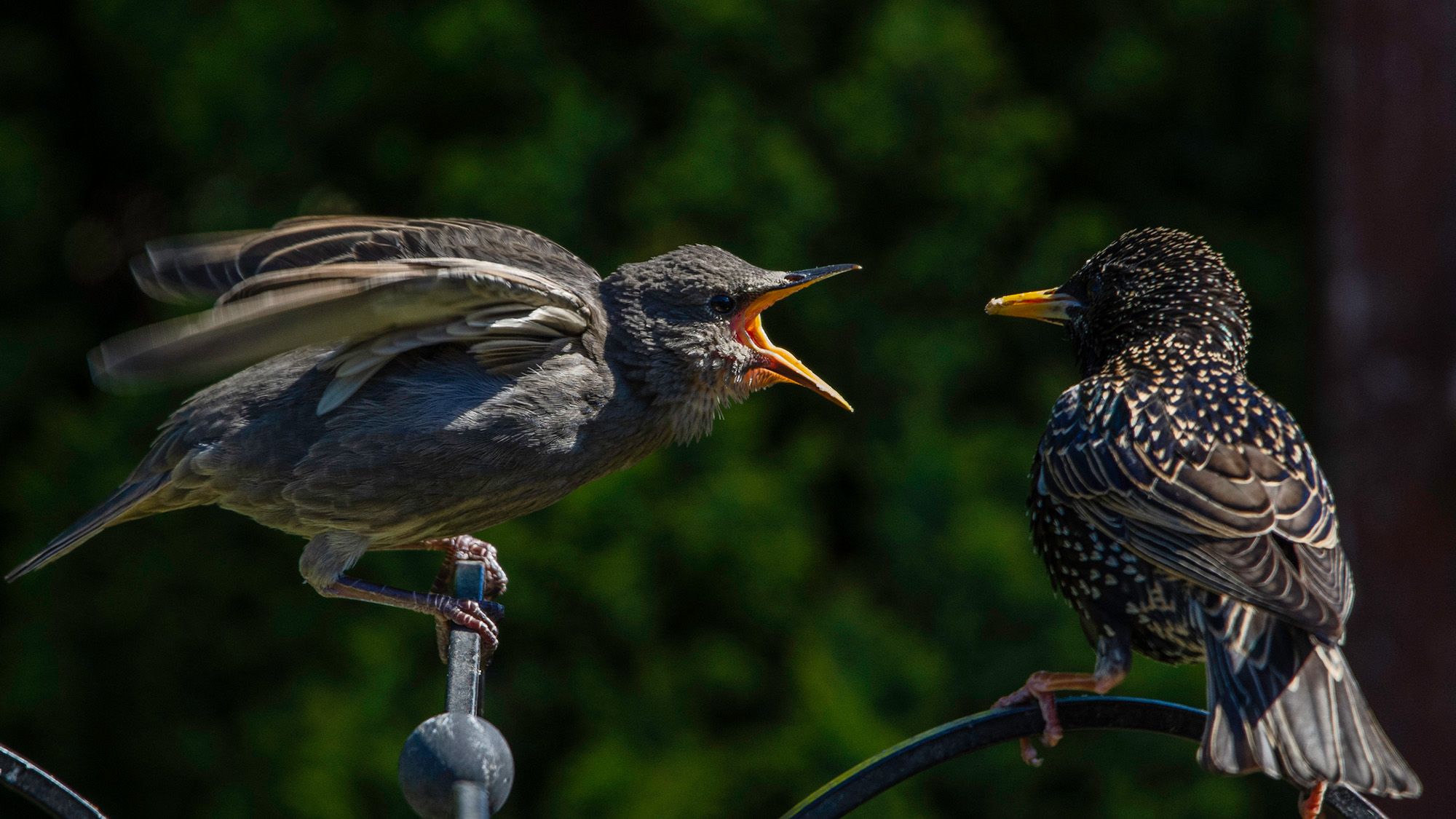
    Starlings can quickly adapt to local climates, which contributes to their success as a species. (Image credit: Douglas Sacha via Getty Images)

    However, an allele can become common through genetic drift even when it offers no advantage. It may simply be the only version represented in a small population. This statistical sampling process is strongest when populations are small.

    The influence of founder effects on genetic variation is relatively well understood. Their effects on physical traits, however, are more difficult to explain. A single physical, or phenotypic, trait such as wing length is controlled by many genes at once.

    In the 1860s, Austrian monk Gregor Mendel conducted pioneering experiments with pea plants and discovered that a single gene could control a trait such as flower color or pea texture. Scientists now know that this simple one-gene model does not describe how most complex physical traits are genetically programmed.

    This complexity heightened Gicello’s interest in how starling phenotypes might have changed over time as a result of founder effects. Patterns of change—or the absence of change—can provide evolutionary clues and indicate that something happened in the past. Identifying exactly what happened is one of the central challenges of studying a historical science such as evolutionary biology.

    What five dead starlings could reveal

    Historical records show that the U.S. starling population began with about 100 birds and expanded rapidly to its current population of 93 million. Gicello’s central question was whether starlings had unusually limited genetic and phenotypic diversity because of this dramatic population history, which was created by human intervention.

    At a casual glance, the birds in a flock appear extremely similar—“like shiny little soldiers,” sometimes pecking at grass and sometimes moving forward in unison. But visual impressions are not enough to answer a scientific question. Gicello and her colleagues needed to measure the birds’ differences and similarities.

    That approach—using the entire living species to look back into its history—was why Gicello was excited about her five specimens. She could dissect them, collect tissue for DNA extraction and preserve them as research specimens for the future. The project, she wrote, was “an evolution inside a garbage bag.”

    This article has been republished from Bird on the Street: The Unnatural History of Starlings, by Julia M. Zichello. Copyright © 2026 Columbia University Press. Used by arrangement with the publisher. Unauthorized reproduction is prohibited.

    About the book

    Bird on the Street: The Unnatural History of Starlings, published by Columbia University Press, combines natural history with scientific memoir. The book follows starlings from streets and skies into museums and laboratories, exploring the mechanisms of evolution and the relationship between humans and wildlife. Julia M. Zichello describes the small discoveries, frequent setbacks, uncertainty and wonder involved in the daily practice of science.

    Source: www.livescience.com

    Share. Facebook Twitter Pinterest LinkedIn WhatsApp
    Previous ArticleOpenAI Countersues Apple Over Alleged Trade Secret Theft Claims

    Related Posts

    Science

    Remington Highline Vision Now on Display for Group Access

    Science

    Dengue Fever Cases Surge Worldwide at an Alarming Rate

    Science

    HIV Prevention: A Critical Global Opportunity We Must Not Waste

    Science

    Ancient Supermountain Beneath Antarctica May Have Fueled Complex Life on Earth, but Scientists Disagree

    Science

    JWST and Euclid Discover the Oldest Monster Black Hole at the Edge of the Universe, Challenging Cosmic Theory

    Science

    Astrophysicist and Star Trek Science Advisor Erin MacDonald Reveals Her Success Secrets and Most Memorable Science Flubs

    Science

    Daily Briefing: Riemann Forecast Guide and Latest Insights

    Science

    Scientists May Have Misunderstood How Brain Cells Work for Decades

    Add A Comment
    Leave A Reply Cancel Reply

    Stay In Touch
    • Facebook
    • Twitter
    • Instagram
    • Pinterest
    Top Picks
    Science

    Ancestors of Rare Armored Dinosaur in Japan May Have Crossed a Land Bridge 100 Million Years Ago

    New Armored Dinosaur Species Discovered in Japan May Reveal How Dinosaurs Reached Asia Rare fossils…

    Women Banned from Underground Research: How to Modernize the System

    1,700-Year-Old Church Beneath Turkish Lake May Be Site of First Council of Nicaea, Experts Debate

    Windows 11 Version 24H2 Home and Pro End of Support Arrives in October

    4 Best Monitor Arms for a Cleaner Desk Setup in 2026

    Most Popular
    Technology

    Malicious npm Package Bypasses Installation Script Security Defenses at Runtime

    Science

    How Researchers Debunked Race Science Through Scientific Self-Correction

    Categories
    • AI (9)
    • Gadgets (6)
    • Science (3,637)
    • Space (3)
    • Technology (3,061)
    • Wheels (3)
    Our Picks
    Technology

    Can a Radar-Equipped Air Conditioner Reduce Your Electricity Bill?

    Science

    Before Banning Kids From Social Media, Try These Parenting Strategies First | Jonathan Belluck and Mariana Olaisola Rosenblatt

    © 2026 Hitechub.
    • Home
    • About Us
    • Privacy Policy
    • Terms & Conditions

    Type above and press Enter to search. Press Esc to cancel.

    GDPR Cookie Banner

    We are using cookies to give you the best experience on our website.

    You can find out more about which cookies we are using or switch them off in .

    Ad Blocker Enabled!
    Ad Blocker Enabled!
    Our website is made possible by displaying online advertisements to our visitors. Please support us by disabling your Ad Blocker.