


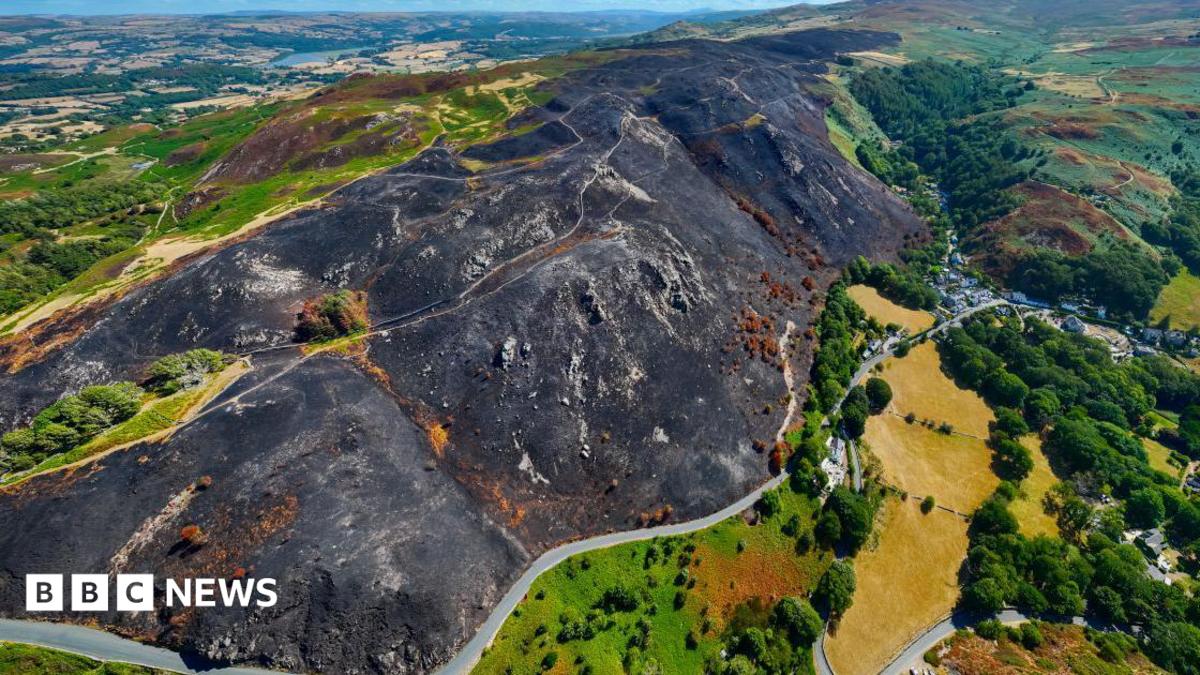
Wildfire damage to habitats in Wales could take hundreds of years to recover, Natural Resources Wales (NRW) has warned.
Nick Thomas, from Natural Resources Wales, said upland areas containing peat could face the longest recovery times. Peat grows by only about one millimetre each year, meaning vegetation may take centuries to return if the soil has been destroyed by intense wildfires.
He described 2026 as the worst year for wildfires Wales has ever experienced.
In addition to damaging wildlife and natural habitats, the loss of soil could increase the risk of flooding. Healthy upland soil acts like a natural “sponge”, absorbing and holding rainwater on higher ground.
Wales has experienced several major wildfires this summer, including a large-scale incident that led to the evacuation of a village in Conwy county.
In the Rhinogydd mountain range in Gwynedd, home to a National Nature Reserve and a Special Area of Conservation, a wildfire burned for almost two weeks and affected more than 2,000 acres.
Both major wildfires were visible from space.
A separate blaze in Blaenavon, Torfaen, produced smoke that could be smelled as far away as Cardiff.
Although fewer wildfires were recorded in the second half of July in England and Wales than during the same period in 2025, Thomas said: “This year seems to have been worse than any of the years I can remember.
“I would expect this to probably be the worst year for wildfires that we’ve ever had.”
Some areas affected by wildfires may recover relatively quickly, potentially within a few years. However, Thomas said the long-term impact depends on how deeply the fire burns into the ground.
“If a fire burns into the soil and incinerates it, then you’ve lost hundreds of years’ worth of soil,” he said.
“It could therefore take hundreds of years for the vegetation to return to anything like its original condition.”
Source: www.bbc.co.uk