


Uterine Microbiome May Help Improve Age-Related Fertility, Study Finds
Supporting beneficial bacteria in the uterus may help counter age-related changes that reduce fertility, according to a new study in mice and laboratory-grown human uterine cells.
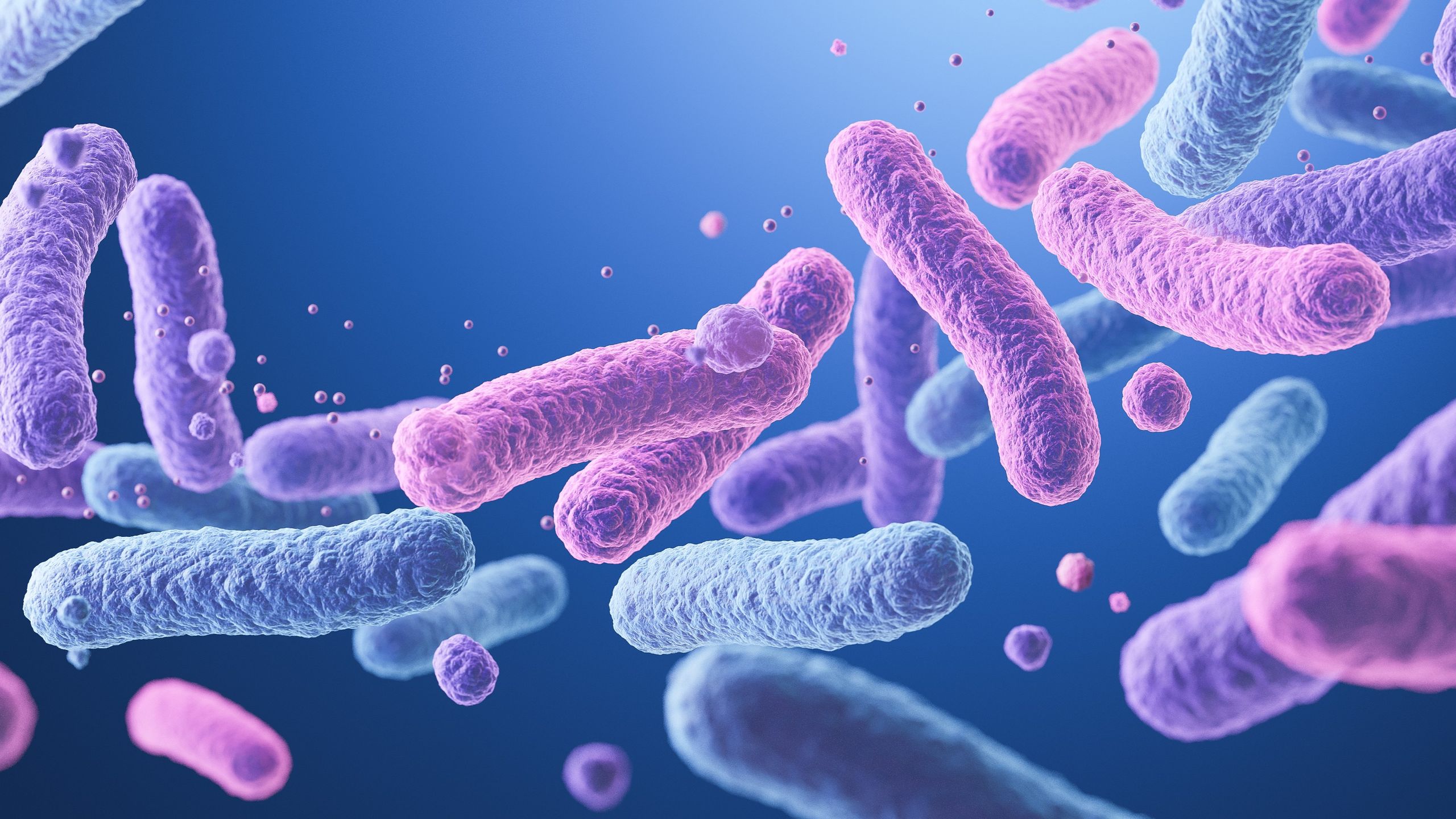
Age-related fertility decline is commonly associated with changes in egg number and quality. However, the uterus also becomes less receptive to embryo implantation as people age. The new research suggests that changes in the uterine microbiome — the community of microorganisms living in the uterus — may contribute to this decline.
In experiments, treating older mice and laboratory-grown human endometrial cells with a specific species of Lactobacillus reduced signs of aging in the uterine lining and improved embryo implantation. Similar effects were observed with a compound produced by the bacteria.
Latest Videos FromLive Science
How the uterine microbiome changes with age
The findings, published Thursday (Aug. 6) in the journal Cell Host & Microbe, indicate that the uterine microbiome could eventually become a target for treatments aimed at age-related infertility. Outside experts emphasized that the results are preliminary and have not yet been confirmed in human fertility trials.
“This is an interesting and promising approach, but we still don’t know whether these findings will translate into meaningful improvements in human fertility,” said Dr. Alex Robles, a fertility specialist at Columbia University Fertility Center who was not involved in the research.
“The microbiome can be influenced by many factors, including genetics, diet, geography, environmental exposures and other lifestyle practices,” Robles told Live Science in an email. “That is why it’s important to validate these findings across diverse populations before developing broadly applicable treatments.”
To investigate how the uterine microbiome may change over time, researchers analyzed endometrial samples from 149 women ages 20 to 45 who were receiving fertility treatment in China. Older participants had lower levels of several beneficial Lactobacillus species, particularly L. gasseri and L. crispatus. These bacteria are generally associated with a healthy reproductive tract.
Get the world’s most fascinating discoveries delivered straight to your inbox.
As people age, the uterine lining typically becomes less receptive to embryo implantation, which can reduce the chance of pregnancy.
(Image credit: BSIP / Contributor via Getty Images)
Lactobacillus gasseri improved implantation in older mice
“One finding that surprised us was that overall microbial diversity did not change markedly across the different age groups,” study co-author Dr. Rong Li, deputy director of the Department of Obstetrics and Gynecology at Peking University Third Hospital in Beijing, said in a statement. “Instead, the major differences involved particular bacterial species.”
Among the 93 women who later underwent in vitro fertilization, or IVF, 56 became pregnant. Women who became pregnant generally had higher levels of Lactobacillus in their uterine lining than those who did not. However, pregnancy rates were similar among the different age groups in this IVF group, so the findings do not establish that the bacteria directly improved fertility.
Researchers then isolated five Lactobacillus species and tested their effects on uterine cells. L. gasseri stood out because it attached strongly to the cells. This interaction was linked to lower inflammation, reduced oxidative stress and increased production of exopolysaccharides, or EPS — sugar molecules made by some bacteria.
What are postbiotics?
The researchers purified the bacterial sugars to create a postbiotic they called LG-EPS. Unlike probiotics, which contain live microorganisms, postbiotics are preparations made from components or byproducts of bacterial cells.
The team administered either L. gasseri or LG-EPS to the vaginal canal of older female mice each day for four weeks. Both treatments were associated with fewer signs of uterine aging, reduced inflammation and higher embryo implantation rates than no treatment. However, the researchers did not measure how much of either treatment reached the uterus.
When the researchers used a modified strain of L. gasseri that could not produce EPS, many of the benefits disappeared. This result suggests that the exopolysaccharides may be responsible for much of the treatment’s effect. LG-EPS also reduced aging-related changes in artificially aged human uterine cells and improved their ability to support embryo implantation in the laboratory.
Additional experiments indicated that LG-EPS may work by adjusting a cellular signaling pathway involved in cell growth and tissue repair. The pathway was unusually active in older mice and aged uterine cells, while treatment helped bring its activity closer to normal. Blocking a key protein in the pathway eliminated the treatment’s effects.
Could postbiotics become a fertility treatment?
Postbiotic treatments may be easier to manufacture and standardize than products containing live bacteria, Robles said. If future research confirms the findings, such treatments could potentially be studied as an addition to IVF before embryo transfer.
Still, experts caution that the study does not show that vaginal probiotics or supplements can improve fertility. The research was conducted primarily in mice and laboratory-grown cells, and further studies are needed to determine whether the approach is safe or effective in people.
“The reproductive tract is a delicate ecosystem, and introducing or eliminating certain bacteria could have unintended consequences,” Robles said. “We do not fully understand what constitutes a ‘healthy’ uterine microbiome. As such, any intervention should be approached with caution.”
This article is for informational purposes only and is not meant to offer medical advice.
Li, M., Li, S., Zheng, D., Liao, B., Niu, H., Wang, Y., Liu, X., Pan, H., Yu, Y., Zhou, P., & Li, R. (2026). Lactobacillus gasseri postbiotics ameliorate age-related decline in endometrial receptivity. Cell Host & Microbe, S1931312826002787.
Source: www.livescience.com