


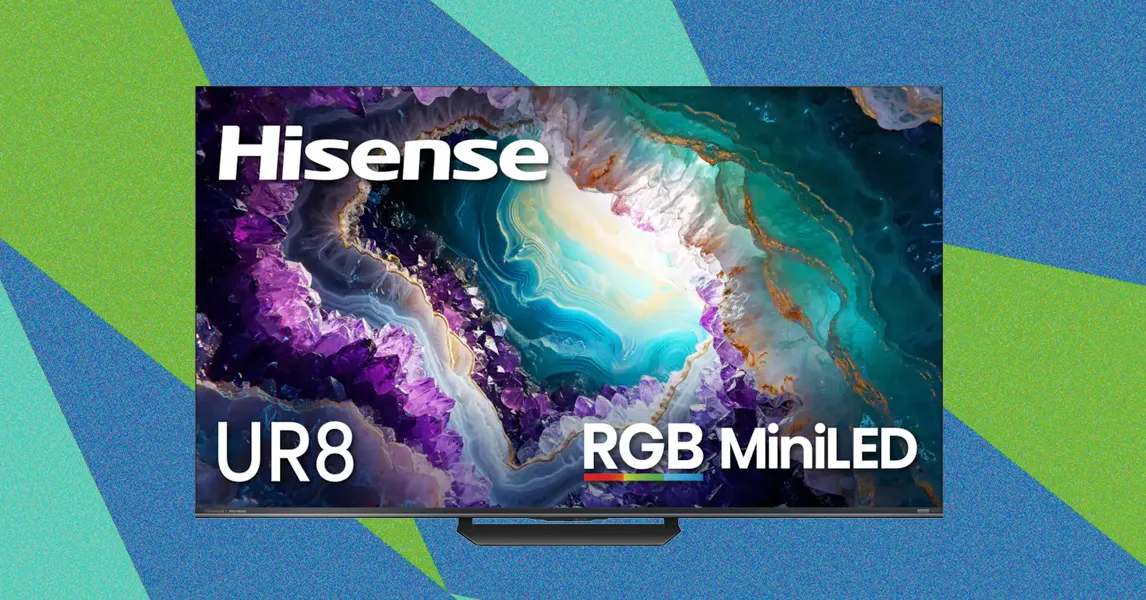
Comparisons with the higher-end Hisense UR9 and LG Micro RGB Evo show that the Hisense UR8 RGB MiniLED TV delivers strong color accuracy and an atmospheric gaming image, but it can fall behind in contrast, shadow detail, brightness, and fine texture. The differences are subtle in some scenes yet noticeable in demanding dark or high-contrast content, while gaming latency appears broadly similar to the UR9.
Picture quality in movies and television
While watching the next episode of dragon house through the HBO Max app using Google Cast, the scales in the dragon scene were visible on the UR8, although they did not appear as textured as they did on the UR9. Whether that subtle difference justifies paying more for the higher-end model remains uncertain, but the distinction was noticeable.
In creator on Fandango at Home, the beach landing appeared slightly faded and dark. In batman, gunfire in a dark hallway looked bright enough, but the scene lacked the rich detail seen in the dragon sequence comparison.
super mario galaxy movie on Peacock provided a useful color test. Stars moved across the screen in vibrant rainbow colors and looked bright and accurate, although some showed excessive blooming—the halo effect in which bright tones bleed into nearby darker areas. To be fair, the UR9 displayed the scene in a similar way.
There was better news in Guardians of the Galaxy Vol. 2 on Disney+. The UR8’s RGB technology produced highly realistic colors, including the bright blues, reds, and oranges in the opening scene. However, contrast was not as rich or tonal as it was on the UR9, and shadow detail was weaker. The LG Micro RGB Evo rendered the same scene even brighter.
Benchmark tests using Spears & Munsil discs showed skin tones that appeared darker and less varied than on the LG Micro RGB Evo and Hisense UR9. The demonstration reel revealed several additional differences. White mist against white mountains was less distinct than on the UR9, although the UR8’s accurate color reproduction made the green grass beside a fence look similar to the UR9’s output. Dark trees in nighttime scenes appeared sharper on the UR9, which has a higher nits rating. The UR8 still revealed the texture of the wood, but its red cacti and yellow flowers appeared darker.
Gaming performance on the Hisense UR8
The UR8 is designed to support gaming by detecting game content, adjusting latency, and helping improve picture quality. Like the UR9, it automatically adjusted key picture settings whenever a game was started.
Black levels appeared slightly richer than expected, which worked well in Resident Evil: Requiem, a game that largely takes place in darkness. The UR8 created an atmospheric image that was dark and moody without looking washed out. There was no major difference in latency compared with playing the same game on the UR9, and a Hisense representative said the wait times are about the same.

Source: www.wired.com