


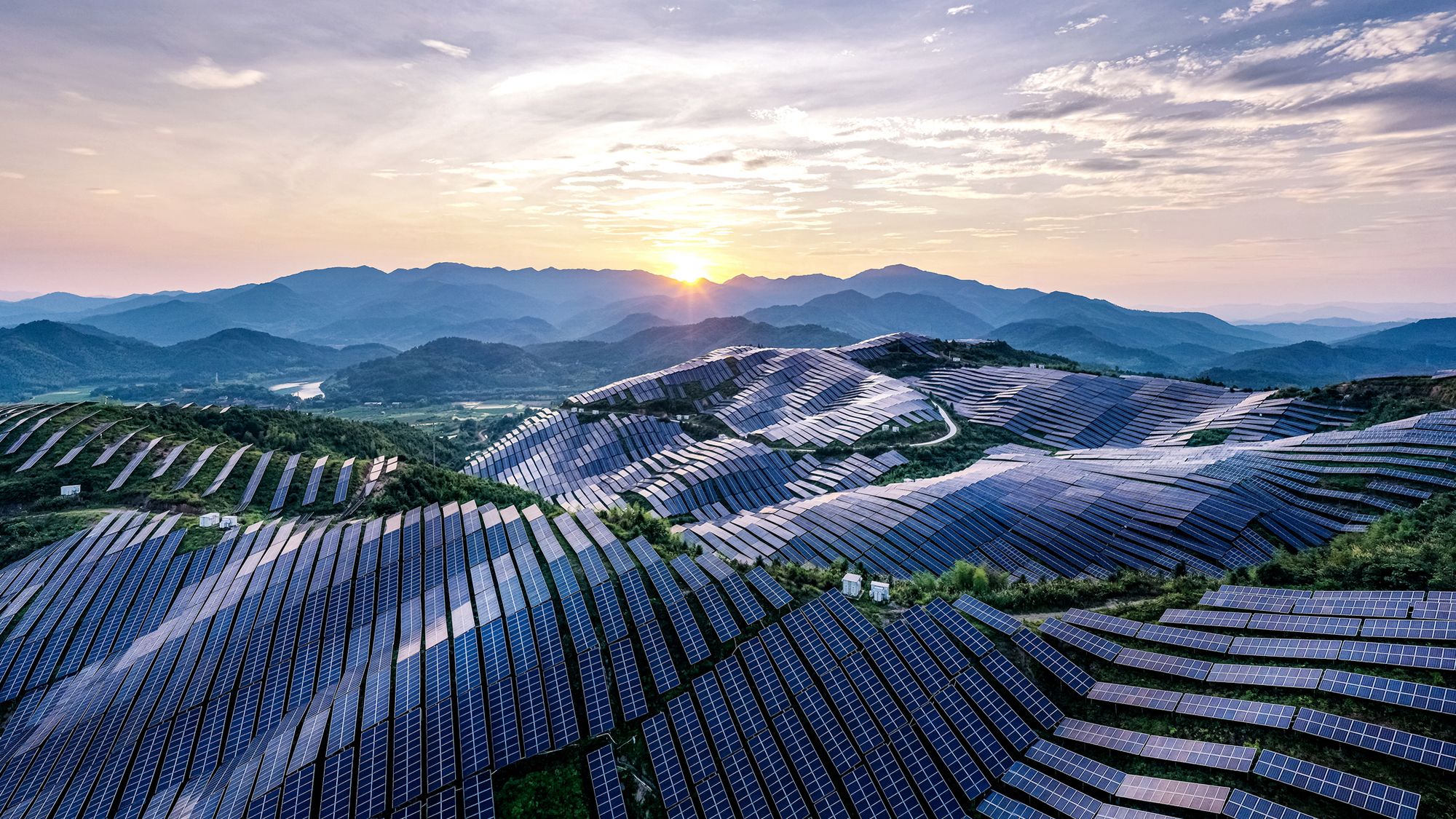
China’s Solar Power Capacity Surpasses Coal for the First Time
China’s installed solar power capacity has overtaken coal-fired power capacity for the first time, marking a major milestone in the country’s rapid renewable energy expansion.
According to data from China’s Energy Administration, the country had approximately 1,288 gigawatts (GW) of installed solar capacity by the end of July. That figure narrowly exceeded its 1,285GW of installed coal-fired power capacity, The South China Morning Post reported.
What China’s solar milestone means for climate change
The shift could have significant implications for global efforts to reduce greenhouse gas emissions. China is the world’s largest annual greenhouse gas emitter, accounting for roughly 30% of global warming emissions.
If renewable energy growth begins to displace coal generation, China could reduce one of its largest sources of carbon dioxide emissions. The impact could also extend beyond China, as the country’s enormous solar manufacturing industry continues to influence the global price and availability of solar panels.
“It is a major milestone that China’s installed solar power capacity has reached approximately 1,288GW, narrowly overtaking coal,” said Matthew Davis, a professor of chemical engineering at Swansea University and UNESCO Chair in Sustainable Energy Technologies.
However, installed capacity does not directly reflect how much electricity each source generates. Solar photovoltaic systems produce power only when sunlight is available, while coal plants can operate for longer periods and provide more consistent electricity.
“Solar PV only generates electricity when sunlight is available, but coal-fired power plants can operate for much longer periods, so solar PV remains a much smaller share of China’s electricity supply than coal,” Davis said.
Solar generation continues to rise
China’s solar electricity output is increasing alongside its installed capacity. From January through July, solar generation rose 15.5% compared with the same period in 2025, reaching 802.4 terawatt-hours (TWh).
That total represented approximately 13% of China’s electricity consumption during the seven-month period. Coal, however, remains more important in terms of the electricity actually delivered to the national grid.
Davis described the capacity crossover as a “structural tipping point,” rather than evidence that solar power has already replaced coal.
“The key question is whether renewable energy generation can grow fast enough to not only meet growing electricity demand but also push coal generation down in absolute terms,” he said. “Given the size of China’s electricity system, continued reductions in coal use could have a significant impact on global CO₂ emissions.”
China must modernize its power grid
Building more solar farms is only one part of the energy transition. China must also expand electricity transmission, energy storage and demand-management systems to ensure that renewable power can reach consumers when it is needed.
“Installing solar power is just one part of the transition. The grid, transmission, storage and demand flexibility all need to keep up so that renewable power can actually be used,” Davis said.
Solar energy production can vary throughout the day and is affected by weather conditions. As a result, large-scale solar deployment requires flexible power systems capable of balancing periods of high and low generation.
Solar manufacturing brings global benefits and challenges
China’s vast solar manufacturing capacity could help reduce the cost of renewable energy around the world. Lower panel prices may make clean electricity more accessible in developing regions and areas where reliable power remains limited.
At the same time, the solar industry must address the environmental impact of manufacturing. Solar panels require raw material extraction, processing, transportation and installation, all of which create an initial carbon footprint.
The production of polysilicon, a key material used in solar panels, is particularly energy-intensive. Nevertheless, the emissions associated with manufacturing can be offset by the clean electricity generated by panels over their operating lives.
Davis said the next stage of the transition should focus on making the entire solar supply chain more sustainable, including the origins of materials, manufacturing methods, product lifespans and recycling systems.
A more resilient global clean-energy system
Expanding local and regional solar manufacturing could strengthen supply chains, create new technical skills and generate economic value. It could also make the global energy transition more resilient and equitable.
“The global energy transition is not just about replacing fossil fuels in existing electricity systems,” Davis said. “It is also about ensuring that those who still lack reliable electricity have access to clean, affordable electricity.”
China’s solar capacity milestone shows how quickly renewable energy can scale. But the long-term success of the transition will depend on more than installing solar panels. It will require cleaner manufacturing, stronger power grids, expanded energy storage and affordable access to reliable electricity worldwide.
Source: www.livescience.com