


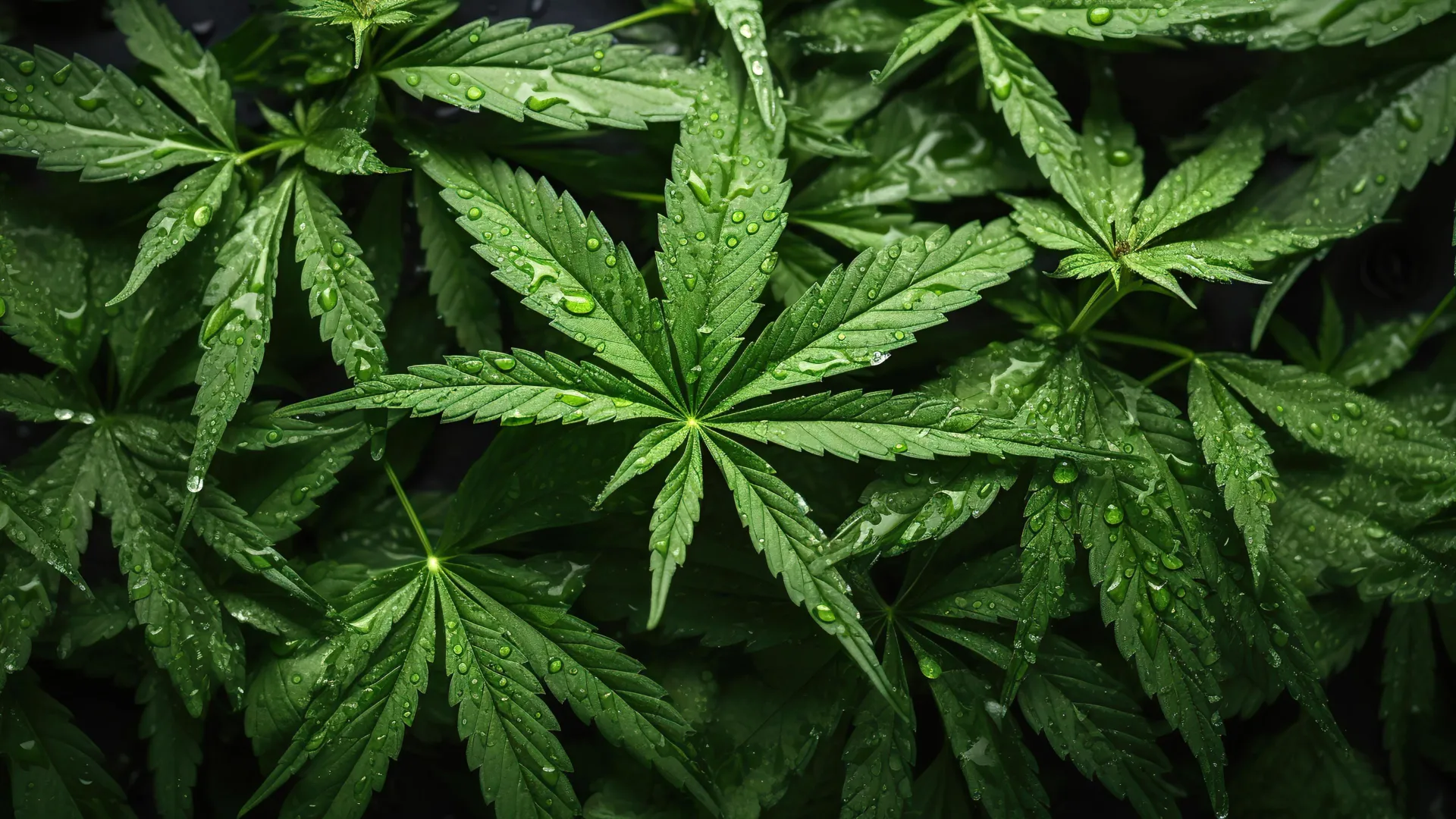
Scientists Discover Rare Flavoalkaloids in Cannabis Leaves
Scientists studying the chemistry of cannabis leaves have found evidence of a previously undocumented group of rare natural compounds known as flavoalkaloids.
Analytical chemists at Stellenbosch University (SU) made the discovery while investigating the complex mixture of chemicals found in commercially grown cannabis plants in South Africa. Their findings suggest that cannabis leaves—often treated as low-value plant material or waste—may contain a much richer collection of potentially useful compounds than previously recognized.
Rare compounds discovered in cannabis leaves
Flavoalkaloids belong to a broader family of plant chemicals known as phenolic compounds. Plants naturally produce phenols, which can contribute to pigmentation, defense, and protection from environmental stress.
One major subgroup of phenolic compounds is flavonoids. Many flavonoids have been associated with antioxidant, anti-inflammatory, and anticarcinogenic properties, attracting significant interest from pharmaceutical researchers.
Flavoalkaloids, however, are much less common in nature.
In their analysis of three commercially grown cannabis strains, the researchers detected 79 phenolic compounds. Of these, 25 had not previously been reported in cannabis.
Sixteen compounds were tentatively identified as flavoalkaloids, providing the first evidence that this rare class of chemicals occurs in cannabis leaves. The researchers also found that most of the flavoalkaloids appeared primarily in just one of the three strains.
The findings were reported in the Journal of Chromatography A.
Cannabis contains hundreds of metabolites
Studying plant phenols can be particularly challenging, says Dr. Magliette Müller, an analytical chemist in the LC-MS laboratory at Stellenbosch University’s Central Analytical Facility (CAF).
These compounds are often present in very low concentrations, and their chemical structures can vary widely. This makes it difficult to separate, identify, and distinguish individual compounds within an already complex plant sample.
“Most plants contain very complex mixtures of phenolic compounds, and while flavonoids are widespread in the plant kingdom, flavoalkaloids are extremely rare in nature,” she explains.
The results were especially surprising because cannabis is already known to contain hundreds of metabolites. A metabolite is a small molecule produced through biological and chemical processes within an organism.
“We know that cannabis is very complex, containing over 750 metabolites, but we did not expect to find such a large variation in phenolic profiles between just three strains,” Müller says. “We also did not expect so many compounds to be detected for the first time in that species. In particular, the first evidence of flavoalkaloids in cannabis was very exciting.”
Advanced analytical techniques reveal hidden cannabis compounds
The discovery resulted from analytical techniques developed by Müller during her graduate studies in the Department of Chemical and Polymer Sciences at the University of South Wales.
Her method combines comprehensive two-dimensional liquid chromatography with high-resolution mass spectrometry.
Liquid chromatography separates chemicals in a mixture so researchers can study them individually. Two-dimensional liquid chromatography separates compounds in two different ways, providing greater resolution when samples contain many closely related chemicals.
High-resolution mass spectrometry helps identify compounds by determining their molecular weights with a high degree of precision.
By combining these techniques, the researchers were able to examine the phenolic chemistry of cannabis in much greater detail.
“We were looking for new applications for the method I had developed after successful tests on rooibos tea, grapes, and wine, and decided to apply it to cannabis because we knew it was a complex sample,” Müller explains. “Cannabis phenolics are not well characterized.”
Separating rare compounds from abundant flavonoids
Professor Andre de Villiers, Müller’s research leader, said the separation achieved with this technique was critical to discovering the rare compounds.
He said he was surprised by the chromatography results Müller obtained.
“The superior performance of two-dimensional liquid chromatography allowed us to separate flavoalkaloids from much more abundant flavonoids, allowing us to detect these rare compounds in cannabis for the first time.”
De Villiers leads the Analytical Chemistry Research Group in SU’s School of Chemical and Polymer Sciences.
The findings highlight an important challenge in phytochemistry: rare compounds can easily be masked by chemicals present in much greater quantities. More powerful separation methods can reveal substances that have been present in a plant but were difficult to distinguish using less advanced techniques.
Looking beyond THC and other cannabinoids
Scientific attention on cannabis has historically focused on cannabinoids, a group of compounds associated with many of the plant’s well-known pharmacological and mood-related effects.
De Villiers argues that the new findings show how much remains to be learned about the non-cannabinoid chemistry of cannabis.
Cannabis leaves, in particular, may deserve closer attention. Plant material currently considered waste could contain phenolic compounds with properties of interest for future biomedical research.
“Our analysis once again highlights the rich and unique non-cannabinoid phenolic profile of cannabis plant material currently considered waste,” De Villiers concludes. “This profile may be relevant from a biomedical research perspective.”
Source: www.sciencedaily.com