


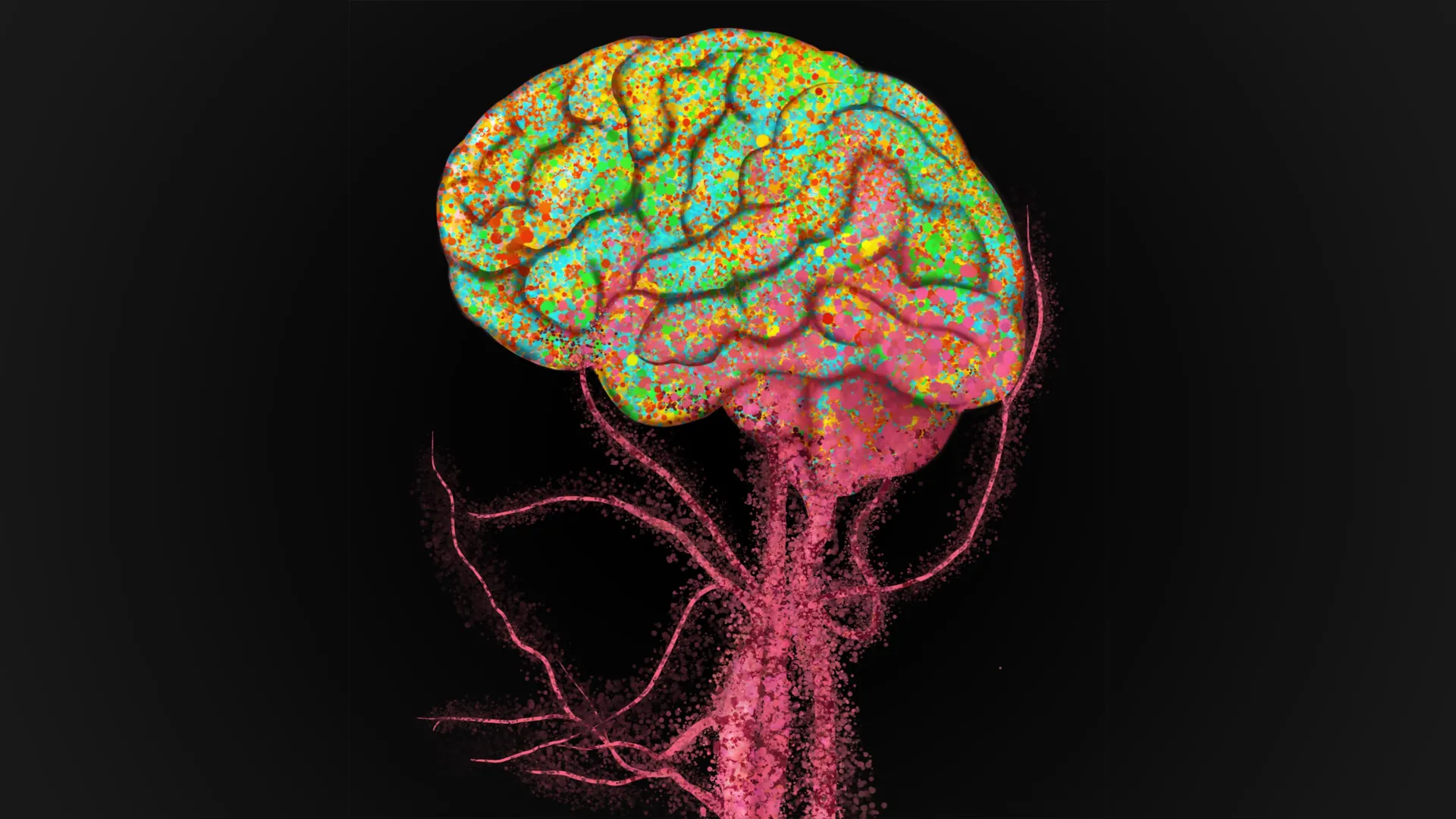
For decades, scientists have believed that the brain’s immune system operates largely independently from the immune defenses found throughout the rest of the body. The brain contains specialized immune cells and is protected by the blood-brain barrier, which limits the entry of many substances and cells into brain tissue.
However, a new Stanford University study challenges this long-standing view. Researchers discovered that, as people age, large numbers of immune cells from other parts of the body can enter the brain. The finding could transform scientists’ understanding of brain aging and open new possibilities for treating neurological diseases. The research was supported in part by the Wu Tsai Institute for Neuroscience’s Knight Initiative for Brain Resilience and was recently published in the journal Nature.
“We usually think of the brain as a closed system,” says Julia Berg, a postdoctoral fellow in pathology at Stanford University and lead author of the study. “What we discovered is that as we age, more immune cells actually invade the human brain.”
An unexpected path to understanding brain aging
Berg’s interest in neuroscience began while she was a graduate student in the computer science department at Stanford University’s College of Humanities and Sciences. She also received training through Stanford’s Sarafan ChEM-H Chemistry/Biology Interface Predoctoral Training Program. Berg says this interdisciplinary experience helped shape her approach, which combines basic science, computer science, and medicine.
Her training eventually led to a collaboration with Siddhartha Jaiswal, senior author of the study, associate professor of pathology at Stanford, and a member of the Institute for Stem Cell Biology and Regenerative Medicine.
In earlier research, scientists analyzed genetic information from thousands of people, including participants who had been monitored for decades. The team found that people carrying a particular clone of immune cells produced by mutated blood stem cells were significantly less likely to develop Alzheimer’s disease. The finding suggested that these abnormal immune cells may interact with the brain.
Researchers later found evidence that some of these mutated immune cells could enter the brain. The mutations are linked to a condition called latent clonal hematopoiesis, which affects only a minority of people. Even so, the discovery raised broader questions: Do immune cells in the bloodstream routinely enter the brain as people grow older?
“Unlike most immune cells, which are continuously replenished by blood stem cells from the bone marrow, immune cells in the brain are estimated to self-renew throughout life without influence from outside the brain,” Jaiswal said. “Our initial study showed that this is not always the case.”
Challenging traditional views of brain microglia
For many years, scientists believed that microglia—the brain’s specialized immune cells—were established at birth and remained an independent population throughout life. This theory did not account for immune cells from other parts of the body migrating into the brain and becoming part of the microglial population.
Berg and her colleagues began exploring another possibility. If blood-derived immune cells could enter the brains of some people, perhaps the process was not rare. Instead, it might be a normal feature of human aging.
The possibility that blood-based immune cells could influence Alzheimer’s disease was unusual and controversial. In 2022, Jaiswal and his colleagues sought support from the Knight Initiative for Brain Resilience, which funds research focused on rethinking brain resilience and neurodegenerative disease.
With partial support from the Knight Initiative Innovation Award, Berg, Jaiswal, and co-senior author Howard Chan, the Ludwig Professor of Cancer Research at Virginia and DK and professor of genetics at Stanford School of Medicine, began investigating why certain peripheral immune cells appear to protect against Alzheimer’s disease. Before answering that question, however, they first needed to determine whether immune cells from the bloodstream could enter the brain and become microglia.
Tracking immune cells from the bloodstream into the brain
To investigate the process, the researchers examined human brain tissue. They used samples from the Stanford Rapid Anatomy Center, led by co-author Jody Hooper, professor of pathology at Stanford University, as well as samples from the Alzheimer’s Disease Sequencing Project at the University of Washington.
These programs collect blood and postmortem brain tissue from people with and without Alzheimer’s disease. Having access to both types of samples gave the researchers a rare opportunity to compare immune cells in the bloodstream with those found in the brain after death.
The researchers’ main challenge was determining where the brain’s immune cells originated. Because immune cells continually divide, scientists needed to trace their lineage. The goal was to distinguish cells descended from the original microglia population, which is present from birth, from cells produced by blood stem cells and later housed in the bone marrow.
Researchers solved this problem by comparing the DNA of immune cells from the blood with the DNA of immune cells from the brain. They used shared mutations as biological markers of ancestry, similar to the methods used by consumer genetic ancestry services.
As people age, random mutations gradually accumulate in blood stem cells. The immune cells produced by those stem cells inherit the same mutations. Therefore, when two groups of immune cells share matching mutations, they are more likely to have originated from the same source.
“If we see the same mutations in microglia in the blood and brain, we can be very confident that the immune cells in the brain are descendants of the immune cells in the blood,” Berg says.
Using this method and technology developed during their 2023 study, Berg and her colleagues compared immune cells from paired blood and brain samples. The genetic signatures matched, showing that immune cells from outside the brain can enter brain tissue. This process begins in middle age and becomes more apparent as people grow older.
Additional experiments revealed another unexpected finding: After entering the brain, peripheral immune cells transform into specialized microglia. The researchers noted that this process does not appear to occur in the same way in other species, including mice and non-human primates.
A potential new pathway for brain immunotherapy
The discovery challenges established ideas about brain immunity and could eventually support new approaches to developing targeted treatments for neurological diseases.
“Now that we know that these immune cells can actually invade the brain, we can think of all sorts of new engineering strategies to make peripheral immune cells do beneficial things.”
One potential strategy would involve engineering immune cells to identify and remove amyloid and tau protein aggregates associated with neurodegenerative diseases. In the future, these modified cells could potentially be administered before harmful protein deposits begin accumulating in the brain.
The findings may also expand research into how the health and history of blood stem cells influence brain function. Because many microglia in older adults appear to originate from blood stem cells, changes affecting blood or bone marrow cells could also influence the brain.
“Our findings suggest that blood stem cell life history may influence brain disease risk by altering microglia,” Jaiswal said.
For Berg, the study is especially significant because it identifies a previously unknown feature of human brain aging.
“I think this is interesting because this is also a characteristic of human aging that we didn’t know about.”
Source: www.sciencedaily.com