


Close Menu
HitechubHitechub
    What's Hot
    Gadgets

    PlayStation 5 becomes a completely silent console and gets more space

    Science

    Atom-Based Quantum Computers: Accelerating Towards Practical Applications

    Science

    The World’s Oldest Cheese: Fascinating Facts About This Unusual Delicacy

    Important Pages:
    • About Us
    • Privacy Policy
    • Terms & Conditions
    Facebook X (Twitter) Instagram Pinterest
    Facebook X (Twitter) Instagram
    HitechubHitechub
    Saturday, June 13
    • Technology
      1. AI
      2. Gadgets
      3. View All

      This is the most popular CEO in the world

      Sectors in which “Chat-GPT” is most often used

      AI Pioneer Expresses Concern About Potential for AI to Surpass Humanity

      Artificial intelligence has begun to “swallow” professions

      What’s new in Android 14

      Europeans have about 700 million old mobile phones in their drawers

      Here’s how you can tell if your phone is being tapped

      “Sneaker X” – computer case in the shape of a sneaker

      Russian Gamers Unite to Prevent Nuclear War: Join the Fight Online

      Challenges of Space Travel: Why Journeying to Space is So Difficult

      NASA Astronaut Casts Historic Vote from Space

      Discover the Future of Comfort: What If You Could Wear a Chair?

    • Science
      1. Space
      2. Wheels
      3. View All

      Galaxies in the universe are growing more slowly than they should

      “Espace” presented the new lander “Apex 1.0”

      The largest asteroid sample ever collected has arrived on Earth

      (VIDEO) Incredible flight of the Parker Solar Probe

      Toyota wants to make a new generation battery with a range of up to 1,200 km

      Meet Toyota’s lunar “baby” that could make exploring the Moon easier

      Microlino – Is this the perfect city car?

      Alfa Romeo 4C gets an electric successor

      Can Lab-Grown Sperm Help Infertile Men Conceive Their Own Children?

      Ancient Anesthetic Unearthed in Chinese Doctor’s Grave: A Historical Breakthrough

      Space Storm Threatens Train Signals, Potentially Leading to Serious Accidents

      First Quantum Grandfather Clock: Exploring the Origins of Gravity

    HitechubHitechub
    Home » Exploring Galaxies During Cosmic Noon: A Sciworthy Analysis
    Science

    Exploring Galaxies During Cosmic Noon: A Sciworthy Analysis

    Share Facebook Twitter Pinterest WhatsApp
    Share
    Facebook Twitter LinkedIn Pinterest WhatsApp

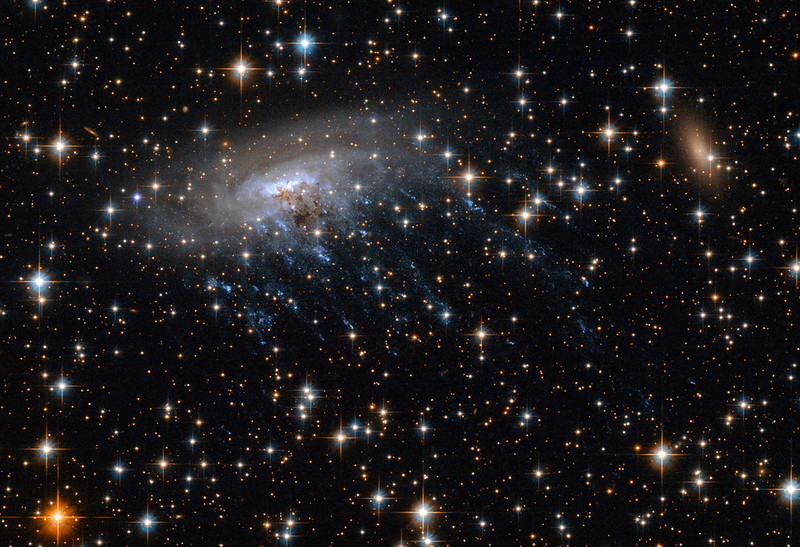
    The universe, estimated to be approximately 14 billion years old, entered a phase known as the dark ages of the universe, during which it is theorized that no stars formed for the initial few hundred million years. Following this epoch, the first billion years saw the dawn of the universe, marking the assembly of the oldest galaxies from gas and plasma.

    As these galaxies came together and more material became accessible, their star formation rates surged annually. Roughly two to three billion years post-Big Bang, galaxies experienced unprecedented growth, producing stars at record rates. This period is referred to as the noon of the universe.

    Recently, Dutch researchers focused on three distant galaxies whose light traveled to Earth during cosmic noon. Their selection stemmed from ancient star-forming galaxies identified via ALMA, a comprehensive archival program aimed at enhancing kinematic analysis. alma alpaca project. They chose to investigate galaxies designated as ID1, ID3, and ID13.

    By integrating two data types, they crafted a detailed depiction of these galaxies. They first gathered information from the Atacama Large Millimeter/Submillimeter Array, a powerful 66-antenna telescope situated in Chile. This ALMA telescope was utilized to detect radio emissions from carbon monoxide and elemental carbon within these galaxies. Researchers noted that analyzing these chemicals could unveil the movement of free-floating gas clouds across distant galaxies. Additionally, they utilized publicly accessible data from JWST’s near-infrared camera, known as NIRCam, to gauge the light emitted by stars within the galaxies. Through diverse analytical methods on these noonday galaxies, the researchers aimed to estimate their masses along with the contributions of normal matter and dark matter.

    Utilizing computer programs developed by fellow astronomers, the team interpreted the JWST data into a series of maps illustrating the star distribution across each galaxy. They applied this emission data to assess the total mass of all stars in these galaxies. Subsequently, they developed their own software to map the gas distribution using ALMA data. These visualizations led to the creation of plots termed the rotation curve, which illustrates the speeds of particles orbiting each galaxy’s center relative to their distance from that center.

    Astronomers leveraged these rotation curves to estimate dark matter quantities in each galaxy. Since dark matter is invisible but still exerts gravitational influence, the gravity it generates causes visible matter, like stars and gas near the galactic periphery, to move faster than in galaxies devoid of dark matter.

    The study revealed that the selected galaxies have masses ranging from 39 billion to 80 billion times that of our Sun’s mass, or solar mass. They hosted free-floating gas amounting to between 4 billion and nearly 16 billion solar masses, alongside dark matter quantities estimated between 1 trillion and 31 trillion solar masses.

    However, discrepancies arose when comparing luminescence data with rotation curves. Typically, dark matter forms shells or haloes around galaxies, primarily affecting outer regions. Consequently, astronomers generally ascertain central matter mass based on existing gas and star quantities. Yet, the researchers discovered that, near the centers of these galaxies, the mass derived from emissions was less than what rotation curves suggested.

    They proposed several theories to explain this inconsistency. Firstly, they posited that the halo shape might not accurately represent dark matter distribution in all galaxies—implying that noonday galaxies could harbor dark matter in their centers. Secondly, densely packed stars in these galaxies might impede each other’s emissions. Lastly, in galaxy ID1, a supermassive black hole was found to constitute roughly 1.5% of the total star mass at its core.

    The researchers concluded that they had achieved a comprehensive understanding of the mass distribution within these midday galaxies. However, the reason behind the central mass discrepancy remained unresolved. They suggested the existence of a complex interplay between dark matter haloes and the ordinary matter within these galaxies. Future astronomers could employ this methodology to investigate matter distribution in ALMA ALPACA and other distant galaxies in upcoming surveys.

    Post views: 1,038

    Source: sciworthy.com

    Share. Facebook Twitter Pinterest LinkedIn WhatsApp
    Previous ArticleCombatting Fungal Brown Rot with Bacteria: A Sciworthy Exploration
    Next Article Breakthrough Pancreatic Cancer Drug Doubles Survival Rates: A Revolutionary Treatment

    Related Posts

    Science

    Can Lab-Grown Sperm Help Infertile Men Conceive Their Own Children?

    Science

    Ancient Anesthetic Unearthed in Chinese Doctor’s Grave: A Historical Breakthrough

    Science

    Space Storm Threatens Train Signals, Potentially Leading to Serious Accidents

    Science

    First Quantum Grandfather Clock: Exploring the Origins of Gravity

    Science

    Nasa’s Ambitious Lunar Base Project: A Massive Facility Covering Hundreds of Square Kilometers

    Science

    Why Wealthy Individuals with Environmental Values Contribute Most to Carbon Emissions

    Science

    Stunning Images Reveal Sand’s Advance on Sahara Desert Oasis

    Science

    Exploring Ian Watson’s Sci-Fi Classic ‘The Embedding’: A Fascinating Yet Outdated Read

    Add A Comment
    Leave A Reply Cancel Reply

    Stay In Touch
    • Facebook
    • Twitter
    • Instagram
    • Pinterest
    Top Picks
    AI

    Now you can talk to ChatGPT – and he will answer you

    Updates from OpenAI come amid the ongoing AI race in the tech sector. Now you can speak out loud on ChatGPT and hear how your AI chatbot returns.

    Webb Discovers Most Distant Inactive Black Hole Ever Detected

    Can Your Brain Communicate While You Sleep? Discover Findings from This Fascinating Experiment

    Exploring the Quantum Illusion of Time Through the World of Toys

    The unusual robot conductor of a concert in Seoul

    Most Popular
    Science

    A revolutionary technique for connecting electronic devices with human cells

    Technology

    This is the first phone that can be used to park a car

    Categories
    • AI (13)
    • Gadgets (10)
    • Science (225)
    • Space (9)
    • Technology (37)
    • Wheels (9)
    Our Picks
    Science

    Discoveries of Millions of Fossilized Whale Bones Unearthed in Deep Sea ‘Graveyard’

    Science

    Understanding the Relationship Recession: Why It’s a Major Concern for Gen Z

    © 2026 Hitechub.
    • Home
    • About Us
    • Privacy Policy
    • Terms & Conditions

    Type above and press Enter to search. Press Esc to cancel.

    We are using cookies to give you the best experience on our website.

    You can find out more about which cookies we are using or switch them off in .

    Ad Blocker Enabled!
    Ad Blocker Enabled!
    Our website is made possible by displaying online advertisements to our visitors. Please support us by disabling your Ad Blocker.
    Hitechub
    Powered by  GDPR Cookie Compliance
    Privacy Overview

    This website uses cookies so that we can provide you with the best user experience possible. Cookie information is stored in your browser and performs functions such as recognising you when you return to our website and helping our team to understand which sections of the website you find most interesting and useful.

    Strictly Necessary Cookies

    Strictly Necessary Cookie should be enabled at all times so that we can save your preferences for cookie settings.