


How the Green New Deal Put Climate Change Back on the Political Agenda
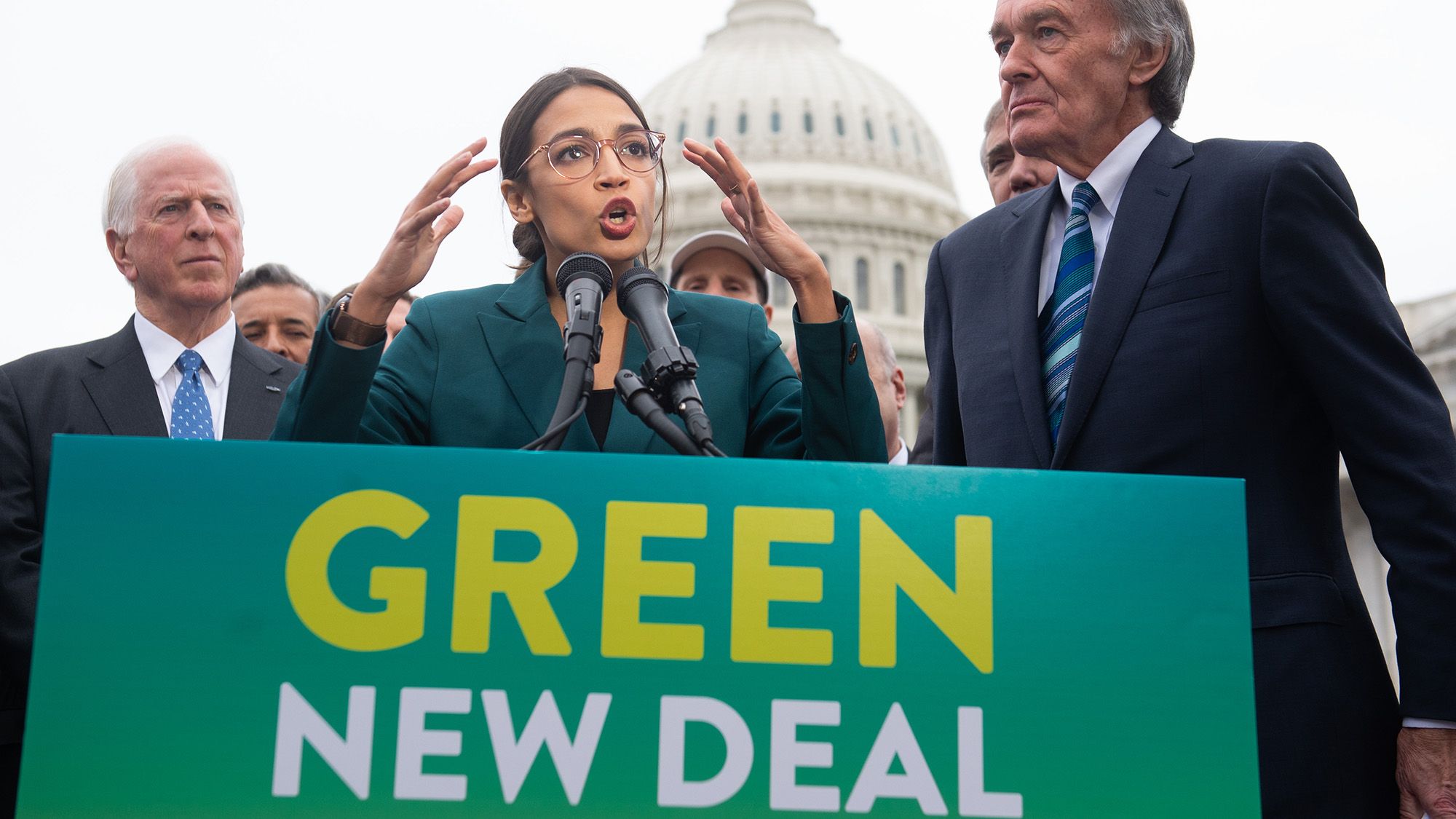
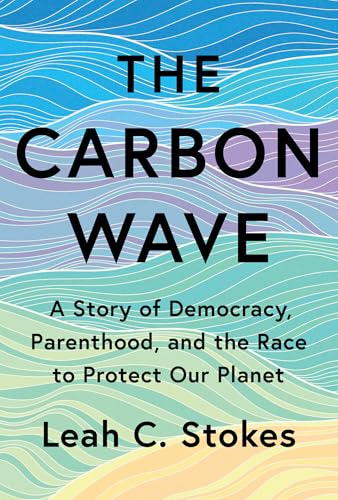
In this excerpt from Carbon Wave (MIT Press, 2026), author Leah C. Stokes, an associate professor of environmental politics at the University of California, Santa Barbara, explores a hopeful turning point in American climate politics. The movement gained national attention when Rep. Alexandria Ocasio-Cortez and Sen. Ed Markey intensified calls for a transformative Green New Deal.
Alexandria Ocasio-Cortez and the personal impact of climate change
In September 2017, Alexandria Ocasio-Cortez was still largely unknown when she watched Hurricane Maria devastate Puerto Rico. The island’s electrical grid failed, and many communities remained without power for months. Like thousands of other Puerto Ricans, her grandfather died in the aftermath of the storm. Ocasio-Cortez saw firsthand how climate change and extreme weather can affect vulnerable communities most severely.
Ocasio-Cortez’s experience was part of a wider pattern. The year before, she had traveled to Standing Rock, North Dakota, where Indigenous protesters were opposing an oil pipeline and highlighting the environmental damage caused by fossil fuel infrastructure. In the weeks after the 2016 presidential election, a temporary protest camp along the Missouri River became a major center of resistance to the Trump administration and the fossil fuel industry.
Soon after Ocasio-Cortez left Standing Rock, progressive organizers encouraged her to run for Congress. Inspired by the activists she had met, she accepted the challenge. In 2018, she launched a primary campaign in the Bronx against a 10-term member of Congress. Her platform included the Green New Deal, an idea that had been discussed for years but had not yet been developed into a major national policy proposal.
“The Green New Deal we are proposing will be on the same scale as the mobilization efforts seen in World War II and the Marshall Plan,” Ocasio-Cortez told reporters that summer. “We must once again invest in the development, production, deployment, and distribution of energy, but this time in green energy.” She won the primary in June. Her victory marked the beginning of a broader political shift: climate change was returning to the center of the national agenda.
The IPCC report that changed the climate conversation
That fall, the Intergovernmental Panel on Climate Change, the world’s leading climate science organization, published a landmark report. It warned that global greenhouse gas emissions would need to fall by nearly half by 2030 to give the world a chance of limiting warming to 1.5 degrees Celsius.
The report received worldwide attention, with headlines warning that there were only 12 years left to stop climate change. In my neighborhood, someone printed the report, placed it in a free library and labeled it “Important Reading.” Its message changed how many people understood the climate crisis. This was no longer a problem that could be postponed for decades. It demanded immediate action.
Two years into the first Trump administration, Democrats won a decisive victory in the November 2018 midterm elections. The result cleared the way for Nancy Pelosi to return as speaker of the House after eight years as minority leader.
Several days later, young activists from the Sunrise Movement staged a sit-in at Pelosi’s office. They carried a bright yellow-and-black sign that read, “You have 12 years to go. What are your plans?” The message referred directly to the IPCC’s climate report.
Sunrise Movement participants gather at the office of former U.S. Representative Nancy Pelosi to call for action on the Green New Deal.
(Image credit: SOPA Images/Getty Images)
Building a hopeful vision for climate policy
Newly elected Rep. Ocasio-Cortez joined the activists that day. She urged organizers to ask direct questions and demand a Green New Deal. The idea quickly gained momentum and became a major subject of news coverage across the country.
The Green New Deal offered a hopeful vision for climate action. Its supporters did more than describe the climate disasters the world needed to avoid. They also explained how investments in renewable energy and clean technology could create well-paying jobs, strengthen communities and help build a healthier future.
From my office overlooking the Pacific Ocean, I watched these developments unfold in Washington, D.C., and wanted to contribute. The Green New Deal had a powerful pull. It brought together activists, researchers, environmental justice advocates and policymakers who believed that bold climate legislation was possible.
Through a chance meeting at a conference, I connected with people working with Ocasio-Cortez and was invited to an early gathering focused on developing the Green New Deal into a detailed policy framework. By then, Ocasio-Cortez and Massachusetts Sen. Ed Markey had released a formal outline for the proposal.
Climate activism and the environmental justice movement
The meeting took place in March 2019 at a hotel in Washington, D.C.’s Adams Morgan neighborhood, several miles from the Capitol. The participants included youth activists, environmental justice leaders, political organizers, think tank researchers and academics.
The gathering also revealed tensions within the growing climate movement. Some participants argued that communities living with the heaviest pollution burdens had not been adequately consulted or included. These concerns highlighted the essential connection between climate policy and environmental justice.
At the time, I was still learning how closely the climate movement and the environmental justice movement were connected. As a political science professor, I wanted to understand how research could become more useful in the effort to pass effective climate legislation and address the unequal effects of pollution and climate change.

Varshini Prakash speaks at a climate strike rally in New York City in 2019.
(Image credit: Pacific Press/Getty Images)
At the gathering, I met Varshini Prakash, executive director of the Sunrise Movement. I had seen photographs of her standing in Pelosi’s office in a dark red jacket over a black-and-yellow shirt, surrounded by young activists seated on the floor.
Only four months after the sit-in, Prakash had become one of the most visible leaders in the climate movement. Yet she was also a recent college graduate in her mid-20s who felt the emotional strain of the climate crisis and the enormous effort required to confront it. During the meeting, she spoke openly about the pressure facing young activists and began to cry. Her vulnerability revealed the human cost of organizing for climate action.
Prakash had already helped change the course of the movement. Through her leadership, and through the work of countless Sunrise Movement organizers, millions of people gained a sense of hope and possibility. Their organizing brought people together for the first Washington, D.C., conference and many others that followed. It encouraged me to believe that determined people can accomplish more when they work collectively.
How collective action creates political change
Our understanding of political change is often too simple. We are encouraged to focus on the short term and to believe that each person is responsible only for an individual carbon footprint. We are told that each person has one vote and that there are strict limits to what one individual can accomplish.
From that perspective, challenging fossil fuels—an industry that has shaped modern society for more than a century—can seem impossible. We may feel too small to make a difference, like a single drop of water in an ocean.
But drops of water can create waves. When people organize, persist and act together, their efforts can influence public opinion, reshape political priorities and produce meaningful change. The story of the Green New Deal shows how grassroots climate activism helped return climate change to the center of American politics.
Excerpt from Carbon Wave: A Story of Democracy, Parenthood, and the Race to Save the Planet, written by Leah C. Stokes. Reprinted with permission of MIT Press. Copyright 2026.
Help us improve Live Science Pro: We are always working to improve our content. Share your feedback about Pro here.
MIT Press
Carbon Wave: A Story of Democracy, Parenthood, and the Race to Protect Our Planet
Blending personal stories with accounts from Congress, the White House and grassroots activists, Leah C. Stokes explains how persistence and collective action can influence the course of history. The book also examines climate policy during the second Trump administration, including which parts of the legislation were rolled back and why there are still reasons for hope.
Source: www.livescience.com