


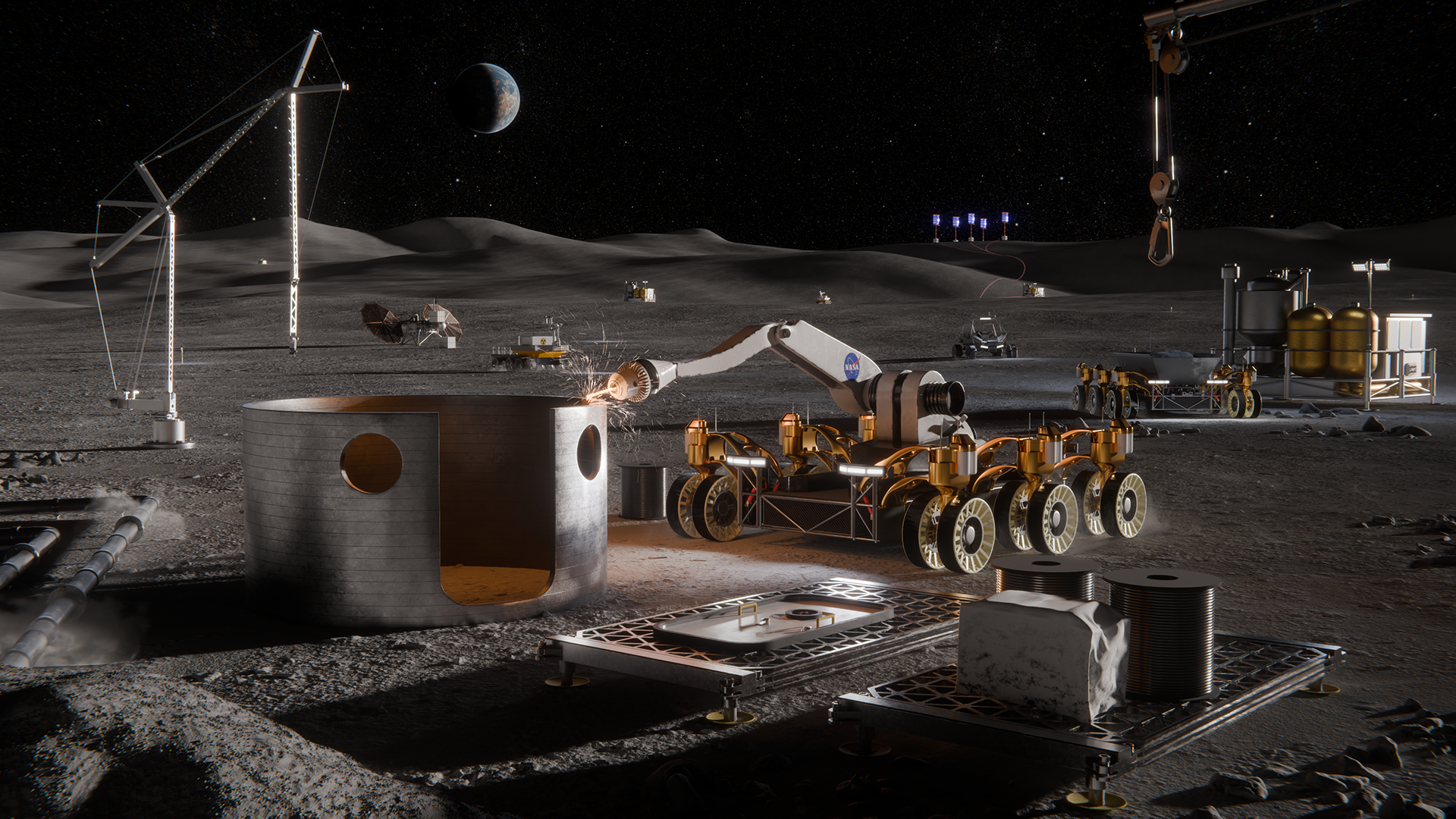
NASA is inviting proposals to develop the technology and infrastructure required for long-term human exploration of the Moon, including the establishment of a sustainable lunar base near the Moon’s south pole.
Announced Tuesday, September 8, the opportunity focuses on critical technology gaps in lunar surface operations, including power generation, oxygen extraction from lunar regolith, advanced manufacturing, and the production of construction materials. These capabilities will support NASA’s plans for sustained lunar exploration and future crewed missions.
“NASA is accelerating the development of key technologies to close critical gaps needed for long-term human lunar exploration,” said Greg Stover, director of NASA’s Advanced Research and Technology Division. “Partnering with industry will mature the capabilities and infrastructure necessary for a sustainable lunar presence and strengthen the U.S. industrial base.”
The NextSTEP-3 Broad Agency Announcement, Appendix A: Lunar Surface Enabling Infrastructure Accelerator, seeks to mature and demonstrate technologies in five key areas:
- Vertical solar array systems capable of providing integrated power generation, management, distribution, and energy storage for lunar missions.
- Oxygen production from lunar regolith, using in-situ resources to extract oxygen chemically bound within the rocks and dust covering the Moon’s surface.
- Radioisotope Stirling generators, which convert heat from radioactive materials into electricity for spacecraft and lunar systems operating in dark, dusty, and remote environments.
- Advanced in-space manufacturing technologies designed to reduce reliance on Earth-based resupply missions while improving flexibility and resilience during lunar operations.
- Innovative nanomaterial manufacturing to expand the availability, quality, and commercial use of nanomaterials for lunar exploration.
The solicitation is designed to advance U.S.-led lunar capabilities while preserving full and open competition among private companies, academic institutions, nonprofit organizations, and international partners participating through U.S.-led teams.
NASA may use technical data, demonstration results, and other insights from contracts awarded through this solicitation to guide future acquisition strategies for lunar exploration and surface infrastructure.
For more information about NASA’s NextSTEP-3 lunar infrastructure initiative, please visit:
-end-
Rob Marghetta
NASA Headquarters, Washington
202-358-0918
[email protected]
Source: www.nasa.gov