


How “Memo Conferences” Are Improving Scientific Lab Meetings
A monthly 20-minute silent reading session is helping one neuroscience research group improve scientific discussions, expose uncertainty and develop stronger research plans.
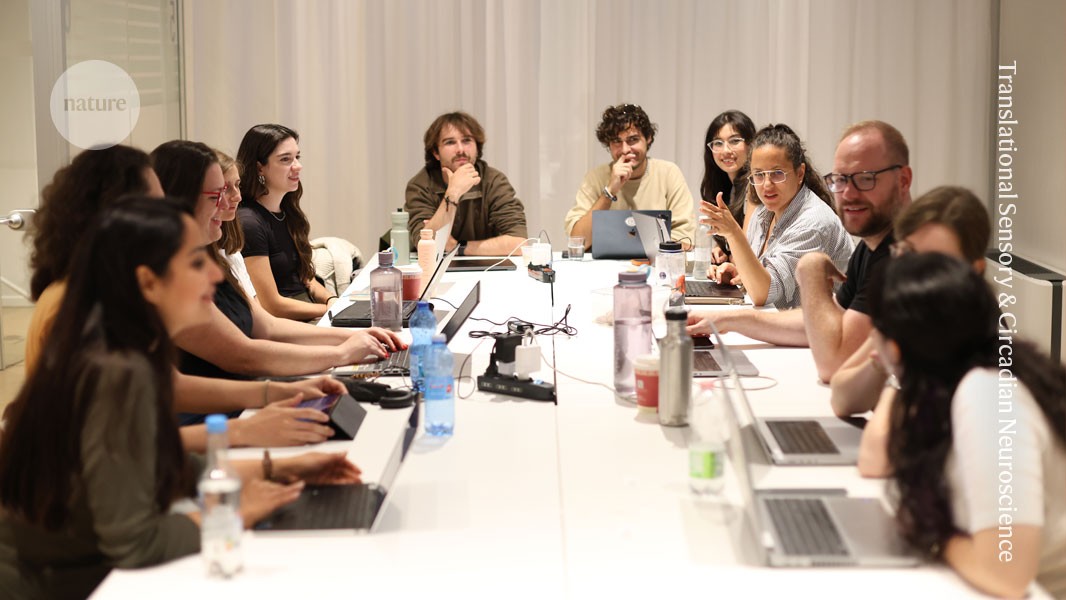
Every month, members of my lab gather for a video call that begins in silence. For 20 minutes, the entire group reads a memo written by one of its members. We then spend the remaining 70 minutes discussing it.
Since we introduced this approach in April 2024, our team has written about 50,000 words—roughly the length of a short story—on topics ranging from the design of individual experiments to uncertainty about a postdoctoral researcher’s scientific focus. Each discussion is summarized in a memo of no more than six pages.
What is a memo conference?
The memo conference format originated in industry. Technology company Amazon introduced it in 2004 after executives argued that meeting time could be used more effectively to discuss written documents. Text, they reasoned, contains more information than presentations.
Although the superiority of six-page narratives over other forms of information sharing has never been empirically tested, the format is well established in Amazon’s corporate practices and has been discussed in the company’s letters to shareholders.
I wanted to test the approach in another setting: scientific discussion. We hoped that using memo conferences alongside weekly meetings focused on logistics and detailed scientific topics would make our lab more efficient. What I did not expect was that the format would change the subjects people were willing to bring to the table.
Written memos reveal uncertainty that slides can hide
My neuroscience research group studies how the environment influences human circadian rhythms and sleep across a wide range of biomedical research areas, including laboratory, field, intervention and modelling studies.
Our monthly meetings bring together these different methods and help integrate our diverse research. The memo format also puts everyone on a more equal footing.
Slides can obscure uncertainty. For example, a research plan involving n = 40 might explain how to cancel the assignment of conditions without describing exactly how the cancellation would happen or what would occur if it failed.
Writing a full text requires greater precision. Any gaps in understanding become apparent to the author while drafting the memo, and those gaps are also visible to readers unless they are addressed.
Writing six pages can seem like more work than preparing a slide deck, but the time is well spent. Memos keep other lab members up to date while also helping the writer develop and clarify their thinking.
Why silent reading improves lab meetings
Reading time is built into the meeting so that everyone works from the same content. This helps level the intellectual playing field. Unlike a presentation, where participants can lose focus or mentally disengage, the memo gives everyone a shared document to examine.
Participants are expected to remain engaged with the memo during the full reading period. If I finish reading early, I typically use the remaining time to take notes. Distractions should be kept to a minimum during the session.
How long should a scientific meeting memo be?
In some cases, we tried to prevent authors from exceeding the six-page limit. Most of our memos are about 1,900 words, or five to six pages, including figures and tables.
However, the page limit is not the main constraint. The real limit is the 20-minute reading period. If the group cannot read the document within that time, the memo is too long.
A simple memo conference structure
When I suggested introducing this method, I did not impose a specific template. Over time, however, a common format emerged.
The memo begins by presenting the issue or question for discussion. It ends with the question the author hopes the group will answer during the meeting.
This structure gives the meeting a clear purpose while creating space for researchers to share uncertainty, test ideas and improve their scientific reasoning before committing to a course of action.
Source: www.nature.com