


Close Menu
HitechubHitechub
    What's Hot
    Science

    Breakthrough Large-Scale Study Uncovers New Genetic Drug Targets for Alzheimer’s Disease

    AI

    Can ChatGPT diagnose patients just like doctors?

    Science

    How Quantum Computers Enhance the Spookiness of Horror Video Games

    Important Pages:
    • About Us
    • Privacy Policy
    • Terms & Conditions
    Facebook X (Twitter) Instagram Pinterest
    Facebook X (Twitter) Instagram
    HitechubHitechub
    Wednesday, June 10
    • Technology
      1. AI
      2. Gadgets
      3. View All

      This is the most popular CEO in the world

      Sectors in which “Chat-GPT” is most often used

      AI Pioneer Expresses Concern About Potential for AI to Surpass Humanity

      Artificial intelligence has begun to “swallow” professions

      What’s new in Android 14

      Europeans have about 700 million old mobile phones in their drawers

      Here’s how you can tell if your phone is being tapped

      “Sneaker X” – computer case in the shape of a sneaker

      Russian Gamers Unite to Prevent Nuclear War: Join the Fight Online

      Challenges of Space Travel: Why Journeying to Space is So Difficult

      NASA Astronaut Casts Historic Vote from Space

      Discover the Future of Comfort: What If You Could Wear a Chair?

    • Science
      1. Space
      2. Wheels
      3. View All

      Galaxies in the universe are growing more slowly than they should

      “Espace” presented the new lander “Apex 1.0”

      The largest asteroid sample ever collected has arrived on Earth

      (VIDEO) Incredible flight of the Parker Solar Probe

      Toyota wants to make a new generation battery with a range of up to 1,200 km

      Meet Toyota’s lunar “baby” that could make exploring the Moon easier

      Microlino – Is this the perfect city car?

      Alfa Romeo 4C gets an electric successor

      Uncovering Surprising Foods That Cause Weight Gain: What You Didn’t Expect

      Moon Meteorite Holds Key Evidence of Massive Asteroid Impact

      Discover How Millions of Planets Could Form Around Supermassive Black Holes

      Unlocking Sloth’s Slow Lifestyle: The Ancient ‘Jumping Gene’ Explained

    HitechubHitechub
    Home » Join The New Scientist Book Club: Exclusive Excerpt from Richard Dawkins’ “The Selfish Gene”
    Science

    Join The New Scientist Book Club: Exclusive Excerpt from Richard Dawkins’ “The Selfish Gene”

    Share Facebook Twitter Pinterest WhatsApp
    Share
    Facebook Twitter LinkedIn Pinterest WhatsApp

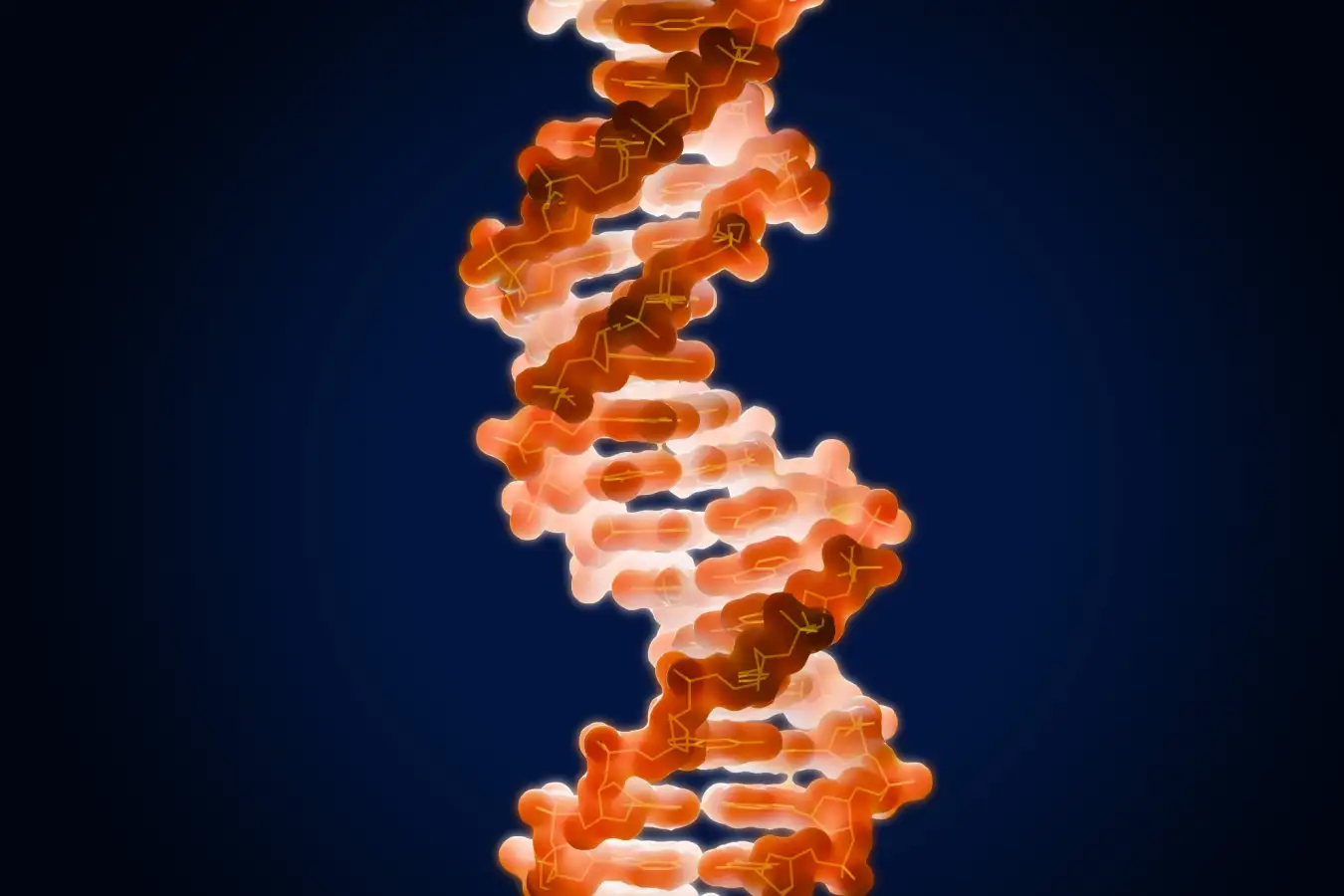
    Unveiling the Double Helix: The Genetic Blueprint of Life

    Shutterstock/Juan Gartner

    Intelligent life achieves maturity when it discovers its purpose. If advanced extraterrestrial beings were to visit Earth, their primary inquiry would likely involve assessing our understanding of evolution. For over 300 million years, life has thrived on our planet, often without deciphering its true nature—until Charles Darwin shed light on the matter. While others had inklings, Darwin was the first to articulate a cohesive narrative explaining our existence. His work allows us to respond sensibly to profound questions such as “Does life have meaning?” and “What defines humanity?” Renowned zoologist GG Simpson remarked that any efforts to answer these queries prior to 1859 were largely futile.

    Today, the theory of evolution is widely accepted, akin to the heliocentric model of our solar system. Yet, the full impact of Darwin’s revolutionary ideas remains largely unacknowledged. Zoology, a field critically relevant to our understanding of life, often finds itself underappreciated in academia. Even students pursuing a zoological education may not grasp its profound philosophical implications. Over time, this perspective will evolve. This book does not serve as a blanket defense of Darwinism; instead, it delves into the implications of evolutionary theory concerning a specific concern: the biology of egoism and altruism.

    Apart from its academic intrigue, the relevance of this subject to humanity is undeniable. It encompasses every facet of our social interactions: love, conflict, cooperation, generosity, and selfishness. Critics, such as Ashley Montagu, often misinterpret the implications of aggression in works from thinkers like Lorenz. They mistakenly prioritize species benefits over individual gains. However, I believe that Lorenz’s evolutionary views align with some critiques but still overlook critical aspects of natural selection.

    Before I outline my arguments, let me clarify what this exploration entails. Consider a scenario involving an individual who thrived within Chicago’s notorious gang landscape; we might predict traits like resilience or charisma based on that context. Likewise, both humans and animals act as genetic machines, competing over millennia. Consequently, one can often anticipate ruthless selfishness as a fundamental characteristic of successful genes. Nevertheless, circumstances may arise where individual animals exhibit altruism to serve broader goals. Phrases like “special” and “limited” become significant when discussing these behaviors, as universal altruism lacks evolutionary rationale.

    This leads to a crucial distinction about the nature of this book. I am not advocating for a moral framework rooted in evolution; rather, I am presenting factual insights into our nature as evolved beings. It is vital to differentiate between observations about our innate behaviors and prescriptions for our moral conduct. While I contend that a society solely based on genetic selfishness would be unsatisfactory, understanding our biological tendencies can help inform better societal frameworks. Our innate tendencies lean towards selfishness; thus, teaching values of cooperation and altruism becomes essential in counteracting our base instincts.

    A corollary to this discussion is the misconception that genetically inherited traits are inherently immutable. While our genes may predispose us to selfishness, they do not mandate behavior throughout our lives. Altruistic behaviors might be more challenging to develop than following genetic predispositions. Human culture—comprising learned and inherited influences—uniquely positions us in the animal kingdom. Some might argue that cultural factors overshadow genetic influences in shaping human behavior. This inquiry does not take a definitive stance in the “nature vs. nurture” discourse; instead, it seeks to understand the broader implications of our evolutionary trajectory.

    The book also distinguishes itself by offering detailed investigations into human and animal behaviors, using factual examples as illustrations. This approach asserts a broader principle: both humans and baboons share a common evolutionary journey shaped by natural selection, suggesting their respective behaviors might display selfish traits. If evidence were to contradict this assumption, it would prompt intriguing questions deserving exploration.

    © Richard Dawkins

    Excerpt from Selfish Gene: 50th Memorial Edition by Richard Dawkins (Oxford University Press)) Available in hardcover, paperback, and ebook formats in June 2026, priced at £25.00

    Join the New Scientist Book Club in June as we read Selfish Gene. Sign up here and participate in the discussion on Discord here.

    Topic:

    Source: www.newscientist.com

    Share. Facebook Twitter Pinterest LinkedIn WhatsApp
    Previous ArticleHow Robots Are Set to Replace Armed Soldiers as Decision Makers in Warfare
    Next Article NASA’s Stunning New Image Reveals the Incredible Power of a Supermassive Black Hole

    Related Posts

    Science

    Uncovering Surprising Foods That Cause Weight Gain: What You Didn’t Expect

    Science

    Moon Meteorite Holds Key Evidence of Massive Asteroid Impact

    Science

    Discover How Millions of Planets Could Form Around Supermassive Black Holes

    Science

    Unlocking Sloth’s Slow Lifestyle: The Ancient ‘Jumping Gene’ Explained

    Science

    Rapid Melting of Glaciers on the Roof of the World: Causes and Impacts

    Science

    Near Miss with Waymo: Why I’m Still Optimistic About Self-Driving Cars

    Science

    NASA’s Stunning New Image Reveals the Incredible Power of a Supermassive Black Hole

    Science

    How Robots Are Set to Replace Armed Soldiers as Decision Makers in Warfare

    Add A Comment
    Leave A Reply Cancel Reply

    Stay In Touch
    • Facebook
    • Twitter
    • Instagram
    • Pinterest
    Top Picks
    Science

    Experience Incredible Speeds as You Move Through Space

    Movement is a relative concept, gaining significance only when comparing the motion of one object…

    What would happen if you were without a suit in space?

    Rethinking Consciousness: Here’s Why We Need a Fresh Perspective

    Rising Frequency and Intensity of Severe Turbulence: What’s Behind the Unpredictable Sky Conditions?

    US Surgeon Contracts Ebola: Family Flown to Germany for Treatment and Monitoring

    Most Popular
    Science

    The Largest Earthquake in History: A Dive into the Richter Scale’s Ultimate Record

    Science

    Vulture Discovered Hiding Medieval Treasure in Its Nest

    Categories
    • AI (13)
    • Gadgets (10)
    • Science (174)
    • Space (9)
    • Technology (37)
    • Wheels (9)
    Our Picks
    Technology

    Windows 12 requires more powerful hardware

    Technology

    The world’s first artificial energy island has received a construction permit

    © 2026 Hitechub.
    • Home
    • About Us
    • Privacy Policy
    • Terms & Conditions

    Type above and press Enter to search. Press Esc to cancel.

    We are using cookies to give you the best experience on our website.

    You can find out more about which cookies we are using or switch them off in .

    Ad Blocker Enabled!
    Ad Blocker Enabled!
    Our website is made possible by displaying online advertisements to our visitors. Please support us by disabling your Ad Blocker.
    Hitechub
    Powered by  GDPR Cookie Compliance
    Privacy Overview

    This website uses cookies so that we can provide you with the best user experience possible. Cookie information is stored in your browser and performs functions such as recognising you when you return to our website and helping our team to understand which sections of the website you find most interesting and useful.

    Strictly Necessary Cookies

    Strictly Necessary Cookie should be enabled at all times so that we can save your preferences for cookie settings.