


Hubble Space Telescope Completes Its 200,000th Orbit Around Earth
NASA’s Hubble Space Telescope completed its 200,000th orbit around Earth on September 19, marking a major milestone for the observatory that continues to transform our understanding of the universe.
Hubble’s 36 Years of Discoveries
During its more than 36 years in space, Hubble has traveled over 5 billion miles around Earth and made more than 1.7 million observations. The observations completed on the day of its 200,000th orbit highlight one of Hubble’s defining scientific legacies: measuring the rate at which the universe is expanding, known as the Hubble constant.
The observations focus on a supernova called Athena, the explosion of a star. Hubble’s ability to return to the same region of the sky over time allows astronomers to monitor the supernova’s expected reappearance.
How a Galaxy Cluster Acts as a Cosmic Lens
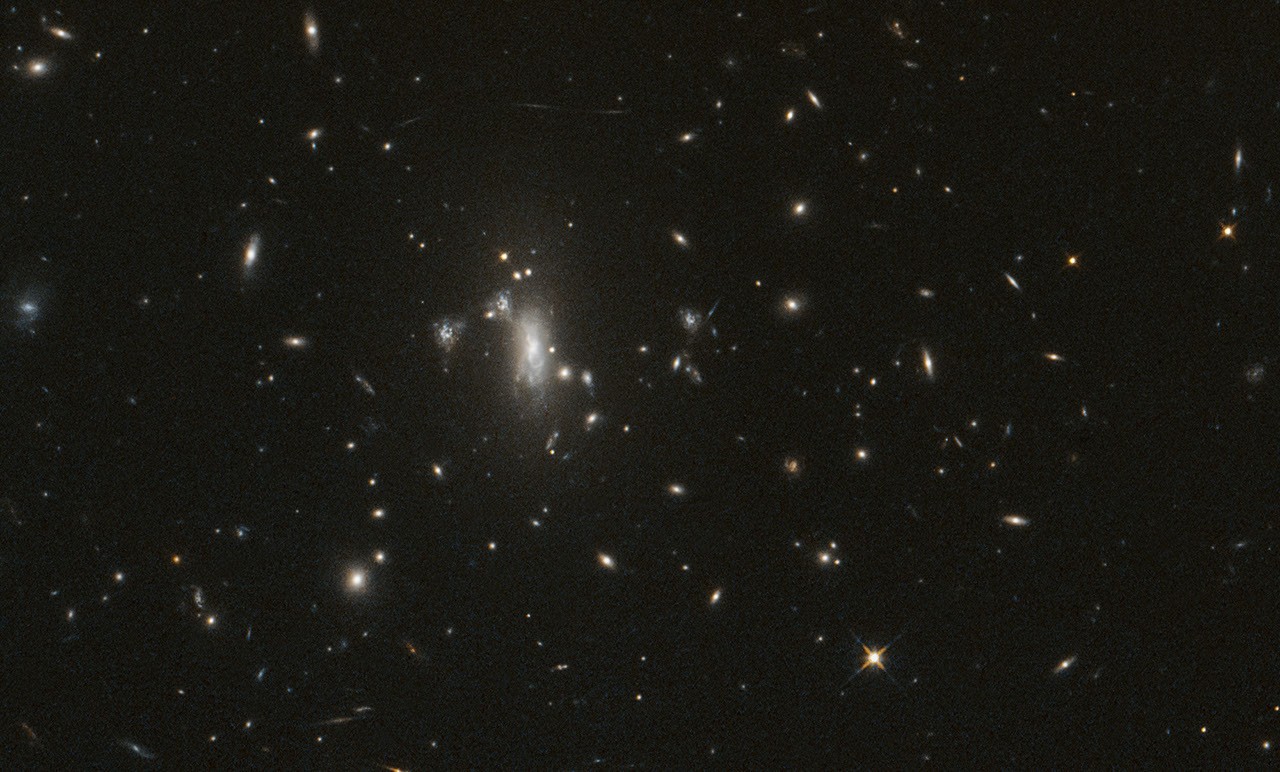
The massive galaxy cluster MACS J0417, located near the center-left of the image, acts as a gravitational lens. Its immense mass bends and magnifies light from objects far behind it.
Light from a supernova can reach Earth along multiple paths, creating multiple appearances of the same stellar explosion. Depending on the length of each path, the explosions may be observed months or even years apart.
NASA’s James Webb Space Telescope discovered Supernova Athena in 2025. The supernova is predicted to reappear between now and early March 2027. Measuring the timing of Athena’s re-emergence will help researchers map the mass of MACS J0417 and improve their understanding of the universe’s expansion rate.
Why Hubble Remains Essential
After more than 36 years in space, Hubble continues to achieve significant scientific productivity and impact. Its unique ability to observe and analyze ultraviolet and visible light complements the capabilities of NASA’s James Webb and Roman Space Telescopes.
Demand for Hubble observing time remains high. Each year, astronomers request approximately seven times more observing time than is available.
Hubble continues to observe targets across every area of astronomy around the clock. Real-time tracking of its observations is available on NASA’s website.
Media contact:
Claire Andreoli
NASA’s Goddard Space Flight Center, Greenbelt, Maryland
[email protected]
Source: science.nasa.gov