



Waymo’s Driverless Cars in London: A Step Towards Safer Roads?
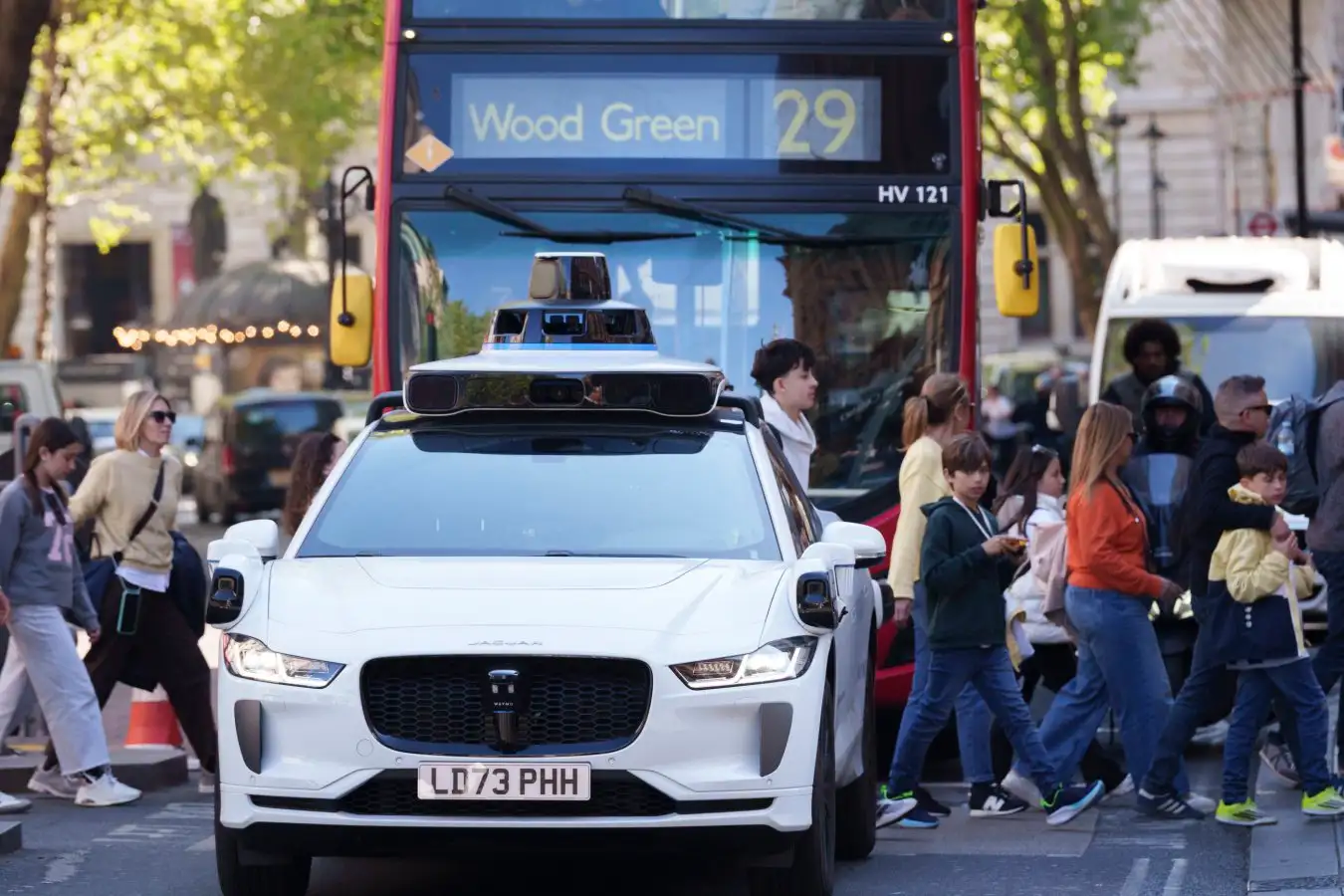
Richard Baker/In Pictures via Getty Images
Waymo’s driverless cars have been operating in London for several months, but they currently do not carry passengers and remain under the supervision of a human to take control if necessary. My encounters with these vehicles have shown them to be cautious and predictable. However, I recently experienced a near miss while cycling.
While navigating a roundabout, a Waymo vehicle attempted to park directly in front of me. Despite my right of way, it seemed to be advancing without slowing, only to stop abruptly. It wasn’t the scariest moment I’ve had on a bike, nor the worst encounter of my day. I wasn’t in immediate danger, as I was prepared for an unexpected situation. Nonetheless, the fact that the driver was an AI, not a human, made it memorable.
I reached out to Waymo to report the incident’s time and location and inquire about their response. A representative explained, “ADS [Automated Driving System] detected a bicycle approaching from the right side of the roundabout, prompting the safety driver to take manual control and apply the brakes.” In essence, human intervention occurred because the AI wasn’t ready to react.
Inquiring about the frequency of such incidents in London, Waymo stated it does not track that data and prefers not to use it as a performance measure. I also asked about the incident that confused the AI, especially since I was legally cycling while wearing a neon yellow bike. Unfortunately, I received no response regarding algorithm improvements.
Other cyclists in London reported mostly positive experiences with Waymo, but one noted a troubling moment where a roadwork sign reading “Narrow Lanes—Do Not Pass Cyclists” seemed to mislead the vehicle into doing just that. Simon Munk from the London Cycling Campaign pointed out that, overall, these autonomous vehicles exhibit caution around cyclists.
Last year, I shared my perspective on AI drivers as they began hitting London streets. I pondered whether unpredictable AI drivers might be safer than tired or distracted human drivers, as I have faced reckless cyclists before. My recent experience with Waymo hasn’t swayed my opinion. Still, there was a past incident where a car managed to navigate through police tape blocking roads, which was later clarified by the company as a controlled event.
While I don’t fully trust AI to navigate city streets, I am also skeptical of human drivers. My belief is that AI has the potential to learn and adapt rapidly. As sensors that inform these systems advance, their ability to detect hazards will also improve. Currently, it’s debatable whether AI represents a lesser danger, but I hold out hope for future advancements.
Munk cautions that self-driving cars have both significant advantages and disadvantages for cyclists and pedestrians. They could enhance road safety by making traffic more predictable, or they could further marginalize vulnerable users. Although Waymo shows promising results in San Francisco, Munk notes that London presents a unique level of complexity and chaos in traffic scenarios. He highlighted a video demonstration of a Waymo vehicle navigating a busy San Francisco intersection, contrasting it with his daily commute, which often involves dealing with less competent drivers.
Munk also fears that once these cars are operational, updates could alter their driving behaviors, even if they initially seem safe. Ensuring the continual monitoring of driverless cars is essential to uphold public safety.
As other companies seek to introduce their self-driving services in London, such as Wayve’s upcoming driverless taxis, there’s no guarantee that they will prioritize safety. Just as human drivers vary in proficiency, different AI systems can demonstrate distinct levels of safety. Additionally, companies can design AI to exhibit specific behaviors, raising concerns about the risks associated with aggressive driving. For instance, Waymo previously faced backlash for modifying its cars to behave more like “aggressive New York taxi drivers” to manage traffic congestion in San Francisco.
We’ve even observed troubling proposals that shift the responsibility for safety onto pedestrians, suggesting they wear special vests for better visibility to self-driving cars.
“In five to ten years, if these practices become standard, will companies push for increased speed and aggression in their services to outpace competitors?” Munk raises an important question about the need for vigilance as we navigate the future of driverless technology.
Topics:
Source: www.newscientist.com