


October Skywatching Guide: Jupiter, Two Meteor Showers and the Hunter’s Moon
October is packed with spectacular celestial events, including Jupiter disappearing behind the Moon, two meteor showers and a bright full moon just in time for Halloween. As autumn days grow shorter and darkness arrives earlier, skywatchers have more opportunities to enjoy remarkable sights in the night sky.
NASA highlighted four notable events this month, from a rare lunar occultation of Jupiter to shooting stars created by debris from Halley’s Comet. With a crisp fall night and a little luck, many observers can enjoy these displays without special equipment.
Jupiter disappears behind the Moon on October 6
Before sunrise on Tuesday, October 6, skywatchers in parts of North America had the opportunity to see Jupiter temporarily disappear behind the Moon. The largest planet in the solar system slipped behind the Moon’s narrow crescent and remained hidden for about an hour before returning to view.
Astronomers call this event a lunar occultation, not a lunar eclipse. An occultation occurs when one celestial body passes in front of and temporarily blocks our view of a more distant object. In this case, the Moon moved between Earth and Jupiter.
The event was visible to the naked eye, while binoculars offered a more detailed view. Observers using optical instruments may also have been able to watch some of Jupiter’s moons disappear behind the Moon’s edge and reappear.
Viewing opportunities varied by location. The occultation was visible in parts of eastern and central North America, with some events occurring in the early morning—around 4 a.m. Eastern Daylight Time in certain locations.
The Draconid meteor shower peaks October 8 and 9
The next celestial attraction arrives Thursday night, October 8, when the Draconid meteor shower reaches its peak. The best viewing begins around 9 p.m. EDT and continues into the early morning hours of Friday, October 9.
Unlike many meteor showers, which are easiest to see after midnight, the Draconids can offer a convenient chance to spot shooting stars shortly after nightfall. That makes them especially appealing to casual observers who do not want to stay awake until dawn.
Conditions are particularly promising this year because the Moon is approaching a new phase. With little moonlight brightening the sky, even relatively faint meteors may be easier to see.
The shower’s name comes from the constellation Draco, which represents a dragon. The meteors appear to originate from that region of the sky, although they can streak across a much wider area.
The Draconids are generally a modest meteor shower, typically producing only a few visible meteors per hour. To improve your chances, find a location away from bright city lights, give your eyes time to adjust to the darkness and scan as much of the sky as possible for brief streaks of light.
The Orionid meteor shower brings debris from Halley’s Comet
Another opportunity to see shooting stars arrives on October 21, when the annual Orionid meteor shower reaches its peak.
These meteors have a fascinating origin: tiny particles left behind by Halley’s Comet during its journey through the solar system. As Earth passes through this trail of ancient comet debris, the particles enter the atmosphere at tremendous speeds and burn up, creating bright streaks of light.
NASA estimates that observers in suburban areas with artificial lighting could see about three to six meteors per hour. The display may be more noticeable from a darker location.
The Orionids are named after the constellation Orion, the famous hunter. The meteors appear to radiate from that area of the sky. Orion is also home to Betelgeuse, a giant red supergiant star recognizable by its reddish appearance.
One potential obstacle this year is the Moon’s gibbous phase, meaning more than half of its visible surface is illuminated. Its brightness may make some of the dimmer meteors difficult to spot.
Fortunately, viewing conditions should improve after the Moon sets around 3 a.m. local time. By then, Orion will also be higher in the sky, increasing the chances of seeing meteors during the hours before sunrise.
October’s Hunter’s Moon brightens Halloween skies
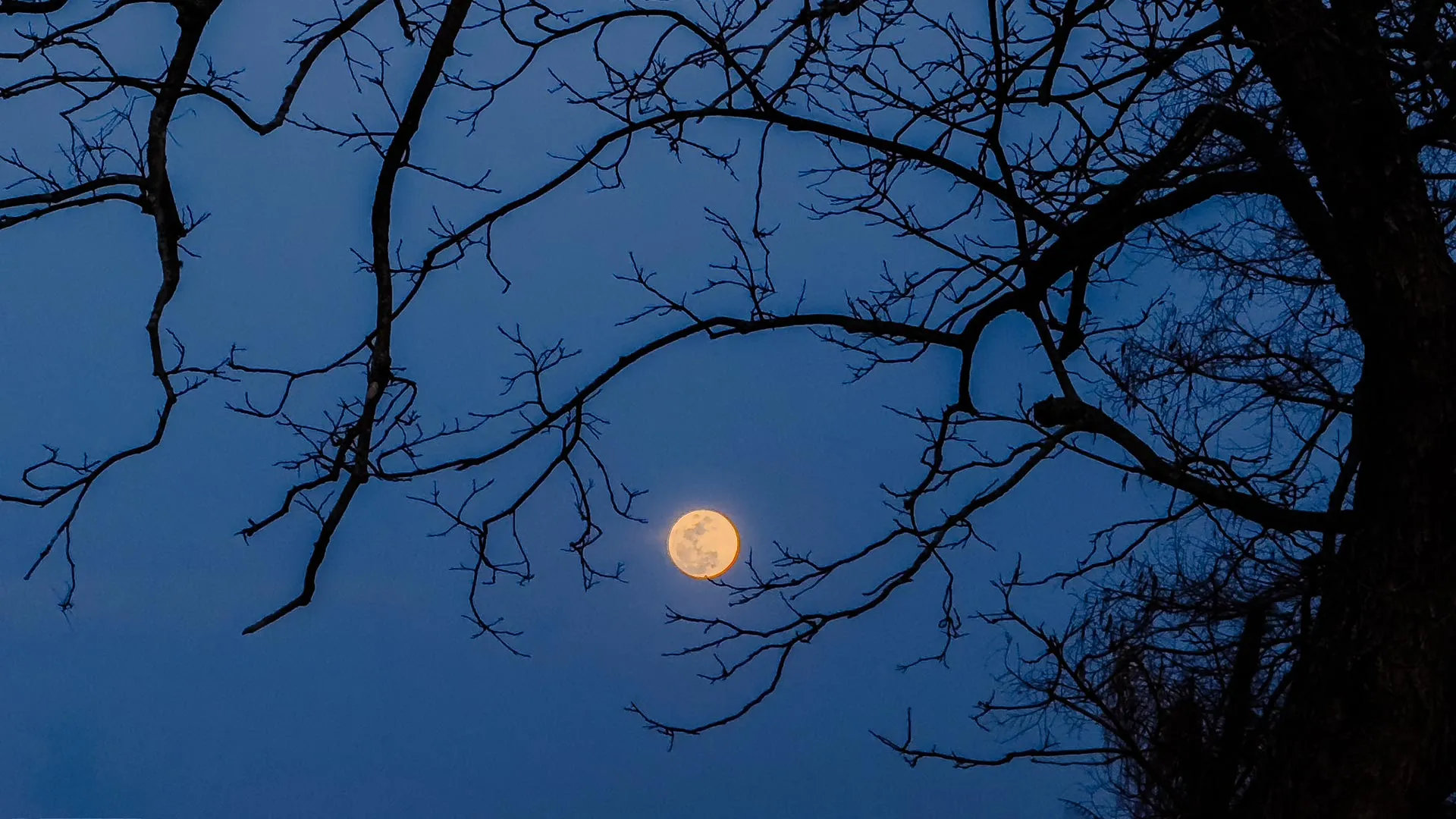
The month’s final major celestial highlight is the Hunter’s Moon, which reaches its full phase on October 26 in Universal Time. For observers in most of North America, the Moon will appear full on Sunday night, October 25.
The name Hunter’s Moon comes from a tradition linked to autumn’s changing conditions. After crops were harvested, fields became more open and daylight hours grew shorter. Hunters could use the bright moonlight to find and track animals after sunset.
The Moon will remain a prominent feature in the night sky for several days as it waxes and wanes. As Halloween approaches, its illuminated area will gradually decrease each night.
That lingering glow provides a fitting backdrop for the last night of October and a memorable finale to a month of celestial tricks and treats.
Source: www.sciencedaily.com