


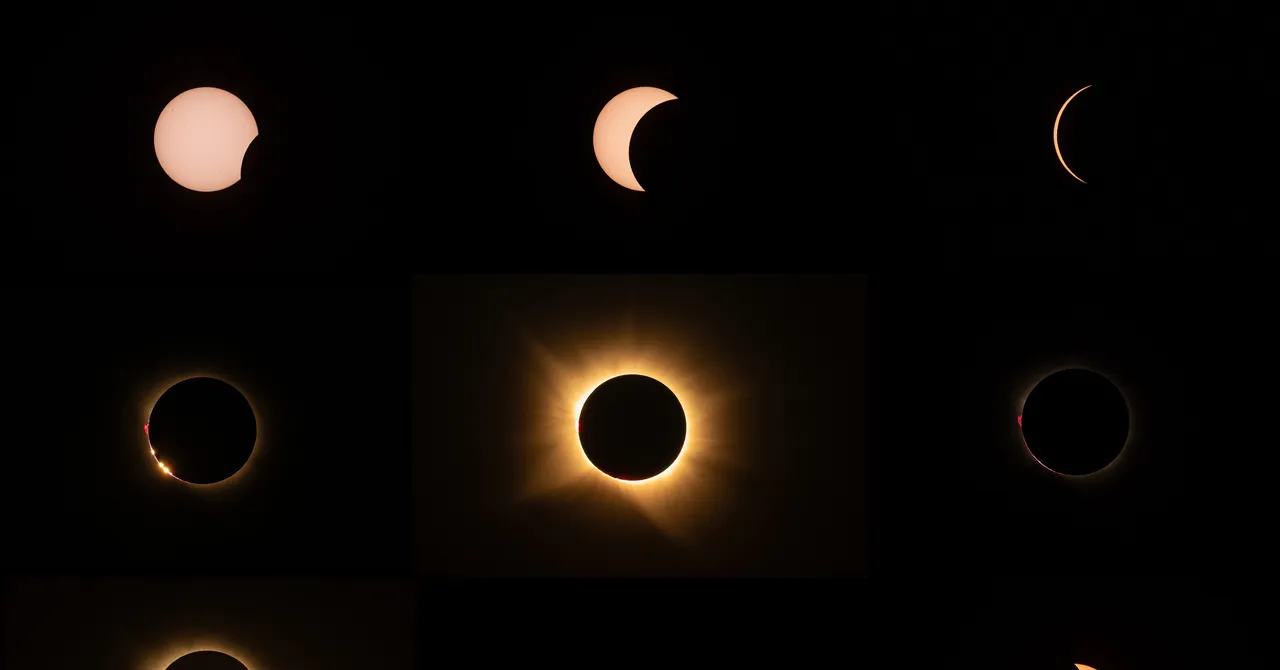
Total solar eclipse coverage The August 12 solar eclipse delivered some of the most spectacular images of this celestial event in recent years. However, Europe’s remarkable era of solar eclipses is only beginning. Two major events remain in the so-called “Iberian Eclipse Trio,” and both could be even more impressive than the eclipse that recently captivated viewers.
The next solar eclipse will take place in 2027 and is being called the “eclipse of the century” because of its exceptionally long totality. The final event, scheduled for 2028, will offer viewers the chance to see the glowing “ring of fire” created by an annular solar eclipse. Whether you live in Spain or plan to travel there—or anywhere along the path of totality—it is never too early to begin planning your eclipse-viewing experience.
On August 2, 2027, one of the longest total solar eclipses of the 21st century will cross parts of Europe, Africa and the Middle East. At its peak, the Moon will completely block the Sun for 6 minutes and 23 seconds. By comparison, totality during the August 12 eclipse lasted approximately 2 minutes and 18 seconds. The 2027 solar eclipse will therefore last nearly three times longer, making it the longest total solar eclipse in more than a century.
Total solar eclipses are visible only along a narrow path across Earth’s surface. In 2027, the path of totality will begin in southern Spain and northern Africa before crossing Morocco, Algeria, Tunisia, Libya and Egypt. It will then continue through Saudi Arabia, Yemen and Somalia. Spain will be the only European country where the total phase is visible, although residents and visitors in Gibraltar, a British overseas territory, may also witness totality.
Egypt will experience both the peak of the 2027 eclipse and its longest period of totality. The Moon’s shadow will pass over ancient Thebes, near the temples of Karnak and Luxor, as well as the Valley of the Kings on the opposite bank of the Nile. Farther north, the Pyramids of Giza will fall just outside the path of totality and will experience a partial solar eclipse instead.
The third event in the Iberian Eclipse Trio will occur on January 26, 2028. This time, the Moon will not completely cover the Sun. Instead, observers will see a bright ring of sunlight surrounding the lunar disk—a phenomenon known as an annular, or “ring of fire,” solar eclipse. The path of the annular eclipse will cross South America, beginning in Ecuador and Peru. It will then pass through Brazil before crossing the Atlantic and reaching Portugal and Spain.
Brazil will offer the longest view of the 2028 ring of fire, with the annular phase lasting up to 10 minutes and 27 seconds. That duration will make it one of the longest annular solar eclipses of the century. Spain will see a shorter but potentially highly photogenic version. In cities including Seville, Córdoba, Albacete and Valencia, the ring of fire will remain visible for roughly seven minutes shortly before sunset, appearing low above the horizon.
This story was originally published in the Spanish edition of WIRED and translated from Spanish.
Source: www.wired.com