


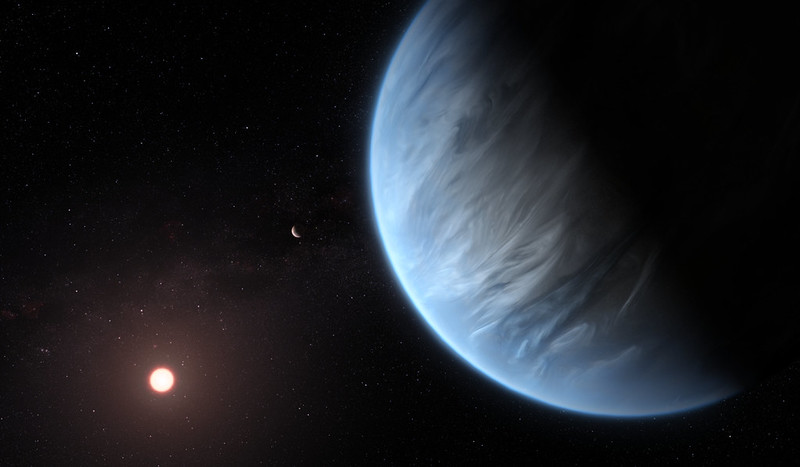
NASA’s Future Habitable World Observatory Could Target 164 Nearby Sun-Like Stars
NASA’s Exoplanet Exploration Program (ExEP) has curated a list of 164 nearby Sun-like stars that are easily visible from Earth. These stars represent the first potential targets for proposed large space telescopes designed to search for life beyond the solar system, including the Habitable World Observatory (HWO).
If HWO is completed, perhaps sometime in the 2040s, scientists could use it to directly image planets in these systems. The telescope would search for planets orbiting Sun-like stars in the habitable zone—the region where temperatures may allow liquid water to exist. Scientists hope to discover Earth-like planets with liquid water around other stars.
Simulating Possible Planetary Systems
The 164 stars on the ExEP list have properties that make them suitable candidates for observation, but it remains unclear how many actually host terrestrial planets in their habitable zones. A team of Arizona State University scientists used simulations of these stars and their hypothetical planetary systems to assess which targets are most likely to host habitable worlds. Their results could help HWO prioritize which star systems to observe.
The researchers began with a subset of 134 stars on the ExEP list that have no known exoplanets. This allowed them to simulate potential planetary systems around each star without having to account for previously discovered worlds. They used a software model called DYNAmical Multiplanet Injection Tester (DYNAMITE).
For each star, the team generated 100,000 simulated planetary systems to estimate the likelihood that unseen planets exist. The simulations used mathematical formulas based on observations of real exoplanets to determine the sizes and orbital properties of hypothetical gas giants and rocky planets. DYNAMITE then assessed whether the systems were stable and whether their habitable zones contained terrestrial exoplanets.
The remaining 30 stars on the ExEP list have known exoplanets, but none are known to be rocky planets in their star’s habitable zone. To predict whether these systems might contain unseen terrestrial planets, the researchers used the same DYNAMITE process while requiring each simulated system to include an exoplanet matching one that had already been observed.
Could Habitable Moons Expand the Search?
To increase the chances of finding potentially habitable worlds, the researchers also examined moons orbiting gas giants. For each simulation involving a gas giant, they added between two and 23 satellites with masses ranging from 10% of Earth’s Moon to 50% of Earth’s mass.
The team then simulated the moons’ surface temperatures based on the amount of starlight they received and the gravitational forces of their host planets, including tidal heating. If a moon was large enough to retain an atmosphere and had temperatures suitable for liquid water, it could potentially be habitable even if it was not technically located within the star’s habitable zone.
Which Stars Should HWO Observe First?
For each star, the researchers calculated a ranking metric based on three factors:
- The probability that the star has a terrestrial planet in its habitable zone
- The probability that the planet remains in a stable habitable zone for at least 2 billion years
- The probability that the star has a potentially habitable moon
Using this metric, the researchers found that the dimmer, cooler stars on the list were more likely to host terrestrial planets in their habitable zones than brighter, hotter stars. Stars without known exoplanets also received more favorable rankings.
Approximately 70% of the stars with known exoplanets had less than a 1% chance of hosting a terrestrial planet in their respective habitable zones. The simulations also found that fewer than 0.1% of the satellites were potentially habitable.
47 Stars Ranked as Highest-Priority Targets
Overall, the researchers concluded that HWO should prioritize cooler, Sun-like stars without known exoplanets. They argued that the known exoplanets in the sample have sizes and locations that make it unlikely for additional planets to exist in their systems’ habitable zones.
Even if the criteria for moon habitability were expanded, the researchers found it highly unlikely that HWO would discover another Earth orbiting a gas-giant exoplanet. Their rankings placed the 164 stars into three observation categories:
- Tier A: 47 highest-priority stars
- Tier B: 51 intermediate-priority stars
- Tier C: 66 lowest-priority stars
The team concluded that the proposed Habitable World Observatory could be an important next step in the search for other Earths. However, scientists still need to identify the best targets for the future telescope. Because HWO should be capable of directly imaging rocky exoplanets, detailed research and a carefully prioritized target list could help ensure that no potentially habitable worlds are overlooked.
Views: 108
Source: sciworthy.com