


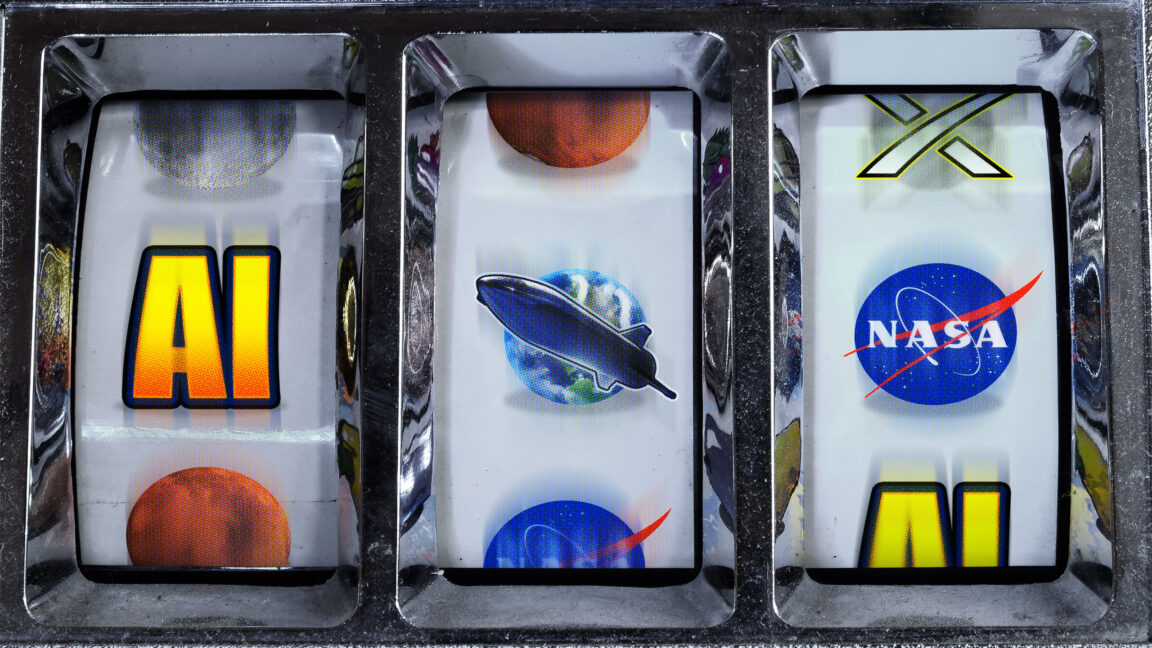
The dispute between President Trump and Elon Musk exposed how dependent the U.S. government has become on SpaceX, even though Trump could still harm Musk’s business through regulatory reviews involving agencies such as the Federal Communications Commission and the Federal Aviation Administration. Although the two men later reconciled, the confrontation underscored SpaceX’s growing leverage over NASA and the U.S. Space Force.
“Mr. Musk’s spat with President Trump when he threatened to take away the Dragon was completely irresponsible,” said Chris Davenport, an Arizona State University professor and author of Rocket Dreams. “If the Falcon and Dragon go away, that’s a big disadvantage for the U.S. government. NASA desperately needs SpaceX, SpaceX knows it, and Elon knows it.”
For those who watched SpaceX fight for years to gain a foothold with NASA and the Space Force, this represents a remarkable shift. However unpleasant the change may be, it can no longer be denied: the U.S. government now needs SpaceX more than SpaceX needs the government.
What is Elon Musk thinking?
Around the time of his dispute with Trump, Musk came to believe that artificial intelligence was not merely the next major technology trend. Instead, he viewed AI as the defining industrial revolution of his lifetime. He began steering his two largest companies, Tesla and SpaceX, toward control of the software, hardware, and computing capacity needed to power AI systems on Earth and in space.
That ambition is the primary explanation for SpaceX’s acquisition of xAI and its subsequent IPO. It also underlies the possibility of a merger between SpaceX and Tesla. Such a deal would give Musk more direct control over Tesla, which he values, while providing vast assets that could be deployed to build data centers, self-driving cars, robots, giant rockets, and other systems on Earth and in space.
No other company currently appears positioned to own the entire artificial intelligence stack, at least in the short term. Musk wants to manufacture chips and develop the power infrastructure for data centers, build the facilities that will drive the AI revolution, create and train the models that provide its intelligence, and produce the physical technologies he believes will help shape the 21st century.
Source: arstechnica.com