


Close Menu
HitechubHitechub
    What's Hot
    Technology

    Empowering Girls: Launching Africa’s First Private Space Satellite

    Science

    Hurricane Season Kicks Off: Below-Average Forecast Highlights First Time in a Decade

    Technology

    Russian Gamers Unite to Prevent Nuclear War: Join the Fight Online

    Important Pages:
    • About Us
    • Privacy Policy
    • Terms & Conditions
    Facebook X (Twitter) Instagram Pinterest
    Facebook X (Twitter) Instagram
    HitechubHitechub
    Thursday, June 4
    • Technology
      1. AI
      2. Gadgets
      3. View All

      This is the most popular CEO in the world

      Sectors in which “Chat-GPT” is most often used

      AI Pioneer Expresses Concern About Potential for AI to Surpass Humanity

      Artificial intelligence has begun to “swallow” professions

      What’s new in Android 14

      Europeans have about 700 million old mobile phones in their drawers

      Here’s how you can tell if your phone is being tapped

      “Sneaker X” – computer case in the shape of a sneaker

      Russian Gamers Unite to Prevent Nuclear War: Join the Fight Online

      Challenges of Space Travel: Why Journeying to Space is So Difficult

      NASA Astronaut Casts Historic Vote from Space

      Discover the Future of Comfort: What If You Could Wear a Chair?

    • Science
      1. Space
      2. Wheels
      3. View All

      Galaxies in the universe are growing more slowly than they should

      “Espace” presented the new lander “Apex 1.0”

      The largest asteroid sample ever collected has arrived on Earth

      (VIDEO) Incredible flight of the Parker Solar Probe

      Toyota wants to make a new generation battery with a range of up to 1,200 km

      Meet Toyota’s lunar “baby” that could make exploring the Moon easier

      Microlino – Is this the perfect city car?

      Alfa Romeo 4C gets an electric successor

      Discover the Giant Scorpion That Dominated Ancient Britain in the Devonian Period

      Pigeons Utilize Superparamagnetic Immune Cells in Their Livers to Detect Earth’s Magnetic Field

      Webb Telescope Discovers Methane in Interstellar Comet 3I/ATLAS

      Silent Spring: How Rachel Carson’s 1962 Science Book Transformed the World

    HitechubHitechub
    Home » Top 5 Expert-Approved Strategies for Managing Hair Loss, According to a Psychologist
    Science

    Top 5 Expert-Approved Strategies for Managing Hair Loss, According to a Psychologist

    Share Facebook Twitter Pinterest WhatsApp
    Share
    Facebook Twitter LinkedIn Pinterest WhatsApp

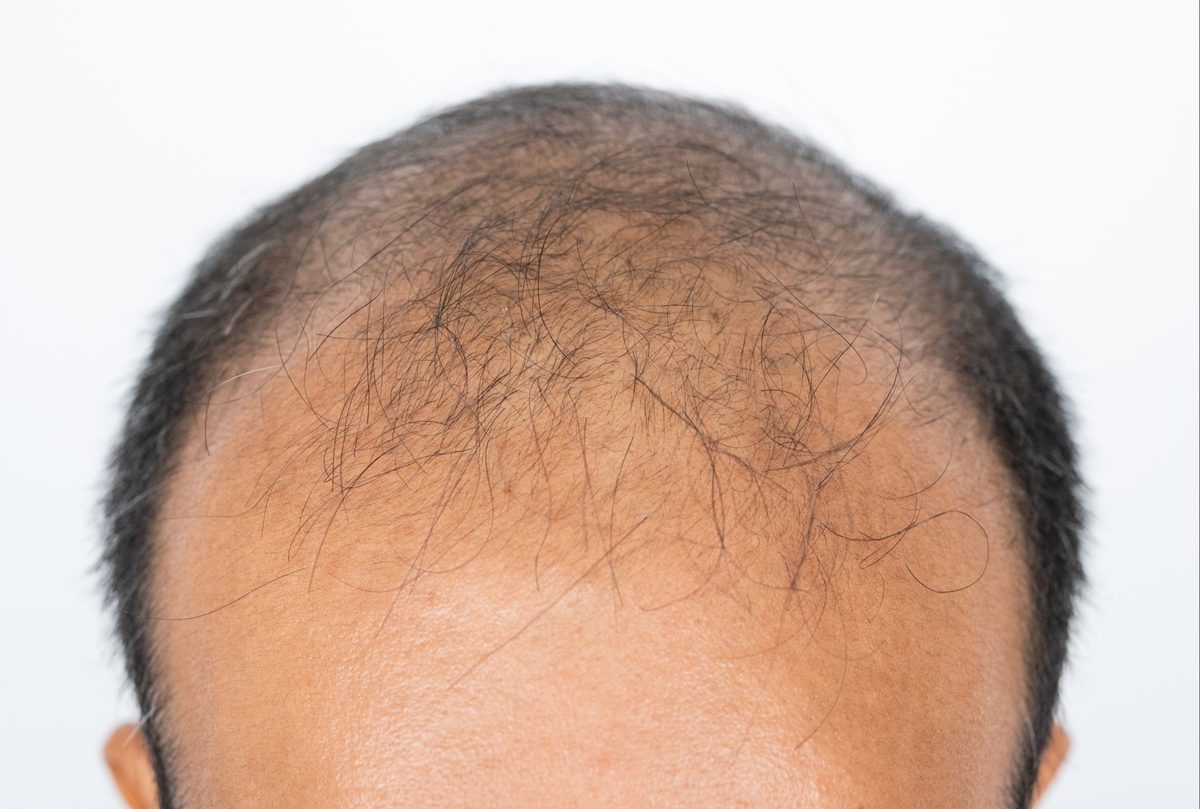
    While it may be biologically simple, hair carries significant emotional weight. Often regarded as a symbol of youth, health, and beauty, its presence or absence greatly influences our self-perception and how others view us. So, why is hair so impactful for our identity?

    Dr. Fabio Zucchelli, a psychologist at the University of the West of England and researcher at the Center for Appearance Research, emphasizes that our relationship with hair stems from an inherent need to fit in.

    “From an evolutionary psychology perspective, humans possess a natural drive to belong to a group,” he explains. When hair begins to thin, it can feel like straying from societal norms.

    Nevertheless, our perceptions of hair are not fixed. “Many ideas about appearance are socially constructed,” Zucchelli notes, explaining that attractiveness can change from one generation to the next. Historically, baldness, especially in men, has been celebrated, from ancient Egypt to the 18th century in Ghana.

    Vincent van Gogh depicted beauty in baldness, noting, “What a sight an old bald worker in a patchwork bombazine suit makes” – Image credit: Alamy

    Today, hair often signifies youth and, by extension, attractiveness. For many women, hair represents femininity and beauty; for men, it embodies masculinity and vitality. It’s no surprise that the hair restoration industry is thriving, projected to reach a staggering $6.5 billion by 2023, with significant growth anticipated.

    “In my view, the medicalization of hair loss reinforces societal pressures,” adds Zucchelli. Treatments are becoming more effective, but they also grow more expensive, making hair loss seem like a condition that must be remedied.

    Ultimately, whether or not you feel compelled to “cure” baldness is a personal choice. For many, it marks a new chapter rather than a flaw to hide. If you decide against restorative treatment, there are numerous proven strategies to cultivate self-confidence.

    1. Focus on Functionality

    A practical approach is to shift your focus from appearance to functionality. Consider how your body operates and protects you. For instance, hair provides insulation and helps regulate temperature.

    Recognizing the biological role of your body parts can foster acceptance. “Developing a positive body image can help combat feelings tied to hair loss,” says Zucchelli, suggesting interventions aiming to highlight bodily capabilities.

    Histology of human scalp and hair follicles as seen under a light microscope
    Microscopic image of hair follicles – integral to the body’s insulation and temperature control systems – Image credit: Getty Images

    One such initiative is Expand Your Horizons, developed by Dr. Jessica Alleva and her team at Maastricht University. This evidence-backed program encourages participants to write about their bodies in terms of function rather than just appearance.

    Research indicates that those engaged in this writing exercise experience increased body satisfaction and appreciation. The goal isn’t necessarily self-love, but self-neutrality, mitigating self-objectification and improving body image.

    “Some might think they need to love themselves,” Zucchelli asserts, “but it’s more about reaching a level of acceptance—recognizing baldness without needing to rewrite your identity around it.”

    2. Increase Media Literacy

    Addressing the emotional toll of hair loss can begin with understanding its origins—often influenced by media and societal norms. “Adopting a critical perspective on media consumption is essential,” Zucchelli advises.

    This concept, known as media literacy, pertains to recognizing the factors shaping our body image—whether it’s advertising, celebrity culture, or social media. “The hair restoration industry is valued in the billions and continues growing,” explains Glenn Jankowski, a health and social psychology professor.

    Being mindful of commercial interests behind hair loss content enables a more balanced perspective. Look for transparency in articles regarding sponsorships or corporate affiliations.

    Moreover, tools like the DISCERN questionnaire at the University of Oxford can evaluate the reliability of health treatment information.

    With algorithmic targeting online, a single search may flood you with related ads for weeks. Adjusting your ad settings on various platforms can help maintain a healthier media environment.

    Zucchelli describes this critical lens as a “protective shield” for body image, allowing for self-reflection on feelings about hair loss and questioning who benefits from these reactions.

    3. Find Others Experiencing Similar Situations

    These feelings of isolation are common, but remember that hair loss is a widespread experience. Conditions like androgenetic alopecia impact a significant percentage of people, including 50% of men and women over 50.

    Public figures, from Dwayne “The Rock” Johnson to Jason Statham, are examples of successful individuals who embrace their baldness. This shared experience fosters understanding, and connecting with others can aid in acceptance.

    A picture of a smiling Jason Statham
    Hollywood star Jason Statham exhibited signs of baldness in his late twenties – Image credit: Getty Images

    Feeling connected can accelerate the acceptance process. Online forums can provide community support, but approach them carefully. Ensure that dialogue emphasizes empathy rather than competition for medical solutions.

    4. Seek Professional Guidance if Necessary

    Sometimes, despite employing these strategies, mental health struggles can arise from hair loss. Consulting a mental health professional can aid in processing these feelings, and acceptance and commitment therapy (ACT) is especially effective.

    two men laughing and talking
    Engaging in conversation can help you reframe harmful beliefs about hair loss and concentrate on what matters – Image credit: Getty Images

    ACT helps individuals recognize thoughts as mere thoughts rather than facts, particularly dispelling myths around baldness affecting romantic prospects. This distance can allow you to refocus on what genuinely matters to you.

    Other therapeutic forms, such as cognitive-behavioral therapy (CBT), can address harmful thoughts, while counseling offers emotional processing and group therapy connects you with peers facing similar challenges.

    5. Allow Yourself Time

    Lastly, practice self-compassion. Hair loss is a significant transition, and it’s okay to experience sadness. “Give yourself time to understand this change,” urges Zucchelli.

    Although grappling with baldness can feel burdensome, the acceptance journey often leads to a more comfortable self-image. Remember, many older men understand that hair loss may be subtle and far from the end of one’s attractiveness.

    Read more:

    Source: www.sciencefocus.com

    Share. Facebook Twitter Pinterest LinkedIn WhatsApp
    Previous ArticleChallenges of Space Travel: Why Journeying to Space is So Difficult
    Next Article Russian Gamers Unite to Prevent Nuclear War: Join the Fight Online

    Related Posts

    Science

    Discover the Giant Scorpion That Dominated Ancient Britain in the Devonian Period

    Science

    Pigeons Utilize Superparamagnetic Immune Cells in Their Livers to Detect Earth’s Magnetic Field

    Science

    Webb Telescope Discovers Methane in Interstellar Comet 3I/ATLAS

    Science

    Silent Spring: How Rachel Carson’s 1962 Science Book Transformed the World

    Science

    New Axolotl Fossil Discovered in Mexico: A Significant Paleontological Find

    Science

    When Food is Scarce: This Single-Celled Organism Becomes a Giant Man-Eater for Survival

    Science

    Unlocking Multitasking: How Science Reveals Your Brain’s Potential with Practice

    Science

    Revealing the Truth: Stonehenge’s Altar Stones Likely Not Transported by Glaciers

    Add A Comment
    Leave A Reply Cancel Reply

    Stay In Touch
    • Facebook
    • Twitter
    • Instagram
    • Pinterest
    Top Picks
    Wheels

    Meet Toyota’s lunar “baby” that could make exploring the Moon easier

    Toyota presents an innovative concept known as the “Baby Lunar Cruiser”. Although this concept is currently only at the level of an idea, this electric lunar SUV represents a futuristic vision of upcoming lunar vehicles.

    How fast commercial airplanes really are?

    Discover the Future of Comfort: What If You Could Wear a Chair?

    Unusual planet with no atmosphere discovered

    How Plants Altered Magma Chemistry: Insights from Sciworthy

    Most Popular
    Science

    Structural changes in the women’s brain during the menstrual cycle?

    Wheels

    BMW XM surprises in a moose avoidance test

    Categories
    • AI (13)
    • Gadgets (10)
    • Science (47)
    • Space (9)
    • Technology (37)
    • Wheels (9)
    Our Picks
    Gadgets

    PlayStation 5 becomes a completely silent console and gets more space

    AI

    10 Effective Strategies for Teaching Artificial Intelligence

    © 2026 Hitechub.
    • Home
    • About Us
    • Privacy Policy
    • Terms & Conditions

    Type above and press Enter to search. Press Esc to cancel.

    We are using cookies to give you the best experience on our website.

    You can find out more about which cookies we are using or switch them off in .

    Ad Blocker Enabled!
    Ad Blocker Enabled!
    Our website is made possible by displaying online advertisements to our visitors. Please support us by disabling your Ad Blocker.
    Hitechub
    Powered by  GDPR Cookie Compliance
    Privacy Overview

    This website uses cookies so that we can provide you with the best user experience possible. Cookie information is stored in your browser and performs functions such as recognising you when you return to our website and helping our team to understand which sections of the website you find most interesting and useful.

    Strictly Necessary Cookies

    Strictly Necessary Cookie should be enabled at all times so that we can save your preferences for cookie settings.