


Why Do Large Dogs Age Faster Than Small Dogs? Their DNA May Hold the Clue
A study of 894 dogs suggests that epigenetic changes, including the activation of “jumping genes,” may help explain why Great Danes and Mastiffs have much shorter lifespans than Chihuahuas.
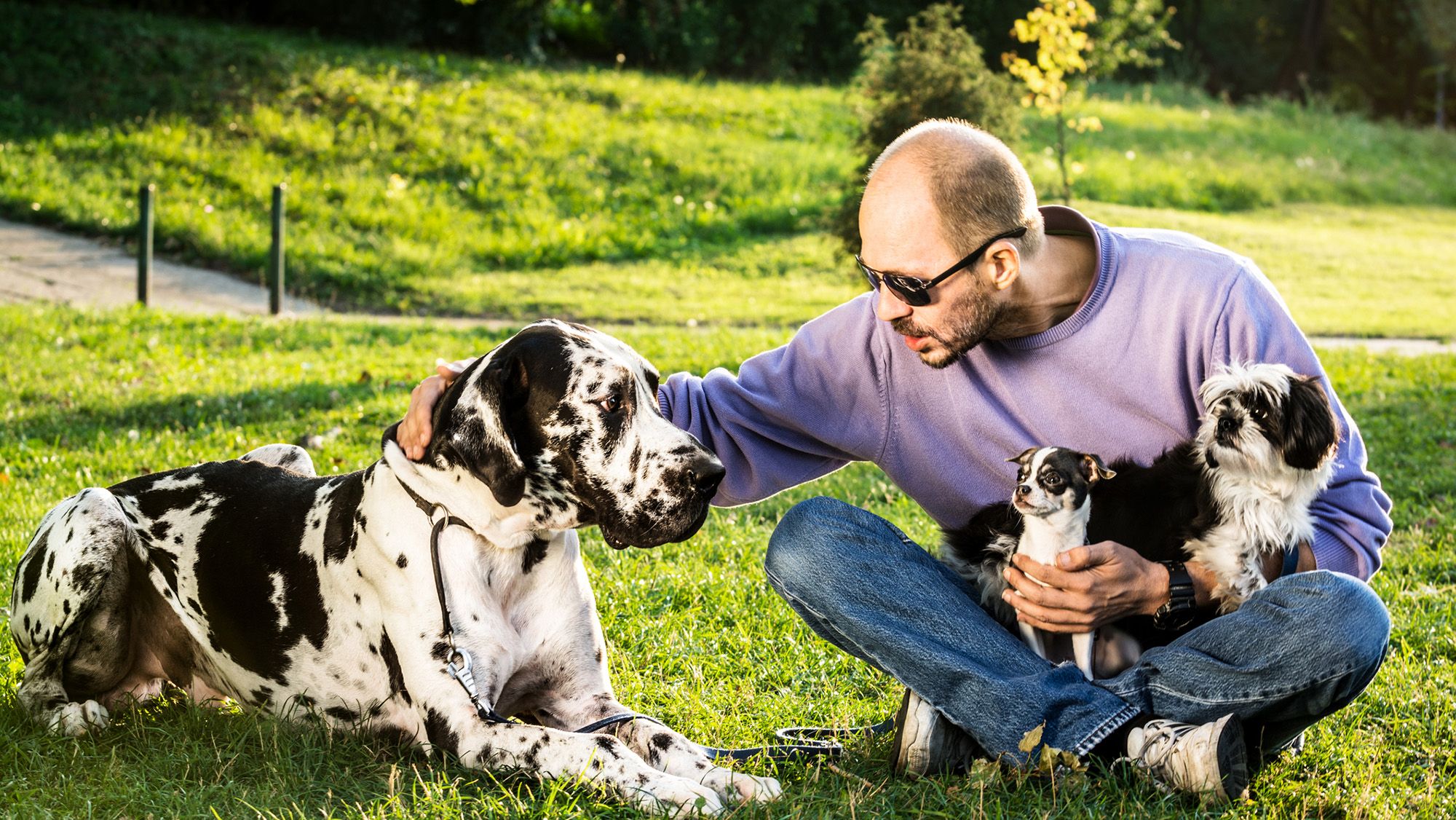
Great Danes and Mastiffs rarely live more than 10 years, while Chihuahuas can live nearly twice as long. Scientists have long wondered why larger dogs tend to die younger than smaller breeds. A new study points to changes in the chemical markers attached to dogs’ DNA as one possible explanation.
The research, published in the journal Science, examined dogs’ methylome—the collection of chemical tags that attach to DNA and help control how genes work.
What is an epigenetic clock?
Proteins constantly read DNA and use its instructions to build proteins for the body’s cells. Chemical tags called methyl groups can influence this process by attaching to DNA and helping regulate gene activity.
These tags are known as epigenetic markers. Their locations on DNA change in predictable ways as an animal ages, allowing scientists to use them to estimate biological age through an “epigenetic clock.”
Researchers led by scientists associated with Arizona State University created an epigenetic clock using blood samples from 894 dogs involved in the Dog Aging Project, a long-term effort based at the University of Washington.
Large dogs appear to age faster biologically
Blood contains immune cells that travel throughout the body, making them a useful measure of overall biological aging. The researchers found that changes in DNA methylation closely tracked the dogs’ biological ages.
Dogs whose epigenetic age was higher than expected also faced an increased risk of dying from any cause. When the team compared dogs of different sizes, it found that larger dogs appeared to age somewhat faster during their lifespans than smaller dogs.
“Using our biomarker, the epigenetic clock, large dogs aged a little faster per lifespan than small dogs,” study co-author Noah Snyder-Muckler said.
‘Jumping genes’ could contribute to accelerated aging
One of the most important differences involved stretches of DNA called transposable elements, sometimes known as “jumping genes.” These elements can move around the genome, but methyl groups normally help keep them inactive.
In larger dogs, the researchers observed a greater loss of methylation in these regions. Without those chemical restraints, the jumping genes may become more active, potentially disrupting other genes and contributing to inflammation—an important process associated with aging.
In short, the findings suggest that uncontrolled jumping genes may play a role in why large-breed dogs experience faster biological aging. However, the researchers emphasize that this remains a hypothesis and that the study does not yet prove why body size affects epigenetic aging.
Aging may reduce immune-cell specialization
The study also found that aging changes the methylation patterns of immune cells. Some parts of the genome gained methylation, while others that were heavily methylated gradually lost it.
As dogs aged, their immune cells also appeared to become more similar to one another from an epigenetic perspective. This possible “loss of cellular identity” may make the cells less effective at performing specialized jobs, such as fighting viruses or preventing cancer.
Previous research suggests that this reduced specialization may be an important feature of aging. It could help explain why older animals become more vulnerable to disease.
Why might large dogs age faster?
Humans have selectively bred dogs for larger body size, but that growth may come with biological trade-offs. Large dogs may need to balance rapid development with maintaining their bodies, immune systems and long-term health.
“Their bodies must make trade-offs between rapid growth and maintenance, and investments in their immune system and biological health,” Snyder-Muckler said.
The current research does not directly establish that rapid growth causes faster epigenetic aging. More data will be needed to determine which biological processes account for the difference between large and small breeds.
Could the research help dogs—and humans?
The Canine Aging Project is continuing to recruit dogs for long-term health tracking. Researchers hope that a larger dataset will produce a more accurate epigenetic clock and help explain why dogs age at different rates.
Eventually, such a model could help veterinarians and dog owners identify pets at higher risk of age-related health problems. It may also improve scientists’ understanding of human aging.
Dogs develop many of the same diseases as people and share living environments with us. Studying how environmental exposures affect dogs’ molecular health could therefore offer insights into how similar exposures influence human aging.
“Most people love dogs,” Snyder-Muckler said. “That means we have a lot of really good data about them.”
Source: www.livescience.com