


Close Menu
HitechubHitechub
    What's Hot
    Science

    New Walking Shark Species Discovered in Papua New Guinea: A Groundbreaking Addition to Marine Science

    Science

    NASA Unveils Three Unmanned Moon Exploration Missions in 2023 to Support Lunar Base Construction

    Wheels

    Toyota wants to make a new generation battery with a range of up to 1,200 km

    Important Pages:
    • About Us
    • Privacy Policy
    • Terms & Conditions
    Facebook X (Twitter) Instagram Pinterest
    Facebook X (Twitter) Instagram
    HitechubHitechub
    Wednesday, June 17
    • Technology
      1. AI
      2. Gadgets
      3. View All

      This is the most popular CEO in the world

      Sectors in which “Chat-GPT” is most often used

      AI Pioneer Expresses Concern About Potential for AI to Surpass Humanity

      Artificial intelligence has begun to “swallow” professions

      What’s new in Android 14

      Europeans have about 700 million old mobile phones in their drawers

      Here’s how you can tell if your phone is being tapped

      “Sneaker X” – computer case in the shape of a sneaker

      Russian Gamers Unite to Prevent Nuclear War: Join the Fight Online

      Challenges of Space Travel: Why Journeying to Space is So Difficult

      NASA Astronaut Casts Historic Vote from Space

      Discover the Future of Comfort: What If You Could Wear a Chair?

    • Science
      1. Space
      2. Wheels
      3. View All

      Galaxies in the universe are growing more slowly than they should

      “Espace” presented the new lander “Apex 1.0”

      The largest asteroid sample ever collected has arrived on Earth

      (VIDEO) Incredible flight of the Parker Solar Probe

      Toyota wants to make a new generation battery with a range of up to 1,200 km

      Meet Toyota’s lunar “baby” that could make exploring the Moon easier

      Microlino – Is this the perfect city car?

      Alfa Romeo 4C gets an electric successor

      Unlock Your Potential: Science-Backed Secrets to Mastering Any Skill

      Will We See a Practical, Error-Free Quantum Computer Within Two Years?

      Unlocking the Secrets to Maintaining a Sharp Mind in Old Age

      Exciting Discovery: New Duck-Billed Dinosaur Species Unearthed in Romania

    HitechubHitechub
    Home » Will We See a Practical, Error-Free Quantum Computer Within Two Years?
    Science

    Will We See a Practical, Error-Free Quantum Computer Within Two Years?

    Share Facebook Twitter Pinterest WhatsApp
    Share
    Facebook Twitter LinkedIn Pinterest WhatsApp
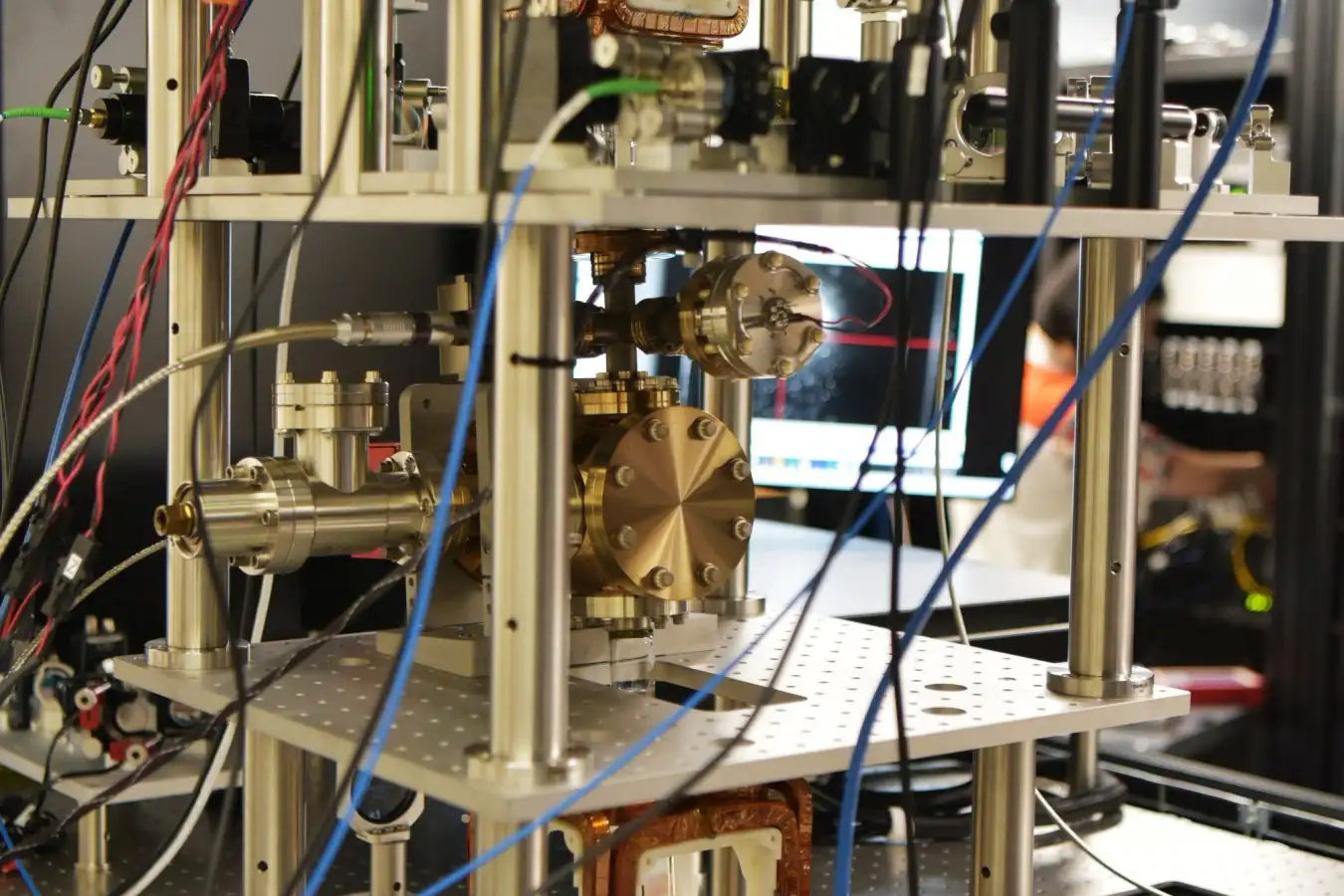
    Prototype of the Libra quantum computer

    Libra Quantum Computer Prototype

    Credit: Cuella

    A promising, error-resistant quantum computer could be operational within just two years, according to researchers from the quantum computing firm QuEra.

    Quantum computing technology is advancing rapidly, driving significant growth in the industry. One of the major challenges currently faced in applying quantum computers to fields such as chemistry, materials science, and drug development is their inherent error-proneness, limiting the complexity of calculations. However, Yuval Boger and his team at QuEra are optimistic about overcoming this significant hurdle.

    The Libra quantum computer, designed to be fault-tolerant (capable of identifying and correcting its own errors), is projected to become available by 2028, distributed via a cloud partnership with Amazon Web Services (AWS). As of now, fully operational, fault-tolerant quantum computers are nonexistent. “Launching the first fault-tolerant quantum computer will be akin to breaking the sound barrier,” asserts Borger.

    The foundational elements of Libra, known as qubits, consist of electrically neutral atoms maintained at ultra-low temperatures and manipulated by lasers. The device is expected to incorporate between 10,000 and 15,000 qubits, arranged into 256 groups referred to as logical qubits. Even if some qubits within a group prove unreliable, each will only experience a failure once per million errors.

    QuEra’s team anticipates that Libra will enable “mega-quops,” or one million operations, by 2025. Quantum computing authority John Preskill, from the California Institute of Technology, stated that the mega-quop machine could signify the dawn of a new quantum computing era. However, for QuEra’s vision to materialize, significant advancements are necessary; currently, the largest available array of neutral atom qubits encompasses 6,100 units, which have yet to be employed in practical computations. Moreover, the highest number of error-corrected logical qubits ever produced stands at 48. Industry leaders like IBM predict fault-tolerant quantum computers could be feasible starting in 2029.

    Jonathan King from Atom Computing, which also develops a neutral atom quantum computer, emphasizes that a fully operational quantum system necessitates the integration of numerous scientific and technological innovations beyond laboratory prototypes. Borger explained that QuEra is currently testing five experimental machines to refine various Libra features, including managing defective atoms due to temperature fluctuations and harmonizing the numerous lasers involved in the process.

    “The focus is shifting from 90% science to 10% engineering, leaning more heavily towards engineering,” noted Borger. The QuEra team is also enhancing the way conventional computers control and monitor qubits and collaborating with AWS to incorporate Libra into their established cloud framework.

    “Much work remains,” warns Thomas Wong from Creighton University. “While reaching our goals by 2028 is plausible, it’s equally possible that delays will extend the timeline.” Joe Fitzsimmons from Horizon Quantum Computing recognizes that while QuEra’s ambitions are bold, the company has a proven history of making headway in quantum error correction. He adds that various methods exist for qubit creation, yet the neutral atom technique facilitates conversions between qubits and logical qubits, potentially providing a crucial advantage.

    If all goes according to plan, a pivotal question still remains about the applications of the MegaQuop machine. Borger points out that it is poised to excel in complex simulations of physical systems and material sciences that are currently insurmountable for both traditional and existing quantum computers. He aspires for researchers to leverage it to innovate better quantum computing algorithms for future fault-tolerant machines. “I wouldn’t be surprised if many of the ultimately significant algorithms remain undiscovered,” says Borger.

    According to Wong, Libra is likely to evolve into a discovery-oriented tool, paving the way for groundbreaking applications. “I believe QuEra aims to set the research agenda for the community to explore the potential of harnessing 256 logical qubits,” he explains.

    Topics:

    Source: www.newscientist.com

    Share. Facebook Twitter Pinterest LinkedIn WhatsApp
    Previous ArticleUnlocking the Secrets to Maintaining a Sharp Mind in Old Age
    Next Article Unlock Your Potential: Science-Backed Secrets to Mastering Any Skill

    Related Posts

    Science

    Unlock Your Potential: Science-Backed Secrets to Mastering Any Skill

    Science

    Unlocking the Secrets to Maintaining a Sharp Mind in Old Age

    Science

    Exciting Discovery: New Duck-Billed Dinosaur Species Unearthed in Romania

    Science

    New Walking Shark Species Discovered Near Papua New Guinea Coast

    Science

    Unlock Youthful Skin with a Red Light Mask: Two Key Considerations You Should Know

    Science

    Experts Warn: California Faces Historic Risk of Major Earthquake

    Science

    Early Human Fire Use: Evidence Suggests Origins Date Back 1.8 Million Years

    Science

    Arctic Ocean at Tipping Point: Impending Disasters for Marine Life

    Add A Comment
    Leave A Reply Cancel Reply

    Stay In Touch
    • Facebook
    • Twitter
    • Instagram
    • Pinterest
    Top Picks
    Science

    Exploring Two Distinct Autism Subtypes Identified by Unique Brain Activity Patterns

    Brain scans indicate varying connectivity patterns among autistic individuals, highlighting distinct neurological mechanisms. Puwadol Jaturautchai/Alamy…

    New Axolotl Fossil Discovered in Mexico: A Significant Paleontological Find

    The Best Phones to Buy in 2023: Our Top 10 Picks

    (VIDEO) Incredible flight of the Parker Solar Probe

    Unraveling a Cosmic Case of Mistaken Identity: The Time to Solve It is Now

    Most Popular
    Science

    Unveiling the Mystery: Why Tyrannosaurus Rex Had Surprisingly Small Arms

    Technology

    How much does it really cost to make an iPhone?

    Categories
    • AI (13)
    • Gadgets (10)
    • Science (257)
    • Space (9)
    • Technology (37)
    • Wheels (9)
    Our Picks
    Science

    Scientists Warn of ‘Unprecedented’ Changes in Earth’s Rotation

    Science

    Neil deGrasse Tyson Discusses New Book: Exploring Aliens on Earth and the Fascinating Science of Wormholes

    © 2026 Hitechub.
    • Home
    • About Us
    • Privacy Policy
    • Terms & Conditions

    Type above and press Enter to search. Press Esc to cancel.

    We are using cookies to give you the best experience on our website.

    You can find out more about which cookies we are using or switch them off in .

    Ad Blocker Enabled!
    Ad Blocker Enabled!
    Our website is made possible by displaying online advertisements to our visitors. Please support us by disabling your Ad Blocker.
    Hitechub
    Powered by  GDPR Cookie Compliance
    Privacy Overview

    This website uses cookies so that we can provide you with the best user experience possible. Cookie information is stored in your browser and performs functions such as recognising you when you return to our website and helping our team to understand which sections of the website you find most interesting and useful.

    Strictly Necessary Cookies

    Strictly Necessary Cookie should be enabled at all times so that we can save your preferences for cookie settings.